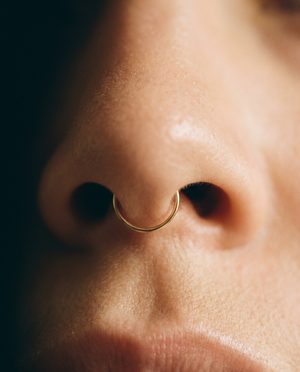
14K Solid Gold ✓
Won't tarnish inside the nose. Biocompatible. Lasts a lifetime. Safe for sensitive skin.
Why 14K Gold for Forward Helix
Cartilage needs the right metal
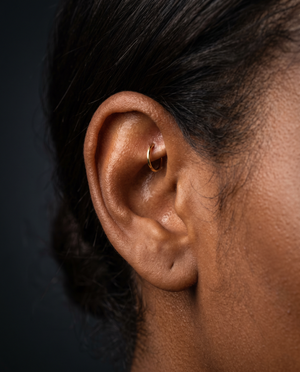
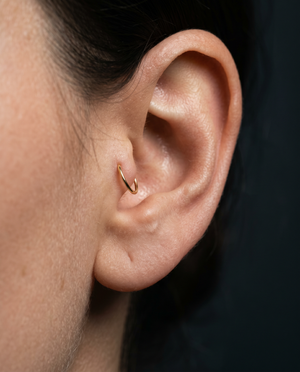
An auricle piercing — also known as a mid helix piercing — sits on the outer rim of the ear, roughly halfway between the lobe and the upper helix. Like all cartilage piercings, it heals slowly and reacts strongly to low-quality metals. The ring stays in contact with healing tissue around the clock, which is why the material matters.
Our auricle rings are made from 14K solid gold wire — 58.3% pure gold alloyed for strength. It's biocompatible, which means the body accepts it rather than rejecting it. No nickel. No plating to wear through. No metal leaching into healing tissue.
14K Solid Gold ✓
Won't tarnish inside the nose. Biocompatible. Lasts a lifetime. Safe for sensitive skin.
Gold-Plated
Coating wears off within months. Exposes base metal. Can cause bumps and irritation.
Surgical Steel
Contains nickel. May cause reactions in the moist nasal environment.
Auricle Ring Size Guide
Finding your exact fit
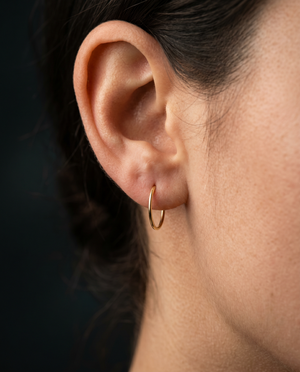
The auricle spans a wider section of the ear rim than most cartilage piercings, so it works with a broader range of hoop sizes. Smaller sizes sit close against the rim for a clean, proportioned look. Larger sizes create more of a visible loop and work well for stacking with other piercings.
Gauge guide: 18G is the most common gauge for cartilage piercings in the UK. 20G is finer for a more delicate appearance. Match the gauge your piercer used, or choose 18G as the safe default.
Not sure? Measure the inner diameter of your current ring or ask your piercer.
Common Questions
About this auricle ring
An auricle piercing is a cartilage piercing on the outer rim of the ear, placed in the middle section between the lobe and the upper helix. It's also commonly called a mid helix piercing — the two terms refer to the same location. Because it sits on the wider section of the ear rim, it works with a broader range of hoop sizes than most other cartilage piercings.
Yes — they refer to the same piercing. "Auricle" is the anatomical term for the outer curve of the ear, and "auricle piercing" specifically describes a piercing placed in the middle section of that rim. "Mid helix" is the more commonly used everyday term for the same placement. This ring is sized for both.
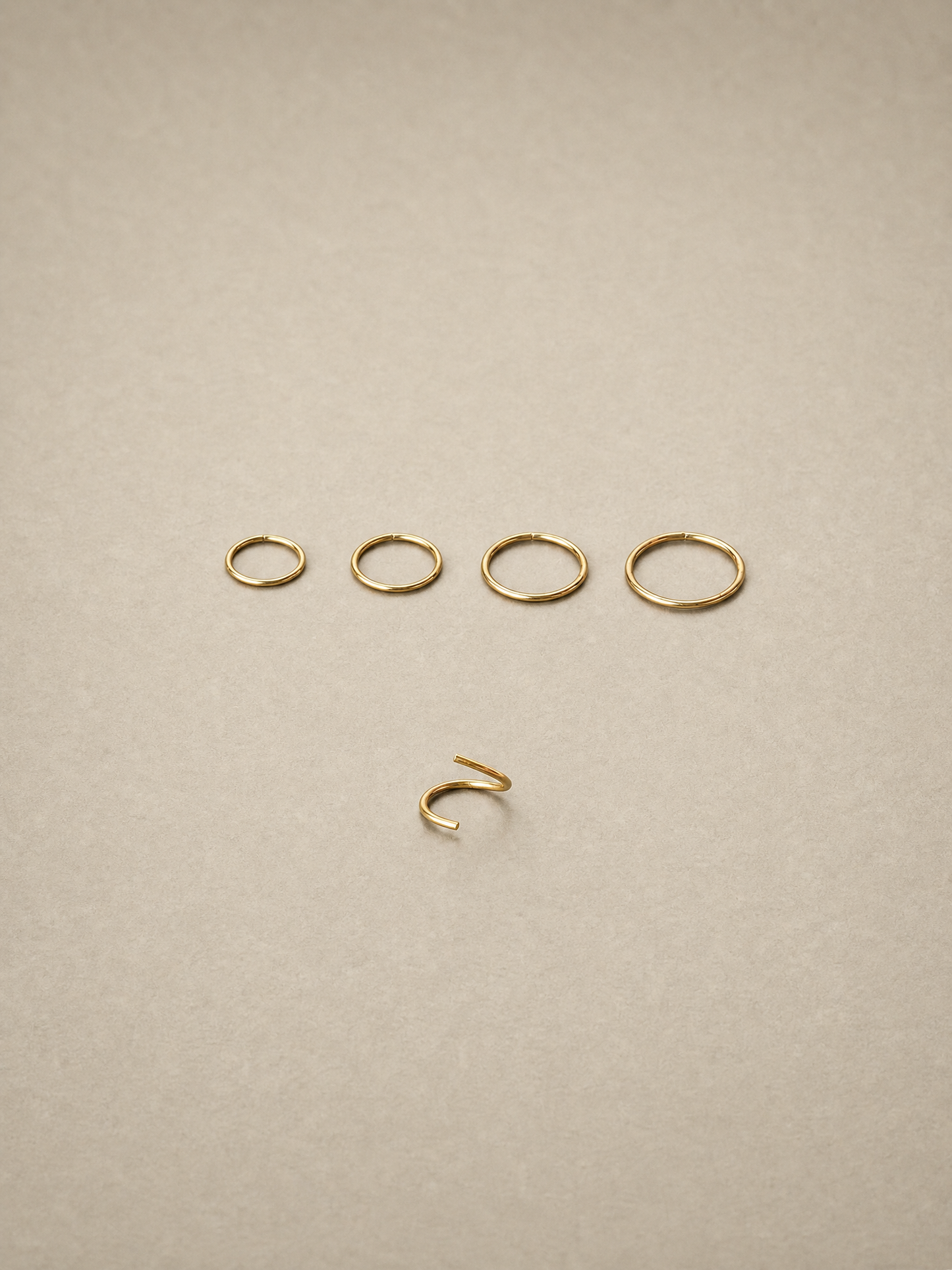
7mm is the most common size and works well for most auricle placements. If you want something closer to the ear, 6mm or 6.5mm sits snug against the rim. For a more visible hoop or for layered looks, 8mm and 9mm give more presence. We offer every size from 6mm to 9mm .
Placement. A standard helix sits on the upper curve of the cartilage, near the top of the ear. An auricle sits in the middle of the outer rim, between the lobe and the helix. The jewellery type is similar — seamless hoops work for both — but size preferences differ: helix piercings typically use 7-8mm hoops, while auricle placements can comfortably take up to 9mm because the rim has more room there.
Yes. 14K solid gold is biocompatible and nickel-free, making it one of the safest metals for cartilage jewellery. Cartilage heals slowly and reacts more strongly to poor materials than lobe tissue does. 14K solid gold is very different from gold-plated jewellery, which can flake over time and expose reactive base metals.
Match whatever gauge your piercer used. In the UK, 18G is the most common for cartilage piercings, including auricle. 20G is finer for a more delicate appearance. If you're unsure which gauge you have, 18G is the safer default.
We recommend waiting until your piercing is fully healed before switching to a seamless hoop. Auricle typically takes 3-6 months to heal enough for a jewellery change, and 6-12 months for full healing. Your initial piercing should be done with a flat-back labret stud — switching too early is the most common cause of cartilage irritation.
Complete Your Look
More 14K gold piercing rings