


Articles on daith piercings — hoop sizing, healing & everyday jewellery.
From understanding daith healing to choosing a comfortable hoop for a healed inner-ear piercing, our articles cover the practical side of wearing jewellery in this curved cartilage placement.
Browse by topic below, or jump straight to the article you need.
Quick answers
Four things to know firstWhat size hoop do most daith piercings use?
Many healed daith piercings suit a hoop somewhere around 6–10mm inner diameter, but there is no single correct size. The right daith hoop depends on the depth of the fold, piercing angle, cartilage thickness, and whether the ring has enough room to sit comfortably.
Is 8mm a good size for a daith hoop?
8mm is often a useful middle size for a healed daith piercing because it gives a visible ring shape without being overly large for many ears. It is still not universal — a smaller or larger diameter may be better depending on anatomy.
Which gauge is common for a daith piercing?
16G and 18G are common for daith jewellery, but the correct gauge is the one your piercing was fitted and healed with. Check your current jewellery or ask a piercer before ordering.
Can I wear a seamless hoop in a daith piercing?
Yes, but seamless hoops are best for fully healed daith piercings. A daith hoop should sit naturally inside the inner ear fold without pressing, twisting, or pulling the piercing channel.
Start here.
Where to startThree articles that cover the most common daith questions. Or scroll on for the full list.
I need help choosing size
Learn how 6mm, 7mm, 8mm, 9mm and 10mm daith hoops differ, and how inner diameter changes the way the ring sits inside the ear fold.
Read the size guide Path ii.I need help choosing gauge
Gauge is wire thickness — not hoop diameter. Learn how 16G, 18G, 20G and 22G differ, and why your healed channel matters.
Read the gauge guide Path iii.Is my daith ready for a hoop?
Daith piercings sit in a folded cartilage area and can take time to settle. Learn when it may be ready for a ring and when to ask a piercer.
Read the healing guideFeatured articles
Most useful first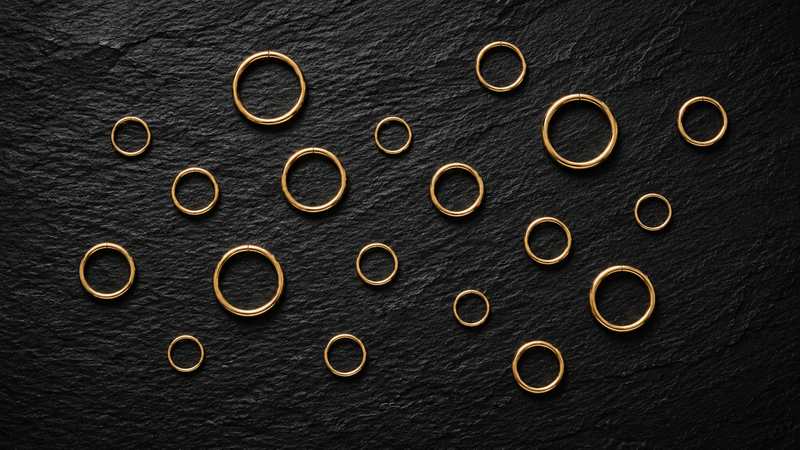
Daith Ring Size Guide
Inner diameter explained — how 6mm, 7mm, 8mm, 9mm and 10mm daith rings sit inside the ear fold, and how to choose between a close or relaxed fit.
Read guide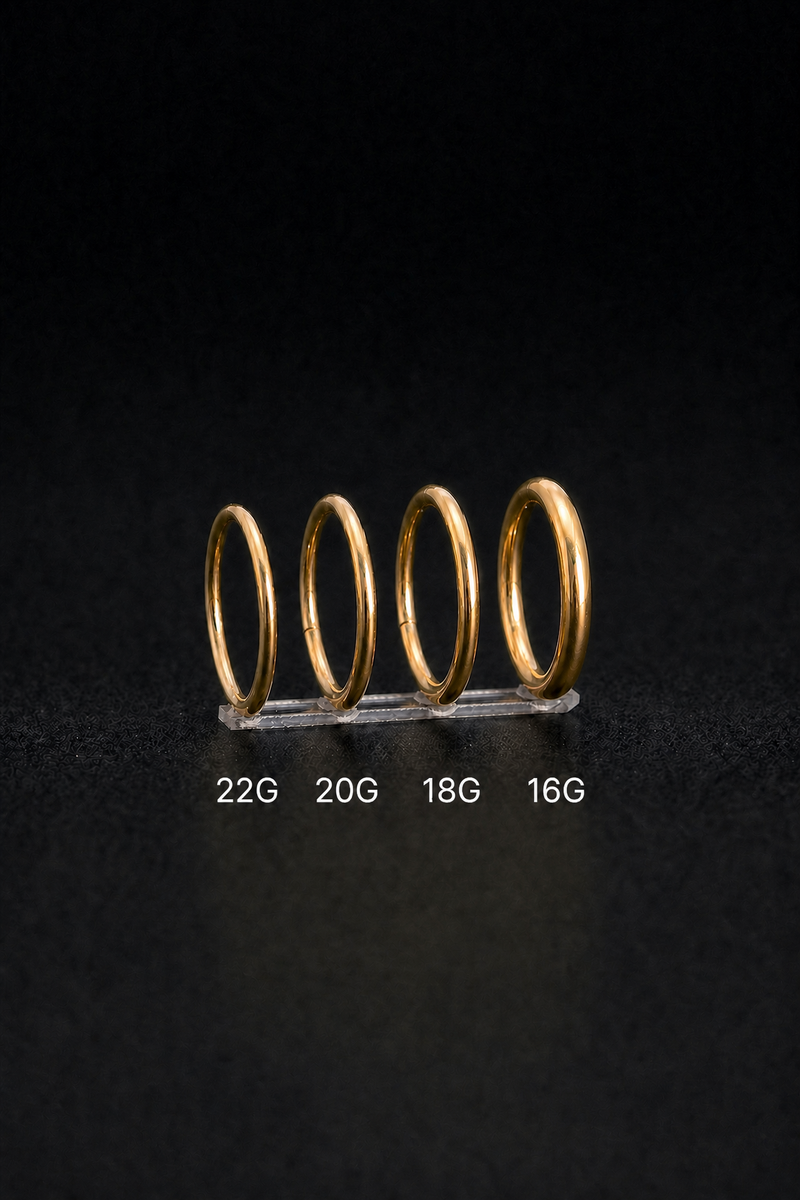
Daith Ring Gauge Guide
What gauge means, why daith jewellery thickness matters, and how to choose the right wire thickness for your existing piercing channel.
Read guide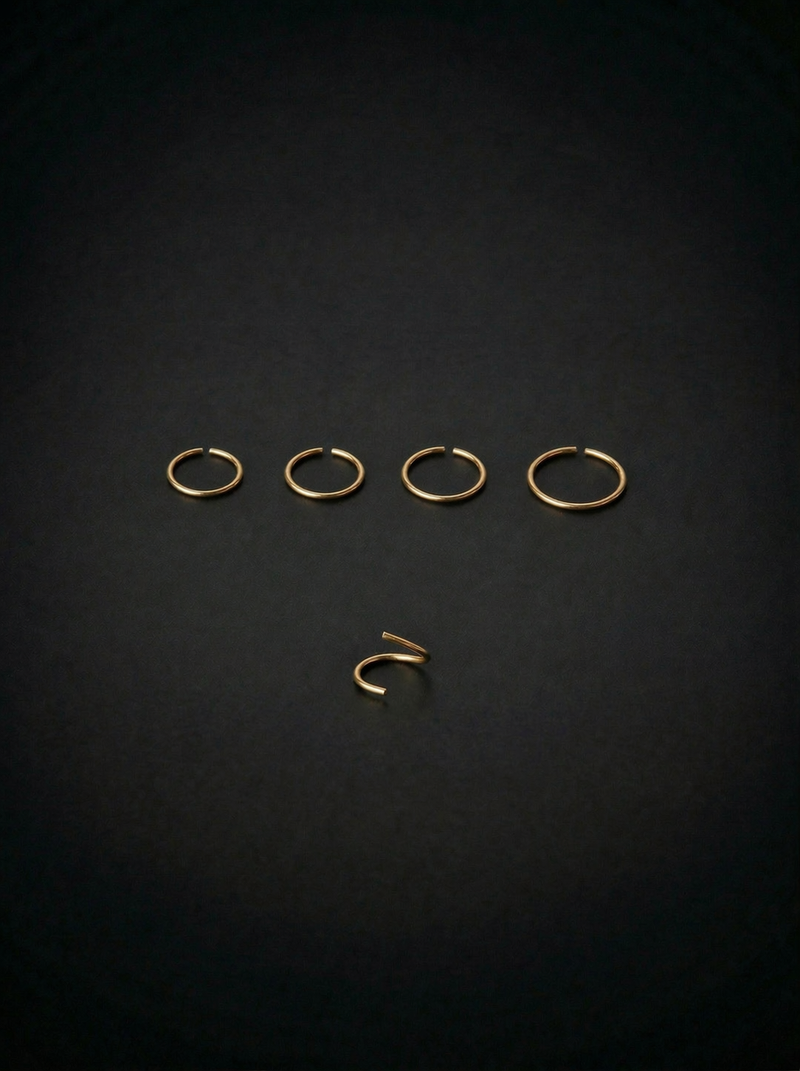
How to Put in a Daith Hoop: Seamless Rings
Step-by-step guidance for fitting a seamless hoop into a fully healed daith piercing without bending or twisting the ring incorrectly.
Read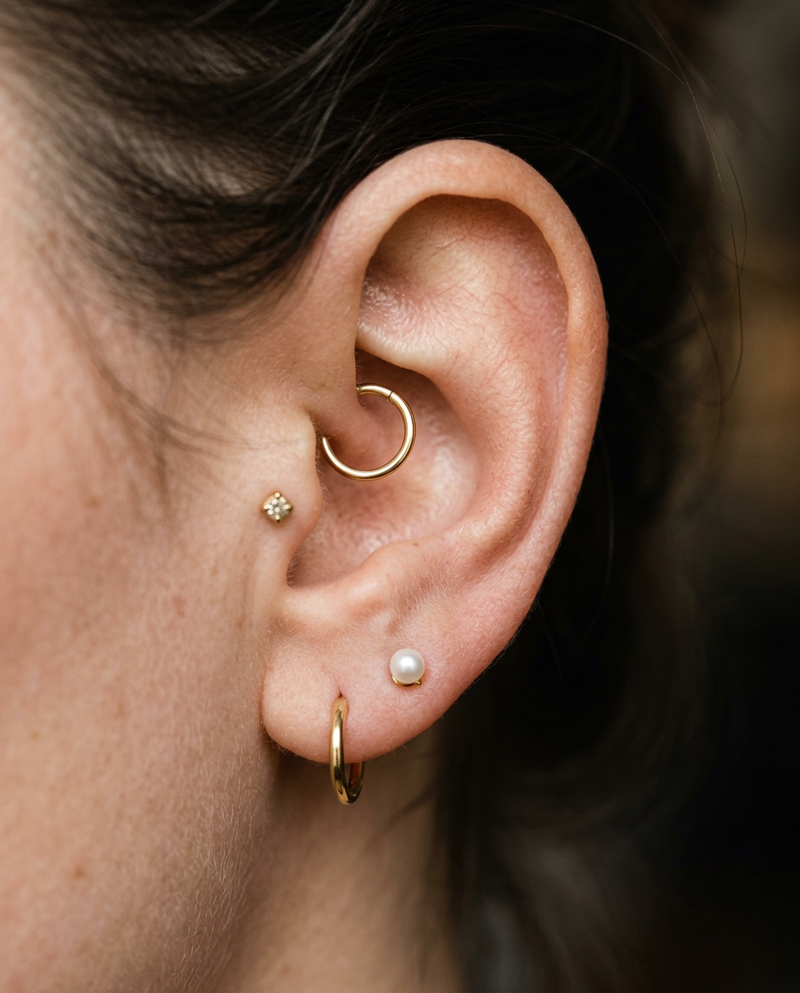
Daith Piercing Healing
What daith healing usually looks like, why this folded cartilage placement can stay sensitive, and when to ask a piercer for help.
Read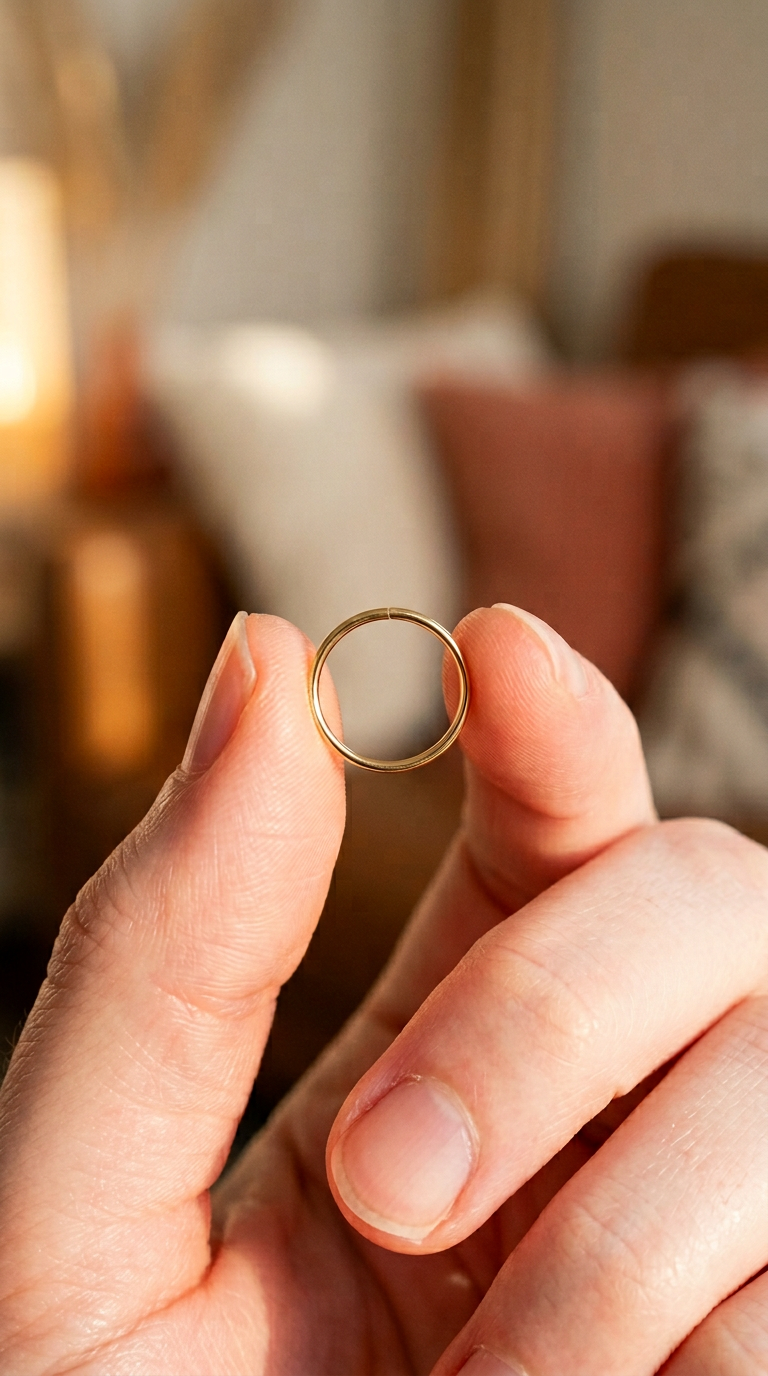
Daith Hoop vs Clicker
How seamless hoops and clickers differ in look, fitting, comfort, visibility and everyday wear for healed daith piercings.
ReadSize & diameter.
Inner diameter explainedInner diameter — the measurement across the inside of the hoop — is the most important size decision for a daith ring. Because the daith sits in a curved inner-ear fold, the hoop needs enough room to sit naturally without pressing into the cartilage or pulling at the piercing channel. A smaller diameter gives a neater fit; a larger diameter creates more visible space and movement. Available size options vary by product — check each product page for the sizes we offer.
Very close fit
A small, neat daith ring look. Best for smaller anatomy or shallow placements, but it can feel too tight if the fold is deeper or the jewellery needs more room to move.
Extra snugClose everyday fit
A subtle size for many healed daith piercings when the placement sits comfortably within the inner fold.
SnugClassic daith ring
Often a balanced middle size for a healed daith hoop, giving a visible ring shape without looking too large for many ears.
PopularRelaxed fit
Adds more space inside the ring, useful for deeper folds, thicker cartilage, or a fit that should move a little more freely.
RoomierStatement loop
Creates a more open, visible daith ring look. Best for larger anatomy or styling, but may be more noticeable with earbuds, headphones or sleeping.
More visibleGauge explained.
Wire thickness, not diameterGauge measures the thickness of the wire — not the size of the hoop. Your daith hoop should match the gauge your piercing channel has healed with.
Many daith piercings are fitted around 16G or 18G, but some healed piercings may wear finer gauges depending on the original jewellery and studio. Do not force a thicker gauge into a smaller channel.
If you're unsure of your gauge, check your current jewellery, look at your piercer's notes, or ask a professional piercer before ordering.
Material & safety.
14K solid gold vs plated✦ Stepoy standard
14K Solid Gold
The gold runs through the entire piece. There's no surface layer to wear off and no base metal hiding underneath.
- Nickel-free composition
- No plating layer to flake or wear away
- Suitable for long-term wear in healed piercings
- A refined choice for everyday cartilage jewellery
For comparison
Gold-Plated
A thin gold layer applied over a base metal. It can look similar at first, but the surface layer may wear down with daily contact.
- Plating can wear down over time
- Base metal sits beneath the gold layer
- Underlying alloys may contain nickel
- Less ideal for long-term healed cartilage jewellery
A note on materials — healed daith piercings can still be sensitive to pressure, friction, earbuds, headphones and unsuitable jewellery. Solid gold is widely chosen for long-term piercing jewellery because it does not have a plating layer that can wear away. If your daith becomes red, swollen, painful, hot or irritated, speak to a professional piercer rather than self-diagnosing.
Fit & comfort.
Inner fold, pressure & daily wearSnug fit
A snug daith hoop sits neatly inside the inner ear fold, giving a clean and minimal look. It can be beautiful for everyday wear, but the ring still needs enough room to move naturally. If it presses into the fold, feels pinched, or pulls the piercing channel, the diameter may be too small.
Relaxed fit
A relaxed daith hoop leaves more visible space inside the ring and may feel easier around deeper folds or thicker cartilage. The trade-off is that larger hoops can be more noticeable with earbuds, headphones, sleeping or hair movement.
Ready to shop —
Shop 14K solid gold
daith hoops.
Handmade to order in your chosen available size and gauge. Designed for fully healed daith piercings. Nickel-free 14K solid gold throughout, with a seamless finish for a clean everyday ring look.
Shop daith hoopsCommon questions.
Practical answers for everyday daith ring wear — sizing, gauge, healing, earbuds, sleeping, pressure and what to do if your jewellery does not feel right. For anything specific to your healing or anatomy, please ask a professional piercer.
The right size depends on the depth of your daith fold, piercing angle, cartilage thickness and whether you want a close or relaxed fit. Many healed daith rings sit around 6–10mm inner diameter, but the hoop should be chosen by comfort and anatomy rather than by one standard size.
6mm can work for smaller anatomy or a very close daith fit, but it may feel too tight if the fold is deeper or the jewellery needs more space to move. A daith ring should not press into the cartilage or pull the piercing channel.
7mm can be a neat everyday size for some healed daith piercings, especially when the placement sits comfortably in a smaller inner fold. It is still anatomy-dependent.
8mm is often a balanced middle size for a healed daith hoop because it gives a visible ring shape without being too large for many ears. It may be a good starting point if you want a classic daith ring look.
10mm is not necessarily too big. It can work well for deeper folds, larger anatomy or a more visible ring look. It may feel more noticeable with earbuds, headphones or sleeping than a closer-fitting hoop.
The best gauge is the one your piercing channel has healed with. 16G and 18G are common for daith jewellery, but you should match your existing jewellery rather than guessing from photos.
Yes, if the piercing is fully healed and the hoop matches the correct size and gauge. If the piercing is fresh, swollen, painful or irritated, do not change it yourself — ask a professional piercer.
Daith piercings are cartilage piercings and can take time to settle. You should only change to a hoop when the piercing is fully healed, calm and comfortable, or when a professional piercer confirms it is ready.
A clicker can be easier to open and close, while a seamless hoop gives a cleaner continuous ring look. For a healed daith piercing, the better choice depends on your styling preference, anatomy and how comfortable the jewellery feels inside the fold.
It depends on your ear shape, hoop size and earbud design. Some people can wear earbuds comfortably with a healed daith hoop, while others feel pressure if the ring sits too close to the ear canal or the earbud pushes against it.
Many people sleep in a fully healed daith hoop, but comfort depends on size, placement and sleeping position. If the ring presses into the ear, catches, or causes soreness, the diameter or jewellery style may not be right for everyday wear.
14K solid gold is a strong choice for healed daith piercings because the material runs through the entire piece and there is no plating layer to wear away. It should still be worn only in a fully healed piercing unless your piercer advises otherwise.
Seamless hoops give a clean continuous ring look and can work well in healed daith piercings. They are not usually the easiest option for fresh or irritated piercings because they need careful fitting and the correct size.
Check diameter first — the hoop may be too small for your fold depth or piercing angle. Then check gauge — a thicker wire than your healed channel can feel uncomfortable. If there is swelling, heat, pain or discharge, do not force the jewellery and speak to a professional piercer.
Yes — if you're unsure about diameter or gauge, message us before ordering. Share your current jewellery measurements, your piercer's notes, or a clear photo of the piercing, and we'll help you narrow down the most suitable option.
Browse all daith articles —