Key takeaways
- A bump next to a septum piercing is almost always an irritation bump (granulation tissue) — not an infection and not a keloid
- The top three causes: touching the jewellery, wearing the wrong material (nickel), and using harsh cleaning products
- Treatment is simple: stop touching, switch to safe metal, use sterile saline only — most bumps flatten in 2–4 weeks
- True keloids are rare, genetic, and look different from irritation bumps — do not self-diagnose a keloid from a Google image search
- 14K solid gold or implant-grade titanium eliminates material-related bumps permanently
- If a bump does not respond to treatment within 4–6 weeks, see your piercer or a dermatologist
What your septum bump actually is
The bump next to your septum piercing has a name: it is most likely a granuloma, commonly called an irritation bump. It is a small mound of granulation tissue — the body’s attempt to heal over a source of chronic irritation. Think of it as your piercing’s way of saying “something is wrong and I am trying to fix it.”
A granuloma forms when the healing tissue around the piercing is repeatedly disrupted. Every time the jewellery is moved, every time nickel corrodes against the wound, every time harsh chemicals strip the healing cells — the body restarts its healing response. Over time, these restarts pile up into a visible bump of excess tissue.
The good news: irritation bumps are not permanent. They are a symptom, not a disease. Remove the irritation source and the bump resolves itself. The body reabsorbs the excess tissue and the piercing returns to normal. This typically takes 2–4 weeks once the cause is addressed, sometimes longer for stubborn bumps.
Types of septum bumps
Not every bump is the same. Here is how to distinguish the three types:
| Irritation bump | Keloid | Abscess |
|---|
| What it is | Excess granulation tissue | Overgrowth of scar tissue | Pocket of trapped pus |
| Appearance | Small, flesh-coloured or slightly red, flat or dome-shaped | Hard, shiny, rubbery, grows beyond the piercing boundaries | Swollen, painful, may have a soft or fluid-filled centre |
| Pain | Tender when touched, otherwise not painful | Occasionally itchy, usually painless | Throbbing, constant pain |
| Frequency | Very common — majority of piercing bumps | Rare — genetic predisposition required | Uncommon — sign of infection |
| Treatment | Remove irritation source — self-resolves | Dermatologist (steroid injection, silicone, excision) | Medical drainage, antibiotics |
| Goes away? | Yes — 2–4 weeks | Not without medical treatment | Yes — with medical treatment |
You almost certainly do not have a keloid
Keloids are heavily over-diagnosed in the piercing community. True keloids are a genetic condition that runs in families and is most common in people of African, Asian or Hispanic descent. A keloid grows beyond the boundaries of the wound — it is larger than the piercing itself, hard, shiny, and continues to grow over time. If your bump appeared after an irritation event (touching, material change, snagging) and is roughly the same size as the piercing hole, it is an irritation bump. If keloids do not run in your family, the odds of this being a keloid are extremely low.
The causes, ranked
Irritation bumps do not appear randomly. They are always a response to a specific trigger. Here are the causes in order of how frequently they are responsible:
#1 Most common
Touching the jewellery
Fiddling, twisting, flipping, pushing, adjusting. Every touch moves the metal inside the wound channel, disrupts the healing cells, and introduces bacteria from your fingers. This single habit causes more piercing bumps than every other cause combined.
#2 Very common
Wrong material
Nickel in “surgical steel”, gold-plated, or unspecified alloys causes a chronic inflammatory response. The body reacts to the metal as a foreign irritant and builds granulation tissue to isolate it. Bumps from bad material will not resolve until the material is changed.
#3 Common
Harsh cleaning products
Alcohol, hydrogen peroxide, tea tree oil, Dettol, TCP, Savlon. All of these destroy healing tissue, strip natural moisture, and cause chemical irritation that the body interprets as damage — triggering the same bump response as physical trauma.
#4 Occasional
Wrong size jewellery
A ring diameter that is too small presses into the septum tissue. A ring that is too large moves excessively and puts leverage on the piercing hole. Both create chronic pressure or friction that leads to bumps. See our
septum size guide.
Less common causes include snagging the ring on clothing or towels, sleeping in a position that puts pressure on the nose, and excessive flipping of a horseshoe barbell during the healing period. If you can identify which cause applies to you, you already know the fix.
How to treat a septum bump
The treatment for an irritation bump is not a product — it is the removal of whatever is causing the irritation. No cream, no ointment, no oil, and no home remedy will fix a bump if the underlying cause is still present. Here is the protocol:
Identify the cause
Be honest with yourself. Are you touching the jewellery? Playing with it? Twisting it? If yes, that is your cause. If you have not touched it and the bump appeared after inserting new jewellery, the material is suspect. If you have been cleaning with anything other than saline, the product is suspect.
Stop touching completely
This is non-negotiable regardless of the cause. Zero contact with the jewellery unless you are cleaning it with freshly washed hands. No fiddling, no adjusting, no checking if the bump has changed. Every touch restarts the irritation cycle.
Check your material
If your jewellery is surgical steel, gold-plated, gold-filled, sterling silver, or an unknown alloy — it likely contains nickel. Visit your piercer and have it replaced with implant-grade titanium (ASTM F-136) or 14K solid gold with a confirmed nickel-free alloy. Do not swap jewellery yourself if the bump is actively inflamed. For material details, see our
septum jewellery guide.
Saline only, twice a day
Sterile saline spray (0.9% sodium chloride, no additives). Spray the bump and both sides of the piercing, morning and night. Stop using every other product. No tea tree oil, no aspirin paste, no chamomile compresses, no crushed paracetamol — none of the internet remedies work and most make things worse.
Wait patiently
Once the irritation source is removed, the bump will begin to shrink. This is not instant. Expect 3–5 days before you notice any reduction, and 2–4 weeks for the bump to flatten completely. Larger or older bumps can take up to 6–8 weeks. Do not panic if progress seems slow — the body needs time to reabsorb the excess tissue.
What NOT to do
Do not pop, squeeze, pick, or attempt to drain the bump. It is not a spot and does not contain pus (unless it is an abscess, which requires medical attention). Squeezing an irritation bump causes further trauma, introduces bacteria, and makes the bump worse. Do not apply tea tree oil, crushed aspirin, toothpaste, or any other “home remedy”. These cause chemical irritation on open wound tissue and frequently turn a small bump into a larger, angrier one.
Nickel-free · safe
14K Gold Septum Ring
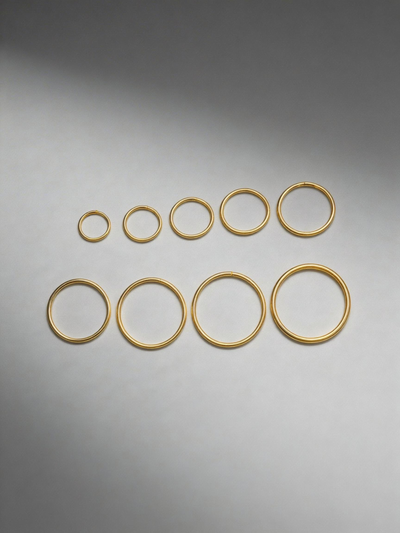
14K solid gold, nickel-free alloy. Eliminates material-related bumps. 16G & 18G, 8-12mm.
Shop bump-free rings ->Recovery timeline
Day 1–3
No visible change yet
The bump looks the same or may even appear slightly more prominent as the tissue adjusts to the new jewellery (if swapped). Do not panic. The healing process has begun internally even if you cannot see it yet.
Day 4–7
First signs of improvement
The bump may feel less tender. Redness begins to reduce. The bump may look slightly flatter or softer. Discharge starts to normalise (clear lymph fluid rather than cloudy).
Week 2–3
Noticeable reduction
The bump is visibly smaller. It may alternate between looking better and looking slightly worse day to day — this is normal. The overall trend should be downward. Continue saline, continue not touching it.
Week 3–4
Mostly resolved
Most irritation bumps are flat or nearly flat by this point. A slight discolouration or textural difference may remain where the bump was. This fades over the following weeks as the skin fully normalises.
Week 4–8
Stubborn bumps
If the bump persists beyond 4 weeks despite consistent treatment, revisit the causes. Is there a hidden irritation source you missed? Is the ring catching on something? Is the gauge or diameter incorrect? See your piercer for an in-person assessment. If the bump persists beyond 8 weeks, see a dermatologist to rule out a keloid.
Why material is the key
Material-related bumps are the most frustrating because they do not respond to improved aftercare alone. You can stop touching the piercing, you can use perfect saline technique, you can do everything right — and the bump will persist as long as nickel or corroding metal sits in the wound.
This is because the bump is not caused by bacteria or mechanical irritation in this case. It is caused by a chemical reaction between the metal and your tissue. Nickel ions leach from the jewellery into the surrounding cells, triggering a localised immune response. The body builds granulation tissue to wall off the irritant. As long as the nickel source remains, the body keeps building.
| Material | Nickel | Bump risk |
|---|
| 14K solid gold SAFEST | None (nickel-free alloy) | Near zero |
| Implant-grade titanium | None (ASTM F-136) | Near zero |
| Niobium | None | Near zero |
| “Surgical steel” | 10–14% | High — primary cause of material bumps |
| Gold-plated | In base metal | High once plating wears |
| Sterling silver | Trace, plus oxidises | Moderate — oxidation causes irritation |
Switching from surgical steel or gold-plated to 14K solid gold or titanium typically produces visible improvement within 3–5 days. The nickel source is removed, the immune response calms, and the body begins reabsorbing the excess tissue. For the full material comparison, see our gold-plated vs solid gold guide.
How to prevent bumps
Start with the right material. Choose implant-grade titanium or 14K solid gold as your initial jewellery. This eliminates the most persistent cause of bumps before it begins. Discuss material options with your piercer before the procedure. See our septum jewellery guide for all safe material options.
Do not touch the piercing. Develop the habit early. The only time your hands should go near the piercing is during cleaning, with freshly washed hands. No fiddling, no twisting, no flipping during the healing period. Once healed, handle the jewellery with clean hands only.
Sterile saline only. No alcohol, no peroxide, no tea tree, no homemade saltwater, no soap directly on the piercing. Sterile saline spray and clean running water from the shower are all you need.
Get the right size. A ring that fits properly does not press, pull, or move excessively. Have your piercer help you choose the correct diameter and gauge for your anatomy. For septum sizing, see our septum ring size guide. For gauge selection, see our 14G vs 16G gauge guide.
Choose a skilled piercer. Correct placement through the “sweet spot” (the thin membrane of soft tissue, not the cartilage) heals faster and with fewer complications. A piercing through cartilage is more prone to bumps, slower healing, and greater discomfort. See our septum pain guide for what to expect from a professional piercing.
When to actually worry
Most bumps are cosmetic annoyances, not medical emergencies. However, see a professional if:
The bump does not improve after 4–6 weeks of consistent treatment (no touching, safe material, saline only). This may indicate a keloid, a sizing issue, or an underlying problem your piercer should assess in person.
The bump is growing larger over time rather than staying the same size or shrinking. Irritation bumps plateau and then shrink once the cause is removed. A bump that continues to grow may be a keloid or hypertrophic scar that requires dermatological treatment.
The bump is accompanied by infection signs: thick green or white pus, spreading redness, increasing pain, warmth, fever, or feeling unwell. This is no longer an irritation bump — see our infected septum piercing guide for next steps, and consult a doctor.
Keloids run in your family. If close family members (parents, siblings) have developed keloids from injuries, piercings, or surgery, your bump may be a keloid. See a dermatologist for assessment — treatment options include corticosteroid injections, silicone sheeting, and in some cases surgical excision.
Frequently asked questions
Will tea tree oil fix my septum bump?
No. Tea tree oil is one of the most widely recommended “treatments” on the internet and one of the least effective. It is a volatile essential oil that causes chemical irritation on wound tissue, can trigger allergic reactions, and is not sterile. Applying tea tree oil to a piercing bump frequently makes the bump worse by adding chemical irritation on top of the existing problem. Professional piercers and dermatologists consistently recommend against it. Use sterile saline only.
Is my bump a keloid?
Almost certainly not. True keloids are genetically determined — they run in families and are most common in people of African, Asian and Hispanic descent. A keloid grows beyond the boundaries of the original wound, is hard and rubbery to the touch, shiny on the surface, and does not resolve on its own. An irritation bump stays at or near the piercing hole, is soft, and resolves when the irritation source is removed. If you are unsure, see a dermatologist for a definitive diagnosis.
Can I pop the bump?
No. An irritation bump is not a spot or a blister. It is excess healing tissue, not a pocket of fluid. Squeezing it causes physical trauma to the already-irritated tissue, breaks the skin surface (introducing bacteria), and makes the bump larger and angrier. The only treatment is removing the irritation cause and giving the body time to reabsorb the tissue naturally.
I changed my jewellery and the bump appeared — why?
Two possibilities. First, the new jewellery contains nickel or another irritant that the old jewellery did not. Check the material. Second, the act of changing the jewellery physically irritated the still-healing piercing channel. Every jewellery swap moves metal through the wound, which can trigger a bump even if the new material is safe. If the bump appeared after a material change, give it 2 weeks with saline care. If it does not improve, the new material may be the issue.
Will the bump leave a scar?
Irritation bumps that are treated by removing the cause typically leave no scar. The granulation tissue is reabsorbed by the body and the skin returns to its normal appearance. There may be a slight textural change or discolouration for a few weeks after the bump flattens, but this fades. Bumps that are squeezed, picked, or treated with harsh chemicals are more likely to leave minor scarring because of the additional tissue damage.
My bump keeps coming back — what do I do?
A recurring bump means the cause has not been fully addressed. The most common pattern: the bump shrinks when you leave it alone, then returns when you start touching it again. If you are certain you are not touching it, check: is the ring catching on something (pillowcase, towel, face mask)? Is the material safe? Is the diameter correct for your anatomy? A bump that repeatedly recurs deserves an in-person assessment from your piercer. They can identify issues that are not obvious from self-examination.
←
Septum Piercing Healing: Your Complete Timeline
Week-by-week healing, aftercare, and when to change jewellery
S
Stepoy
Piercing Jewellery Specialists
We craft handmade 14K solid gold piercing jewellery and publish in-depth guides to help you make informed decisions about your piercings.