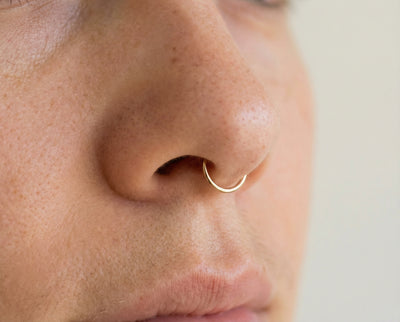
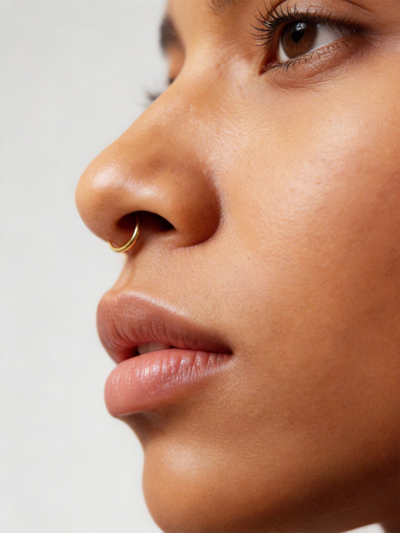
New 14ct Solid Gold Piercing Hoop


Septum Piercing Pain: What to Expect (1–10 Scale)
- Most people rate septum piercing pain at 3–5 out of 10 — a sharp pinch followed by strong pressure, lasting 1–2 seconds
- The septum “sweet spot” is soft tissue, not cartilage — so it hurts less than cartilage piercings like helix, conch or rook
- Your eyes will almost certainly water — this is a reflex, not a pain response, and happens to virtually everyone
- Soreness fades within hours. Most people feel normal by the next day.
- A skilled piercer who finds the sweet spot correctly makes the single biggest difference in pain level
- Jewellery material does not affect piercing pain — but it significantly affects healing comfort
Pain rating: 3–5 out of 10
The septum piercing has a reputation for being painful, but the reality is much more manageable than most people expect. The needle passes through the “sweet spot” — a thin membrane of soft tissue between the bottom of the nasal cartilage and the tip of the nose. This is not cartilage, which is why it hurts significantly less than ear cartilage piercings.
The actual sensation lasts 1–2 seconds. Most people describe it as a sharp pinch combined with strong pressure and a warm, stinging sensation that radiates across the nose. Then it fades rapidly. The jewellery insertion adds another second or two of discomfort as the ring is guided through the fresh channel.
What happens during the piercing
Before the needle: Your piercer will examine the inside of your nose, feel for the sweet spot, and mark the entry and exit points. They will use a clamp or freehand technique to stabilise the tissue. You may feel pressure from the clamp, but it should not hurt.
The needle (1–2 seconds): A sharp pinch as the needle enters the sweet spot, followed by strong pressure as it passes through. This is the peak of the pain and it is over in a breath. Some people feel a pop as the needle exits the other side.
Jewellery insertion (2–3 seconds): The piercer follows the needle with your jewellery — usually a horseshoe or seamless ring. This adds a brief pulling and pressure sensation. The tissue is still numb from adrenaline at this point, so most people find the jewellery insertion less painful than the needle.
Immediately after: Your eyes will water. This is not crying — it is an involuntary reflex triggered by the nasal nerves. It happens to nearly everyone, regardless of pain tolerance. You may also sneeze. Both reactions pass within a minute.
Pain timeline after piercing
How it compares to other piercings
| Piercing | Pain (1–10) | Tissue type | Notes |
|---|---|---|---|
| Earlobe | 1–2 | Soft tissue | The baseline. Minimal pain. |
| Nostril | 3–4 | Cartilage + skin | Sharp pinch. Eyes water. |
| Septum | 3–5 | Soft tissue (sweet spot) | Strong pressure + pinch. Eyes water heavily. |
| Helix | 4–5 | Ear cartilage | Crunch sensation through cartilage. |
| Tragus | 4–6 | Thick ear cartilage | Similar crunch, thicker tissue. |
| Conch | 5–7 | Thick ear cartilage | Dense cartilage. Longer needle pass. |
| Daith | 5–7 | Deep ear cartilage | Awkward angle. Strong pressure. |
| Rook | 6–8 | Thick cartilage fold | One of the most painful ear piercings. |
The septum consistently rates lower than ear cartilage piercings because the sweet spot is soft tissue. The pain is more intense than a standard lobe piercing, but shorter in duration and faster to recover from than any cartilage piercing.
What affects pain level
Piercer skill (biggest factor)
A skilled piercer finds the sweet spot accurately, uses a single confident pass, and completes the procedure in seconds. A less experienced piercer may miss the sweet spot and go through cartilage instead, which is significantly more painful. Choose your piercer based on septum-specific experience. Ask to see healed septum work in their portfolio.
Sweet spot anatomy
Everyone’s sweet spot is slightly different in size and position. Some people have a thin, easy-to-find sweet spot that barely hurts. Others have a thicker or higher sweet spot that requires the needle to pass through slightly more tissue. You cannot control this — but a good piercer will adapt their technique to your anatomy.
Stress and tension
If you are tense, anxious or holding your breath, your pain perception increases. Breathing slowly and deeply during the procedure genuinely reduces how much it hurts. Your piercer will likely coach you on breathing — follow their instructions.
Time of day and general health
Avoid getting pierced when tired, hungry, ill, hungover, or on your period (if applicable). All of these lower your pain threshold. Book your appointment for a time when you are well-rested, fed, and hydrated.
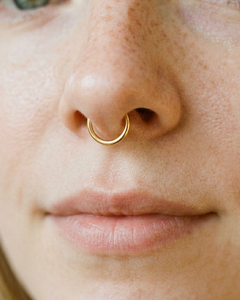
Does jewellery affect pain?
During the piercing: No. The needle does the piercing, not the jewellery. Whether your initial ring is titanium or 14K gold does not change the pain of the needle pass. Both materials slide through the fresh channel with equal ease.
During healing: Yes, indirectly. Poor-quality metals (surgical steel, plated jewellery) cause irritation, swelling and prolonged tenderness. Quality materials (implant-grade titanium, 14K solid gold) sit quietly in the piercing without provoking a reaction. The material does not change the initial pain, but it significantly affects how comfortable the healing weeks feel.
After healing: A well-fitted ring in the correct size and gauge should cause zero discomfort. If your healed septum ring hurts, it is the wrong size (too small, pinching the tissue) or the wrong material (causing a reaction). See our septum size guide or jewellery guide to troubleshoot.
How to reduce the pain
Choose an experienced piercer. This is the single most effective thing you can do. A skilled, confident piercer with a fast, accurate technique makes a 3/10 experience out of what could be a 6/10 with a less experienced practitioner.
Breathe deeply. Your piercer will typically ask you to take a deep breath in and pierce on the exhale. This is not ritual — it genuinely relaxes the body and lowers pain perception.
Eat a proper meal 1–2 hours before. Low blood sugar increases pain sensitivity and raises the risk of feeling faint. A solid meal stabilises your blood sugar and keeps you calm.
Stay hydrated. Dehydration makes tissue tighter and more sensitive. Drink water throughout the day before your appointment.
Do not take blood thinners. Avoid aspirin, ibuprofen and alcohol for 24 hours before the piercing. These thin the blood and increase bleeding, which can make the experience messier and more uncomfortable. Paracetamol is fine if you want a mild analgesic beforehand.