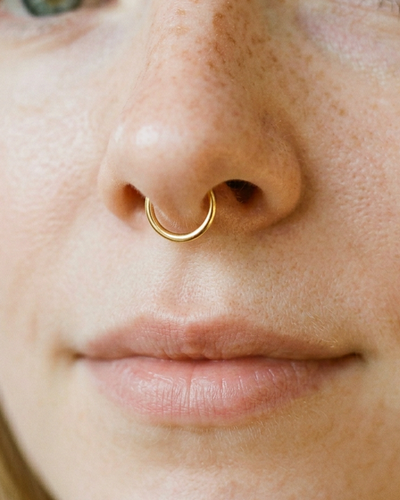
New 14ct Solid Gold Piercing Hoop


Septum Ring Size Guide: 8mm, 9mm, 10mm & How to Measure
- Septum ring size is measured by inner diameter — the distance across the inside of the ring in millimetres
- 8mm is the most popular septum size — sits snugly at the tip of the nose with minimal visibility from the front
- 10mm is the classic look — visible below the nose, the quintessential septum ring appearance
- Septum gauge is typically 16G (1.2mm) or 14G (1.6mm) — thicker than nostril piercings
- Your piercing placement inside the septum (the “sweet spot”) determines which diameters will fit
- A ring that is too small will press into the septum and cause pain — always err slightly larger if unsure
How septum rings are measured
Septum rings are measured by two numbers: inner diameter and gauge. These are independent measurements that describe different things.
Inner diameter is the distance across the inside of the ring from one inner edge to the opposite inner edge. When a septum ring says “10mm”, that means 10mm across the inside opening. This controls how far the ring hangs below the nose and how visible it is from the front.
Gauge is the thickness of the wire that passes through the piercing. Septum piercings are typically thicker than nostril piercings. The standard septum gauge is 16G (1.2mm) or 14G (1.6mm). Some people wear 18G (1.0mm) for a thinner, more delicate septum ring.
8mm vs 9mm vs 10mm
The three most common septum ring diameters are 8mm, 9mm and 10mm. Each creates a distinctly different look:
| Diameter | Fit | Visibility | Best for |
|---|---|---|---|
| 8mm MOST POPULAR | Snug | Minimal — barely peeks below the nose | Subtle, everyday look. Easy to hide by flipping up. Slim noses. |
| 9mm | Medium | Visible — small arc below the nose | The middle ground. Noticeable but not bold. Most nose shapes. |
| 10mm | Relaxed | Clearly visible — classic septum look | Statement piece. Traditional septum aesthetic. Wider noses. |
| 12mm | Loose | Prominent — hangs lower on the lip | Bold statement. Stretched septums. Larger face proportions. |
8mm — the subtle choice
8mm is the most commonly purchased septum ring size. It sits tightly within the tip of the nose, with the bottom of the ring just barely visible below the nostrils when viewed from the front. Many people choose 8mm specifically because it is easy to hide — a quick flip upward tucks the ring completely inside the nose. This makes it ideal for workplaces or situations where discretion matters.
If you have a slimmer nose or your piercing was placed in the upper part of the sweet spot, 8mm may fit closely without any visible drop below the nose at all.
9mm — the balanced choice
9mm offers a small but clearly visible arc below the nose. It is the size most people picture when they imagine a subtle septum ring — present but not dominant. The ring is visible in conversation and in photographs, but it does not draw attention away from the rest of your face.
9mm works well for average nose widths and standard piercing placements. It can still be flipped up to hide, though it may feel slightly tighter inside the nose compared to an 8mm flip.
10mm — the classic look
10mm is the quintessential septum ring size. It hangs visibly below the nose and creates the look that most people associate with septum piercings. If you want your piercing to be a deliberate feature of your face, 10mm delivers that with confidence.
10mm is the better choice for wider noses, lower piercing placements, and anyone who prefers a more traditional or bold aesthetic. It can be flipped up, but it takes more effort and may not sit as comfortably inside the nose as an 8mm ring.
How to measure at home
Measuring a septum is slightly trickier than measuring a nostril because the piercing is inside the nose. Here are two reliable methods:
Method 1: Measure your current ring
If you already have a septum ring that fits well, remove it and measure the inner diameter — from inside edge to inside edge at the widest point. Use a ruler with millimetre markings or digital callipers. This is the most accurate method because you already know this size works for your anatomy.
Method 2: Measure with a piece of paper
Septum gauge guide
Septum piercings use thicker gauges than nostril piercings. Here is what each gauge means for your septum:
| Gauge | Thickness | Notes |
|---|---|---|
| 18G (1.0mm) | Thinnest option | Dainty septum look. Not standard — only works if your piercing was done at 18G or has shrunk from 16G. Creates a very fine, delicate ring. |
| 16G (1.2mm) STANDARD | Standard septum gauge | What most piercers use for septum piercings worldwide. The vast majority of septum jewellery is made in 16G. Start here if you do not know your gauge. |
| 14G (1.6mm) | Thicker option | Used by some piercers for initial piercings, or chosen by people who want a chunkier ring. Common for stretched septums. |
If you were pierced at a professional studio and do not know your gauge: 16G is the safest assumption. It is the global standard for septum piercings. You can wear 18G jewellery in a 16G piercing (thinner wire in a wider hole), but you cannot wear 16G in an 18G piercing without stretching.
Septum ring styles
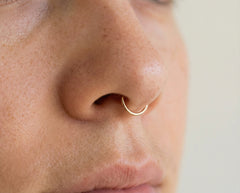
Unlike nostril piercings which are dominated by seamless hoops, septum piercings accommodate several ring styles. Each has a different closure mechanism and aesthetic:
Seamless ring
The same continuous hoop used in nostrils. Opens by twisting the ends apart. Creates the most minimal look — a clean, uninterrupted circle below the nose. In 14K gold, this is the most refined septum option. Sizes typically 8–12mm.
Segment ring / Hinged clicker
A ring with a hinged segment that clicks open and shut. Much easier to insert and remove than a seamless ring. The hinge is hidden at the top of the ring, inside the nose, so it is invisible when worn. This is the most popular septum style for people who change jewellery frequently.
Captive bead ring (CBR)
A ring with a removable bead held in place by tension. The bead sits at the bottom of the ring, visible below the nose. A traditional look that has been popular since septum piercings entered mainstream fashion. Slightly harder to open and close at home.
Circular barbell (horseshoe)
A U-shaped bar with a ball on each end. The balls sit below the nose and are the only visible parts from the front. Extremely popular because the ring can be flipped up inside the nose to hide the piercing completely — the balls sit inside the nostrils and are invisible. This is the standard initial jewellery for many septum piercings.
How placement affects sizing
The “sweet spot” for a septum piercing is the thin membrane of skin at the front of the nasal septum, between the cartilage and the bottom of the nose. Exactly where in this zone your piercer placed the hole determines which ring sizes will fit:
Higher placement (further up inside the nose): the ring needs a larger diameter to reach below the nose and become visible. An 8mm ring on a high placement may sit entirely inside the nose. You may need 10mm or larger.
Lower placement (closer to the tip of the nose): the ring does not need to travel as far to hang below the nose. An 8mm ring on a low placement will already show a visible arc. You may find that even 8mm hangs further than expected.
Nose width matters too. A wider nose means the ring needs to travel further from one side of the piercing to the other. This can make a ring feel tighter than expected. If you have a wider nose, consider sizing up by 1mm from the size you think you need.
Flipping up: which sizes hide best
One of the biggest advantages of a septum piercing is the ability to hide it by flipping the ring upward inside the nose. But not all sizes flip equally well:
8mm flips up easily and sits comfortably inside most noses. This is the ideal size for people who need to hide their piercing regularly for work or family situations.
9–10mm can be flipped but may feel snug inside the nose, especially in slimmer nostrils. It works, but you will feel the ring pressing against the inside of your nose.
12mm+ is difficult to flip in most people and may poke out or cause discomfort when hidden. If hiding your piercing is important, 12mm is not the size for you.
Common mistakes
Ordering too small. A septum ring that pinches the tissue inside your nose is painful and will cause irritation bumps. Unlike nostril rings where smaller tends to look better, septum rings need breathing room. When in doubt, size up.
Confusing outer diameter with inner diameter. Some jewellery listings show outer diameter (the total measurement including the wire thickness). This will be 1–2mm larger than the inner diameter depending on gauge. Always confirm you are looking at inner diameter before purchasing.
Using nostril gauge for septum. Nostril piercings are typically 20G. Septum piercings are typically 16G. Putting a 20G ring in a 16G septum piercing will work physically, but the ring will look very thin and may move around excessively in the larger hole.
Switching too early. Septum piercings take 6–8 weeks for initial healing and 3–6 months for full maturity. Wait until the piercing is completely settled before changing jewellery. Your piercer can confirm readiness.