Rook Piercing and Headphones: What to Expect
- Avoid all headphones on the pierced ear for the first 4–6 weeks — no exceptions, not even "just for one call"
- Over-ear headphones compress the rook from outside. In-ear earbuds push against it from inside. Both cause bumps during healing.
- Bone-conduction headphones sit in front of the ear and bypass the rook entirely — the safest option at every stage
- After full healing (9–12 months), most people can use headphones normally — but switch to a low-profile curved barbell first
- A bump that appears after starting headphone use is almost always caused by the headphones — stop for two weeks and it will usually resolve
- Jewellery choice matters: a curved barbell sits flatter than a hoop and causes fewer headphone conflicts
Why the rook and headphones clash
The rook sits in the worst possible location for headphones. Unlike a lobe piercing (safely below the ear canal) or a helix piercing (on the outer rim, often untouched by earbuds), the rook occupies the upper inner ear bowl — the exact zone where headphone design directs pressure.
Over-ear headphones clamp against the ear and flatten the entire bowl inward. The ear cup pushes the anti-helix wall towards the rook fold, compressing the piercing from outside. Even loose-fitting cups create sustained contact over the 30–90 minutes of a commute or work session.
In-ear earbuds sit inside the ear canal and push outward as their tips seal against the ear walls. That outward force presses directly upward into the rook fold from below, nudging the curved barbell post with every jaw movement, yawn or head turn.
Both directions of pressure cause the same problem: the jewellery shifts inside the piercing channel, creating micro-trauma that triggers irritation bumps. On a healing rook, these bumps can appear within 48 hours of a single headphone session. On a healed rook, the effects are slower but still real.
The timeline — what is safe at each stage
There is no single answer to "can I wear headphones with a rook piercing?" It depends entirely on where you are in the healing process. Here is the practical breakdown:
Weeks 0–6: no headphones on the pierced ear
This is the initial healing phase. The piercing channel is an open wound running through thick cartilage. Any external pressure on the rook — even five minutes of an earbud — shifts the curved barbell inside the channel and introduces bacteria from the headphone surface. During this period, use the opposite ear only (one-ear mode) or use a speaker.
Weeks 6–12: cautious, short sessions
If the piercing shows zero soreness and zero crust, you can test headphones in short bursts — 10–15 minutes maximum. Use the headphone type that causes the least contact (see the comparison table below). If any soreness appears within 24 hours of a test, stop and wait another month. Do not assume that "it felt fine during" means it is fine — irritation shows up the next day.
Months 3–9: gradual increase
Many people can start wearing headphones for 30–60 minutes at a time in this window, depending on jewellery type and headphone type. The key rule: if you get a bump, stop for two weeks, let it resolve, and when you restart, switch to a less-pressuring headphone type. This phase is trial and error.
Months 9–12+: fully healed
Once your piercer confirms the rook is fully healed, most headphone types are fine for normal-length sessions. Some people still get mild soreness after very long sessions (3+ hours of gaming headsets, for example). If this happens, switching to a low-profile curved barbell or a smaller hoop usually resolves it.
Headphone types compared
Not all headphones are equally problematic. Some types avoid the rook entirely. Others press directly on it. Here is how they compare, from safest to riskiest for a rook piercing.
| Type | Contact with rook | During healing | After healing |
|---|---|---|---|
| Bone conduction SAFEST | None — sits on cheekbone in front of the ear | Safe from day 1 | Safe always |
| Open-ear / clip-on | Minimal — hooks over the helix rim, speaker floats near canal | Usually safe after week 2 | Safe |
| Over-ear (large cups) | Moderate — cup encloses the whole ear, may or may not press the rook depending on ear size and cup depth | Avoid first 6 weeks. Test cautiously after. | Usually fine. Soreness after 3+ hrs = switch jewellery style. |
| On-ear (small pads) | High — pad presses directly on outer ear, compresses bowl onto rook | Avoid entirely until healed | Often still uncomfortable. Consider switching type. |
| In-ear (earbuds, AirPods-style) | High — tip pushes outward from canal into rook area | Avoid first 6 weeks. Short sessions after month 2. | Fine for most. Some anatomies feel pressure from certain bud shapes. |
| In-ear (silicone tip, AirPods Pro-style) | Moderate to high — sealed silicone creates outward pressure and suction effect | Avoid first 6–8 weeks | Fine for most. Size the tip down if it pushes against the rook. |
Bone-conduction headphones — the rook-safe option
Bone-conduction headphones sit on the cheekbone in front of the ear and transmit sound through the skull, bypassing the ear canal and the entire inner ear bowl. They never touch the rook. They never compress the ear. They work from day one after piercing.
The tradeoff: bone conduction has weaker bass, lower maximum volume, and leaks sound to people nearby. For office calls, commuting podcasts and casual listening, they work well. For serious music listening or noisy environments where you need isolation, they fall short. But if you need headphones during the first 6 weeks of rook healing and cannot use speaker mode, bone conduction is the only responsible option.
Popular bone-conduction models available in the UK include the Shokz OpenRun series, which wrap behind the head and rest lightly on the cheekbones. They are not cheap, but many rook piercing owners consider them a necessary healing accessory.
AirPods and earbuds — the specifics
AirPods and similar earbuds are the most commonly asked-about headphone type for rook piercings, because they are the ones most people own and use daily. Here is the honest breakdown.
Standard AirPods (hard plastic, no tip)
These rest loosely in the ear canal opening and do not create a seal. On some ear anatomies, they sit low enough to avoid the rook entirely. On others, the top edge of the AirPod presses upward into the anti-helix ridge, which in turn pushes against the rook fold. There is no universal answer — it depends on your ear shape. After healing, try one short session and check for soreness the next day.
AirPods Pro (silicone tips)
These seal inside the ear canal with a silicone tip and create a mild suction effect. That seal pushes the whole earbud outward slightly, which can press the body of the AirPod into the rook area. Additionally, the active noise cancellation uses microphones that create a subtle internal pressure some people feel around the rook fold. If the default medium tip is too snug, switching to the small tip reduces the outward force.
Samsung Galaxy Buds, Sony WF series and similar
Each brand has a slightly different shape and sits differently in the ear. The same principle applies: any earbud that pushes outward or upward from the canal will interact with the rook. Ear wings or stabiliser fins are particularly risky because they hook into the anti-helix — exactly where the rook sits. If your earbuds have removable wings, take them off.
Over-ear headphones — cup depth matters
Over-ear headphones enclose the entire ear inside a padded cup. Whether they press on the rook depends on two factors: the depth of the cup and the size of your ear.
Deep cups (Sony WH-1000XM series, Bose QC, Sennheiser HD series): These have large, deep oval cups that create a cavity around the ear. For most ear sizes, the rook does not touch the inner wall of the cup. These are the safest over-ear option for rook piercings. If you need over-ear headphones during healing, deep-cup models are the ones to test first.
Shallow cups (Beats Solo, many budget brands): These have smaller, shallower pads that sit partly on the ear rather than around it. The pad compresses the top of the ear inward, pushing the anti-helix against the rook. On a healing rook, this is enough to trigger a bump. Even on a healed rook, long sessions with shallow cups can cause soreness.
Clamping force: Tight-clamping headphones squeeze the whole ear tighter, increasing pressure on the rook. If your over-ear headphones leave a red mark on the top of your ear after removal, they are too tight. Stretching the headband gently (or using a wider-band model) reduces clamping force.
The right jewellery for headphone users
Jewellery choice directly affects how much headphones interact with the rook. If you use headphones daily, the shape and size of your rook jewellery matters as much as the headphone type.
Curved barbell: least interference
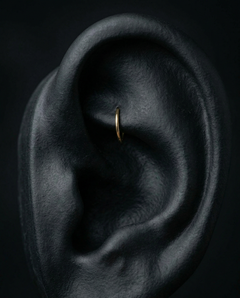
A curved barbell sits close to the cartilage fold with only two small balls visible. The profile is low and the balls do not protrude far from the ear surface. This is the best jewellery for daily headphone users. The balls may still touch an earbud or over-ear pad, but the contact is brief and mild compared to a ring.
Small clicker or seamless ring: moderate interference
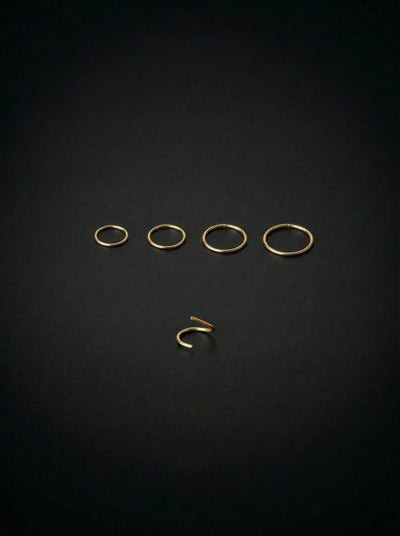
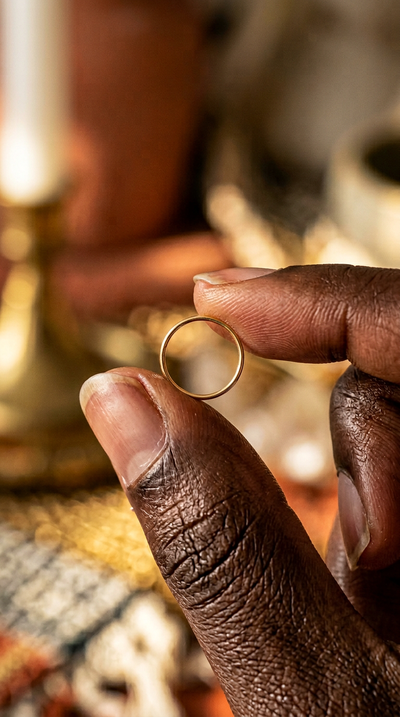
A 5mm or 6mm hoop wraps around the rook fold and creates a small loop that protrudes slightly further into the ear bowl than a barbell. Earbuds and over-ear cups can catch or press on this loop. If you wear a hoop and use headphones, you may need to gently position the headphone around the ring each time, which adds friction to a daily routine. See our rook hoop size guide for sizing.
Large ring or ornate jewellery: high interference
A 7mm hoop, a clicker with gemstone settings, or any decorative rook jewellery extends further into the ear bowl and is almost guaranteed to interact with headphones. If you use headphones for more than an hour daily, save statement pieces for evenings and weekends and wear a simple curved barbell during the work day.
Headphones at the gym
Working out adds sweat, movement and extended wear time to the headphone equation. For rook piercings specifically:
During healing (first 9–12 months): Bone conduction for the gym. No earbuds, no over-ear. Sweat is salty and irritating to a healing piercing, and headphones trap that sweat against the rook for the entire workout. Even if headphones are comfortable on the pierced ear by month 4, working out in them re-introduces moisture and pressure that a calm office session would not.
After healing: Earbuds are usually fine. Wipe the piercing and the earbuds with a clean cloth after every workout. Sweat that dries inside the ear bowl crusts around the jewellery and acts as a long-term irritant. A 10-second wipe post-workout prevents most gym-related rook issues.
Headphones for work calls
Work calls are the hardest headphone scenario for rook piercings because they are non-negotiable. You cannot tell a client to hold on while you switch ears. Here are practical workarounds for each healing stage:
Weeks 0–6
Use the unpierced ear only. Most Bluetooth earbuds have a single-ear mode — on AirPods, put only one in. On over-ear headphones, wear them off-centre so the pierced ear sits in front of or behind the cup. Alternatively, use speaker mode or a desk microphone when privacy allows.
Weeks 6–12
Bone conduction is the cleanest solution. If you need noise isolation for focus, a single over-ear cup on the unpierced ear combined with a boom mic gives reasonable call quality without touching the rook.
Month 3+
Most people can start using their normal headphones on both ears. Keep calls under 60 minutes on the pierced ear if possible. For back-to-back calls, alternate ears or switch to speaker between calls to give the rook a break.
Signs your headphones are causing problems
Headphone-related rook issues are easy to diagnose if you know what to look for. All of these symptoms appear 12–48 hours after a headphone session, not during it:
A bump at the front or back hole. The classic irritation bump, caused by pressure shifting the jewellery. Stop headphone use on that ear for two weeks, soak with saline twice daily, and the bump should begin shrinking. See our full rook piercing bump guide.
Redness around the piercing that was not there before. Mild pink flushing after headphone removal is friction and fades in an hour. Redness that appears the next morning and persists is irritation. Reduce headphone time or switch types.
The barbell feels tighter or sits at a different angle. Sustained pressure can push the jewellery to one side of the channel. If the curved barbell looks crooked after a headphone session and does not straighten on its own within a day, a piercer should check it.
Soreness when you touch the rook that was not there the day before. New tenderness on a previously comfortable rook is almost always caused by a recent pressure event. Think back 24–48 hours: headphones, phone calls held against the ear, sleeping on that side.