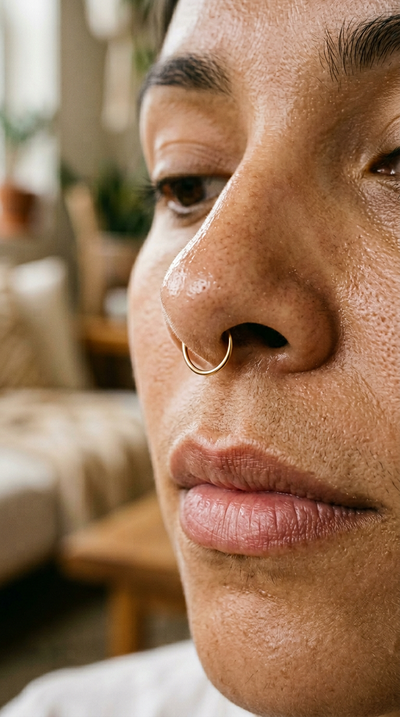
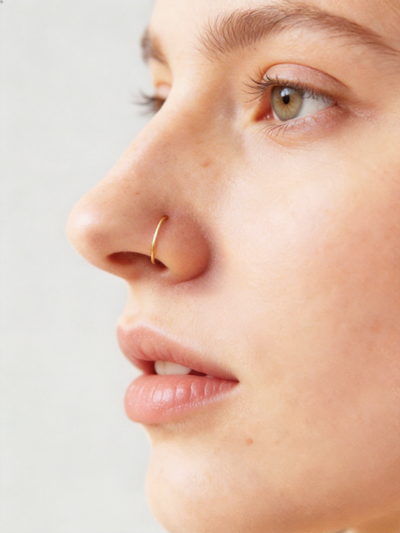
New 14ct Solid Gold Piercing Hoop


Nose Piercing Keloid: Prevention & Treatment
- True keloids are rare — most nose piercing bumps are irritation bumps, not keloids
- Keloids are a genetic condition: your body overproduces scar tissue at wound sites
- Key difference: irritation bumps shrink when the cause is removed; keloids keep growing
- People with darker skin tones and those with keloid history are at higher risk
- Prevention is easier than treatment — quality jewellery and proper aftercare reduce risk
What is a keloid?
A keloid is an overgrowth of scar tissue that extends beyond the original wound boundaries. Unlike normal scars that stay within the wound area and flatten over time, keloids grow outward, forming raised, firm, often rubbery-textured tissue. They can continue growing for months or years after the initial wound has healed.
Keloids are not caused by poor aftercare or bad jewellery — they are a genetic predisposition. Some people's bodies are programmed to overproduce collagen at wound sites. If you are prone to keloids, any wound (including a piercing) can trigger one.
Keloid vs irritation bump
| Irritation Bump | Keloid | |
|---|---|---|
| Cause | Physical/chemical irritation | Genetic predisposition |
| Appearance | Small, fluid-filled, skin-coloured | Firm, rubbery, raised, may be darker |
| Size | Small, localised | Can grow beyond wound site |
| Response to care | Shrinks when cause removed | Continues growing regardless |
| Timeline | Appears and resolves in weeks | Develops over months, persists |
| Treatment | Remove irritant + saline | Medical intervention needed |
| Commonality | Very common (most bumps) | Rare (genetic, 10-15% of population) |
Who is at risk?
Genetic factors: keloid tendency runs in families. If parents or siblings develop keloids, your risk is higher.
Skin tone: people with darker skin tones (African, Asian, Hispanic descent) have higher keloid rates. This does not mean everyone with darker skin will develop keloids — it means the statistical risk is elevated.
Age: keloids are more common between ages 10-30. Risk decreases with age.
Previous keloids: if you have developed a keloid from any wound before, the risk of developing one from a piercing is significant. Consult a dermatologist before getting pierced.
Prevention
Know your history. If you are keloid-prone, discuss with a dermatologist before piercing.
Quality jewellery. 14K gold or titanium reduces irritation that can trigger excessive scarring.
Proper aftercare. Minimise wound trauma through strict saline care and not touching.
Avoid re-piercing. If a previous piercing developed a keloid, re-piercing the same area will likely trigger another one.
Treatment options
Corticosteroid injections: the most common medical treatment. A dermatologist injects steroids directly into the keloid to shrink it. Multiple sessions are typically needed.
Silicone sheets/gel: medical-grade silicone applied over the keloid can flatten it over weeks to months. Available over the counter.
Cryotherapy: freezing the keloid tissue. Can reduce size but may affect skin pigmentation.
Surgical removal: last resort. Keloids have a high recurrence rate after surgery (up to 50-80%), so surgery is usually combined with steroid injections or radiation therapy to prevent regrowth.
Laser therapy: can reduce redness and flatten keloids. Often used in combination with other treatments.