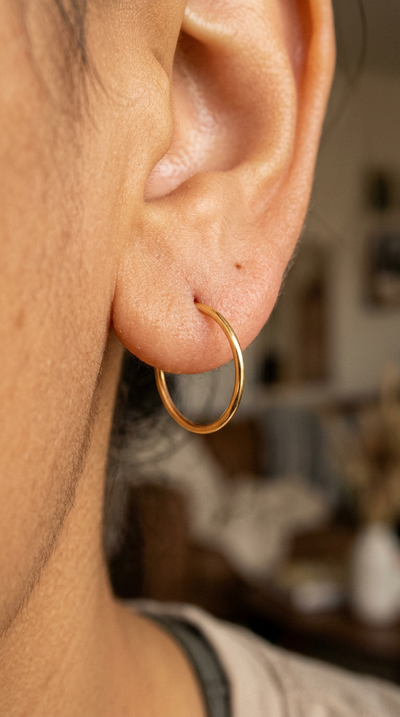
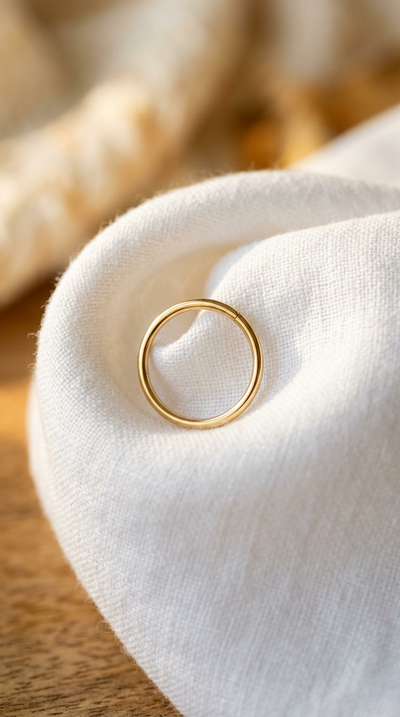
New 14ct Solid Gold Piercing Hoop
18G vs 20G vs 22G Earring: Gauge Guide for Lobe Piercings
- Lobe piercings are typically 20G (0.8mm) or 18G (1.0mm) — thinner than cartilage piercings
- 20G is the sweet spot for lobes — fine enough for a delicate look, strong enough for daily wear in 14K gold
- Fashion earrings have no standard gauge — post thickness varies wildly between brands, which is why some earrings fit and others do not
- A 22G earring will fit a 20G hole easily but will feel loose. An 18G earring will not fit a 20G hole without stretching.
- Gun-pierced lobes are usually 20G. Needle-pierced lobes are 20G or 18G depending on the piercer.
- If an earring will not go through your lobe, the post is too thick — do not force it
What gauge means for lobe earrings
Gauge is the thickness of the earring post — the metal pin that passes through the piercing hole. It is measured using the American Wire Gauge system, where higher numbers mean thinner wire. This is the opposite of what you would expect, and it confuses everyone the first time.
| Gauge | Millimetres | Typical use |
|---|---|---|
| 16G | 1.2mm | Cartilage piercings (rook, tragus, daith, conch). Too thick for most lobe holes. |
| 18G | 1.0mm | Helix, nostril, some lobes. Common for needle-pierced lobes. |
| 20G LOBE STANDARD | 0.8mm | Standard lobe gauge. Gun piercings, most piercing jewellery brands. |
| 22G | 0.6mm | Extra-fine. Nose studs, some dainty lobe earrings. Very thin wire. |
| 24G | 0.5mm | Ultra-thin fashion earring pins. Often too thin to sit securely in a lobe hole. |
For lobes specifically, the practical range is 18G to 22G. Anything thicker than 18G will not fit a standard lobe hole. Anything thinner than 22G is too flimsy for regular wear — the post bends, wobbles in the hole, and provides no structural support for the earring front.
What gauge is your lobe?
Most people do not know their lobe gauge because they were never told. Here is how to figure it out based on how you were pierced.
Gun-pierced (Claire’s, pharmacy, high street)
Gun-piercing studs are almost always 20G (0.8mm). The standard gun cartridge uses a 20G post with a butterfly back. If you were pierced at a high-street shop, your lobe is 20G unless you have stretched it since.
Needle-pierced (professional studio)
Piercers typically use 20G or 18G for lobes. The choice depends on the piercer’s preference and the jewellery brand they stock. If you are unsure, ask your piercer — they will have a record. As a general rule: if the initial stud felt very thin and delicate, it was probably 20G. If it felt slightly more substantial, it was probably 18G.
Old or stretched lobes
If your lobe piercing is decades old and has been worn with various earrings over the years, the hole may have stretched slightly beyond its original gauge. Many long-established lobes comfortably accept both 20G and 18G earrings. Some can even take 16G, especially if heavy earrings have been worn regularly. The hole size is not fixed at the original gauge — it adapts over time.
18G vs 20G vs 22G — compared
| 18G (1.0mm) | 20G (0.8mm) | 22G (0.6mm) | |
|---|---|---|---|
| Wire thickness | Noticeable — slightly substantial | Fine — the standard for dainty earrings | Very fine — almost thread-like |
| Strength in 14K gold | Strong — holds shape well | Good — adequate for daily wear | Fragile — bends easily on hoops |
| Fits 20G hole? | No — too thick without stretching | Yes — exact fit | Yes — slides in loosely |
| Fits 18G hole? | Yes — exact fit | Yes — slightly loose | Yes — quite loose |
| Visual on lobe | Clean, slightly bold wire | Delicate, fine-jewellery feel | Almost invisible wire |
| Best for | Huggie hoops, studs with thicker posts | Seamless rings, flat-back studs, most earrings MOST VERSATILE | Dainty nose-style studs, ultra-fine hoops |
| Our recommendation | Good for 18G piercings | DEFAULT FOR LOBES | Acceptable but fragile |
The fashion earring gauge problem
This is the section that explains why some earrings fit perfectly and others will not go through the hole — even though they are all labelled as "earrings."
Piercing jewellery brands (the ones that make body jewellery for piercers) always list a gauge. A product labelled "20G lobe hoop" has a 0.8mm post, guaranteed. You know exactly what you are getting.
Fashion jewellery brands (the ones sold in department stores, online boutiques, and high-street jewellers) almost never list a gauge. They use whatever post thickness the factory chose, which varies between brands, between product lines, and sometimes between batches of the same product. A "small gold hoop" from Brand A might have a 0.7mm post (thinner than 22G). The same-looking hoop from Brand B might have a 1.1mm post (thicker than 18G). Neither will tell you.
This is why fashion earrings are a gamble for piercing fit. You cannot know the gauge until the earring arrives and you try to put it in. If it slides through smoothly, the post is your gauge or thinner. If it will not pass through, the post is thicker than your hole.
When an earring will not go in
This is the most commonly searched gauge-related question, and there are three possible causes.
1. The post is too thick
The earring gauge is larger than your piercing gauge. An 18G earring will not fit a 20G hole without stretching. Solution: check the earring gauge (if listed) and compare to your piercing gauge. If unlisted, measure the post with a millimetre ruler. If it is wider than your current earring, it is too thick.
2. The hole has partially closed
If you have not worn earrings for weeks or months, the lobe hole contracts. It may not close fully, but it narrows enough that even the correct gauge will not pass through. Solution: try a thinner post (22G) to re-open the channel, then work back up to your original gauge over a few days. If even the thinnest earring will not enter, see a piercer for a taper.
3. You are approaching from the wrong angle
Lobe piercing channels are not always perfectly straight — especially on gun piercings, which can angle slightly. If the earring hits resistance, try tilting the post slightly upward or downward. The channel may curve, and approaching straight-on misses the internal path. A mirror helps.
Can you change your lobe gauge?
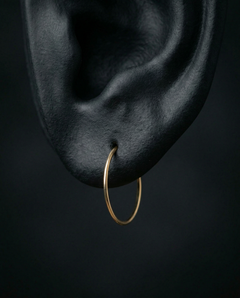
Yes. Lobes are soft tissue and adapt to different gauges more readily than cartilage. Here is how gauge changes work on lobes:
Going thinner (20G → 22G)
Easy and immediate. A thinner post slides through a wider hole with no resistance. The hole will gradually contract to the new gauge over 2–4 weeks. After that, going back to the original gauge may require gentle pressure or a brief taper.
Going thicker (20G → 18G)
Possible but should be done gradually. A piercer can use a taper to gently stretch the hole from 20G to 18G in a single appointment. It feels like mild pressure, not pain. After stretching, wear an 18G stud for 2–3 weeks to let the channel settle before switching to other 18G jewellery. Do not attempt to stretch by forcing in a thicker earring — a taper applies even, controlled pressure. A blunt earring post does not.
Going much thicker (20G → 16G or larger)
This enters the territory of intentional lobe stretching, which is a slow, multi-step process typically done with tapers and plugs over months. It is beyond the scope of this guide. If you want to wear 16G or larger jewellery in your lobes, consult a piercer for a stretching plan.
Lobe gauge vs cartilage gauge — why they differ
| Lobe | Helix / Nostril | Rook / Tragus / Daith | |
|---|---|---|---|
| Standard gauge | 20G (0.8mm) | 18G (1.0mm) | 16G (1.2mm) |
| Tissue type | Soft (fat, skin) | Thin cartilage | Thick cartilage |
| Can go thinner? | Yes — 22G safe | Yes — 20G safe on healed | 18G borderline, 20G risky |
| Migration risk at thin gauge | None — soft tissue | Low | Moderate to high |
| Why | Lobe does not exert lateral pressure | Thin rim, some pressure | Thick fold, gravity, movement |
The key takeaway: gauge rules that apply to cartilage do not apply to lobes. A 22G ring on a rook is dangerous. A 22G ring on a lobe is perfectly fine. The tissue type determines what is safe, not the number alone. If you also have cartilage piercings, see our rook gauge guide for the cartilage-specific rules.