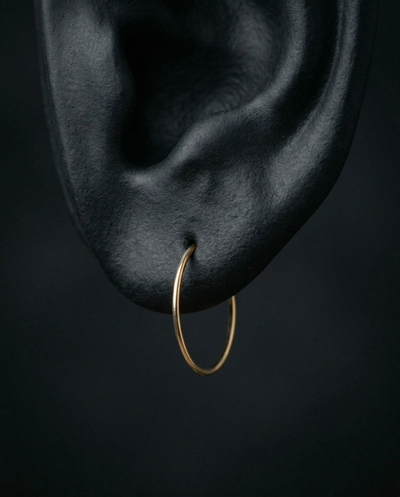
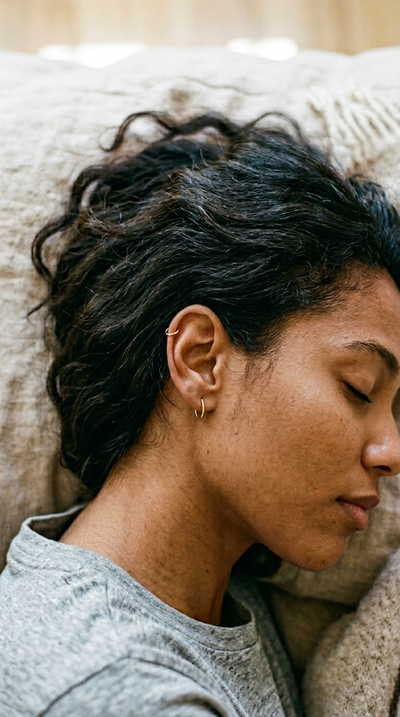
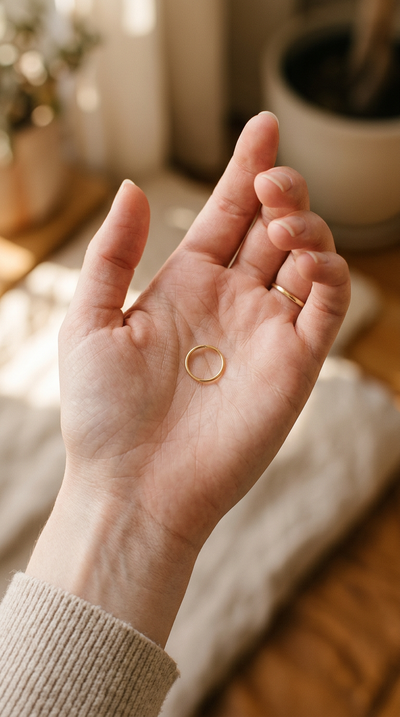
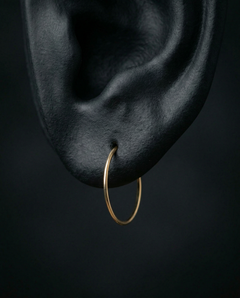
New 14ct Solid Gold Piercing Hoop


Lobe Piercing Healing: Complete Timeline
- Lobe piercings heal in 6–8 weeks — the fastest of all ear piercings because the lobe is soft tissue, not cartilage
- Needle piercings heal faster and cleaner than gun piercings — the gun causes blunt-force trauma that doubles healing time
- Aftercare is the same as any piercing: saline spray twice a day, do not touch, do not twist
- The lobe looks healed at week 2 — it is not. Changing jewellery before week 6 risks infection
- Second and third lobe piercings heal at the same speed as the first, but sleeping position matters more with multiple holes
- A fully healed lobe can hold any earring style — studs, hoops, huggie hoops, drops, dangles
Why the lobe heals faster than everything else
The lobe is the soft, fleshy part at the bottom of the ear. Unlike every other ear piercing location — helix, tragus, rook, conch, daith — the lobe contains no cartilage. It is made of skin, fat and connective tissue, all of which have a rich blood supply. Blood carries the nutrients and immune cells that heal a wound, and the lobe gets more of both than any cartilage location.
This is why a lobe piercing takes 6–8 weeks to heal while a rook takes 9–12 months. It is not about size or pain — it is about tissue type. Cartilage is avascular (no direct blood supply). Soft tissue is vascular. That single difference explains everything.
The practical consequence: lobe aftercare is shorter, lobe complications are less severe, and lobe jewellery changes happen sooner. But the same basic rules apply — saline, no touching, patience.
Week-by-week healing timeline
| Period | What you will see | What is normal | Action |
|---|---|---|---|
| Day 1–3 | Mild swelling, redness, warmth, slight throbbing | The lobe looks puffy and feels tender. Minimal bleeding on day 1 is normal. | Saline spray 2x/day. Do not touch. Sleep on the opposite side. |
| Week 1 | Swelling peaks and begins to reduce. Clear to light yellow discharge. Crust on the stud posts. | Crust is dried lymph fluid, not infection. The earring may feel tight as swelling peaks. | Continue saline 2x/day. Let shower water rinse crust away. Do not twist the earring. |
| Week 2–3 | Swelling largely gone. Discharge fading. Piercing looks and feels mostly normal. | This is the danger zone. It looks healed on the surface. It is not healed internally. | Same routine. Do not change earrings yet. Do not stop aftercare. |
| Week 4–5 | No discharge, no crust, no soreness day to day. | The channel is maturing. Still avoid heavy earrings and excessive handling. | Continue saline 1x/day. You can start sleeping on that side cautiously. |
| Week 6–8 | No symptoms for 2+ consecutive weeks. | The piercing is approaching full maturity. Jewellery changes are now safe. | Stop saline. Change earrings if desired. The lobe is healed. |
Needle vs gun — how it affects healing
How the lobe was pierced directly impacts how long it takes to heal and how likely you are to get complications. This is the most important section if you have not yet been pierced.
Needle piercing (professional piercer)
A hollow needle cuts a clean channel through the lobe tissue. It removes a tiny cylinder of tissue, creating a smooth tunnel for the jewellery to sit in. The wound edges are clean, the channel is precise, and the healing tissue has minimal work to do. Healing time: 6–8 weeks.
Gun piercing (high street, pharmacy, Claire’s)
A piercing gun forces a blunt-tipped stud through the lobe using spring-loaded pressure. It does not cut — it tears. The tissue is pushed apart rather than removed, creating a jagged channel with bruised edges. The butterfly-back studs used in guns are also shorter than professional jewellery, which means they compress swollen tissue. Healing time: 8–12 weeks, sometimes longer.
| Needle | Gun | |
|---|---|---|
| Mechanism | Cuts a clean channel | Forces tissue apart by blunt force |
| Channel quality | Smooth, precise | Jagged, bruised |
| Jewellery | Implant-grade flat-back stud, correct length | Butterfly-back stud, often too short |
| Sterilisation | Single-use, autoclaved needle | Gun cannot be fully sterilised between uses |
| Healing time | 6–8 weeks | 8–12 weeks |
| Infection risk | Low | Higher — blunt trauma + non-sterile gun |
| Cost (UK) | £20–£35 per lobe | £10–£25 per pair |
Daily aftercare routine
Lobe aftercare is identical to cartilage aftercare — the routine does not change based on piercing location. The lobe just finishes sooner.
That is the entire routine. Twice a day, every day, until week 6–8. No cotton buds, no antiseptic, no twisting.
The "twist your earring" myth
If you were pierced at a high-street shop or pharmacy, you were probably told to twist or rotate the earring daily "so it does not stick." This advice is outdated and wrong. Twisting the earring drags bacteria from the outer skin into the healing channel and tears the new tissue forming inside. The earring does not stick if you spray saline — the crust softens and the earring moves freely on its own. Do not twist, rotate or fiddle with the jewellery.
First lobe vs second & third lobe
Many people get their second or third lobe piercing years after their first. The healing process is identical — same tissue, same blood supply, same timeline — but there are a few practical differences:
Multiple healing piercings on one ear = more aftercare attention. Each piercing needs its own saline spray. Do not skip the upper holes because they are harder to reach. Crust tends to build up more where piercings are close together because the discharge from one runs onto the jewellery of another.
Sleeping becomes harder. One healing lobe means sleeping on the other side. Two healing lobes (one per ear) means you cannot comfortably sleep on either side. If you are getting multiple lobes, do one ear at a time. Heal the first side (6–8 weeks), then do the second ear. This way you always have a comfortable side to sleep on.
Higher lobe placements heal slightly slower. A second or third lobe piercing sits higher on the earlobe, where the tissue transitions from soft lobe to firmer pre-cartilage. The higher the placement, the firmer the tissue, and the closer to cartilage healing times. A third lobe positioned at the very top of the soft lobe may take 8–10 weeks rather than 6–8.
Healing jewellery vs first change
The stud you heal with is not necessarily the earring you wear forever. Here is what to expect:
During healing (weeks 0–6)
A flat-back titanium or 14K gold stud is ideal. Flat-back means a disc on the back rather than a butterfly clip — it sits flush against the lobe and does not catch on pillowcases or hair. The post should be long enough to accommodate swelling without compressing the lobe.
First change (week 6–8)
Once healed, you can switch to any earring style: studs, hoops, huggie hoops, dangles, drops. For the first change, choose lightweight jewellery in 14K solid gold or implant-grade titanium. Heavy statement earrings can stretch a newly healed channel — save those for month 3 onwards.
Normal healing vs signs of a problem
| Normal | See a piercer | See a doctor |
|---|---|---|
| Mild swelling for week 1 | Swelling that returns after week 2 | Whole earlobe hot, red and swollen |
| Clear to pale yellow discharge | White discharge with mild odour | Green or brown pus, strong smell |
| Light crust on posts | Heavy crust past week 3 | Crust with spreading redness beyond hole |
| Mild soreness when bumped | Increasing soreness week over week | Throbbing pain, fever, feeling unwell |
| Earring feels tight during peak swelling | Earring embedding into the lobe | Earring fully embedded, skin growing over |
Embedding deserves special attention for lobes. If a butterfly-back stud is too short for the swelling, the back can press into the lobe and the front disc can start sinking into the tissue. If you notice the front of the earring sitting flush with the skin rather than above it, see a piercer within 24 hours. They will swap to a longer post before the earring becomes trapped. This is almost exclusively a gun-piercing problem — needle piercings use longer posts that accommodate swelling.
What not to do
Do not twist or rotate the earring. This is the number one piece of bad advice still circulating. It damages the healing channel and introduces bacteria.
Do not use antiseptic, tea tree oil, hydrogen peroxide, rubbing alcohol or the solution from the shop. Saline only.
Do not change earrings before week 6. The lobe looks healed at week 2. It is not. Changing early risks infection and irritation bumps.
Do not sleep on the piercing for the first 2 weeks. After week 2, cautious sleeping on that side is usually fine for lobes — unlike cartilage, which needs months of avoidance.
Do not swim for 4 weeks. Pools, sea, lakes and hot tubs introduce bacteria. Lobes heal faster than cartilage, so the no-swimming window is shorter — but it still exists.
Do not wear heavy earrings during healing. Dangles and hoops pull on the fresh channel. Heal on flat-back studs, then switch styles after week 6.
Do not touch, fiddle or check it. Every touch transfers bacteria. If you want to check progress, look in the mirror — do not use your fingers.
How lobe healing compares to cartilage
| Lobe | Helix / Tragus | Rook / Daith | |
|---|---|---|---|
| Tissue type | Soft tissue (fat, skin) | Thin cartilage | Thick cartilage fold |
| Blood supply | Excellent | Limited | Very limited |
| Healing time | 6–8 weeks | 6–9 months | 9–12 months |
| Bump risk | Low | Moderate | High |
| Sleep restriction | 2 weeks | 6+ months | 6+ months |
| First jewellery change | Week 6–8 | Month 6–9 | Month 9–12 |
| Swimming restriction | 4 weeks | 6+ months | 9+ months |
This comparison matters if you are planning multiple piercings. Many people start with a lobe and then move to cartilage, expecting the same quick heal. It does not work that way. If you are adding a helix or rook after your lobe, plan for a dramatically longer commitment.
Re-opening a closed lobe piercing
Lobe piercings can close partially or fully if left empty. How fast this happens depends on how long the piercing has been healed:
During healing (weeks 0–6): The channel can start closing within hours. If you remove the earring during this period, the hole may be impossible to reinsert jewellery into by the next day. Never leave a healing lobe empty, even overnight.
Recently healed (months 1–6): The channel will narrow within a few days without jewellery. Reinserting an earring after a week empty may require gentle pressure and may be slightly painful. After two weeks empty, a piercer may need to taper it open.
Long-established (years): A lobe piercing that has been worn regularly for years can usually survive weeks or even months without jewellery, though the hole may tighten. Reinsertion is usually possible but may need a thinner gauge to start.