Key takeaways
- Helix hoops are sized by two measurements: gauge (wire thickness) and inner diameter (hoop width)
- In the UK, helix piercings commonly use 16G (1.2mm) or 18G (1.0mm); 20G is less common for cartilage
- Many healed UK helix piercings sit between 6mm and 10mm — 7mm or 8mm are common starting points
- Always match the gauge of your existing helix jewellery — cartilage is sensitive to size mismatch
- Helix piercings heal slower than nostrils — only switch jewellery once fully healed (typically 6–12 months)
Quick answer
In the UK, healed helix piercings commonly use 16G or 18G wire, with diameters ranging from 6mm to 10mm — 7mm or 8mm are common starting points for many placements. 16G is widely used by UK piercers because cartilage suits a slightly thicker wire. The exact size depends on your existing piercing and ear shape. If you already wear a helix hoop, match its gauge and diameter. If you're unsure, check your existing jewellery, ask your piercer, or measure with a caliper before ordering — don't guess by eye.
What is a helix hoop?
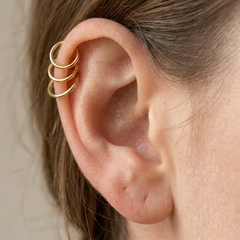
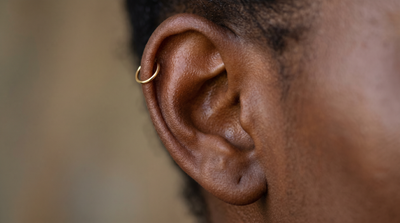
A helix hoop is a ring worn through the upper cartilage of the ear — the rim of the ear from the top down to where it curves toward the head. It follows the natural arc of the ear and sits flush against the rim when sized correctly.
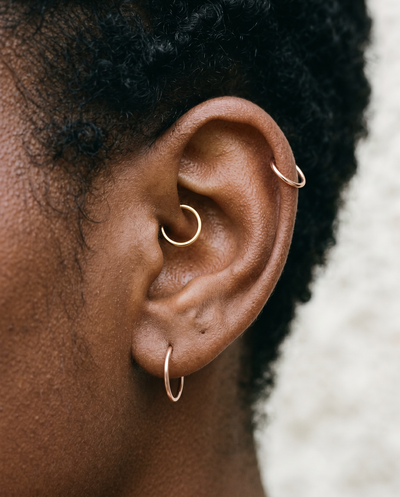
Once a helix piercing is fully healed, hoops become a popular choice. They create a softer curved outline that follows the ear's shape, and they layer naturally with other ear jewellery if you stack piercings. Whether a hoop or stud feels more comfortable for daily wear depends on the exact placement, fit, and personal preference.
But helix is cartilage, not soft tissue — and that changes how sizing works compared to a nostril or earlobe.
Helix is cartilage — sizing matters more
Cartilage piercings are slower to heal (typically 6–12 months) and more sensitive to size mismatch than earlobes or nostrils. The wrong gauge or diameter can cause irritation, bumps, or migration. Only wear gold hoops once the piercing is fully healed, and always match the gauge your piercing was made for.
What size measurements matter most?
Two measurements decide whether a helix hoop fits properly:
Gauge — wire thickness
Gauge is the thickness of the metal wire. It's the number you'll see written as "16G", "18G" or "20G". Lower number = thicker wire (counter-intuitive but standard across all piercing jewellery).
The gauge has to match the size of your existing piercing channel. A thicker gauge than your piercing won't go in. A thinner gauge will move around and let the channel shrink over time.
Inner diameter — hoop width
Inner diameter is the inside width of the hoop, measured in millimetres. Common helix diameters are 6mm, 7mm, 8mm, 9mm, and 10mm.
The diameter decides how the hoop sits against your ear — tight against the rim (smaller diameter) or with a bit of breathing room (larger diameter). Where exactly the piercing sits on your ear affects which diameter looks balanced.
You need both measurements right
A helix hoop can have the right gauge but the wrong diameter and still fit badly. Equally, the right diameter with the wrong gauge won't go through the piercing at all. Check both before ordering.
What are the common UK helix hoop sizes?
UK piercing studios tend to use a small range of gauges and diameters for helix piercings. Knowing the common combinations makes it easier to identify what you have. The two measurements are independent — read them as separate tables.
Table 1: Gauges used in UK helix piercings
| Gauge | Wire thickness | UK use for helix |
|---|
| 16G | 1.2mm | A very common helix gauge in UK piercing studios — offers good stability in cartilage Common |
| 18G | 1.0mm | Common for a slightly finer look on healed piercings Common |
| 20G | 0.8mm | Less common for helix — may feel less stable in cartilage |
Table 2: Inner diameters used for UK helix hoops
| Diameter | How it sits | Best for |
|---|
| 6mm | Very close to the ear rim, almost flush | Low helix placements, thinner ear rims, or a tight neat look |
| 7mm | Close everyday fit | Many healed UK helix piercings Popular |
| 8mm | Slightly looser with a small visible gap | Most forgiving starting point if you're between sizes Popular |
| 9–10mm | Looser, more decorative | Higher placements, larger ears, decorative styling |
If you don't know your current size, your piercing is statistically more likely to be 16G or 18G with a 7–8mm diameter than any other combination — but that's not a reason to guess. Always confirm before ordering.
How do I know which helix size I need?
There are three reliable ways to confirm your gauge and diameter.
1. Check the product listing or packaging. If you already wear a helix hoop, the gauge and diameter are usually written on the original product page, packaging, or receipt. Look for "16G", "18G", or the metric equivalent (1.2mm or 1.0mm), plus a diameter in millimetres.
2. Ask your piercer. If your helix was done professionally, the studio knows the gauge and placement used. A quick message or visit is the most reliable option.
3. Measure with a caliper. A small digital caliper (under £10 online) measures wire thickness precisely. For diameter, measure the inside of the hoop across its widest point.
Don't do this
- Don't guess the gauge by eye — 0.2mm differences matter in cartilage
- Don't force a thicker hoop through a smaller piercing — cartilage can split or scar
- Don't switch sizes during the healing period (typically 6–12 months for helix)
- Don't assume all your ear piercings are the same gauge — helix, lobe, and other placements often differ
Choosing the right inner diameter
Once you know your gauge, the diameter decides the look. Here's a quick scan, then a more detailed breakdown.
Quick diameter guide
6mm — very snug fit, sits close to the ear rim
7mm — close everyday fit, the most popular all-rounder
8mm — slightly looser, the most forgiving starting point
9–10mm — decorative or higher placements
6mm — snug fit
Looks likeA small hoop that sits very close to the ear rim with almost no gap
Best forLow helix placements, thinner ear rims, or a tight, neat look
7mm — close everyday fit
Looks likeA clean, balanced hoop that follows the ear shape closely
Best forMany healed UK helix piercings — a popular all-rounder
8mm — relaxed fit
Looks likeA slightly larger hoop with a small visible gap below the ear rim
Best forAverage placements with thicker ear rims, or the most forgiving starting point if you're between sizes
9–10mm — looser, more decorative
Looks likeA clearly visible hoop with a noticeable gap below the rim
Best forHigher helix placements, larger ears, or a deliberately decorative style
Sizing up if unsure
If you're between 7mm and 8mm, sizing up (to 8mm) is more comfortable than sizing down. A slightly loose hoop sits without pressure; a slightly tight one can irritate the piercing channel over time.
Which gauge is best for a helix hoop?
The right gauge is the one that matches your existing helix piercing. That said, certain gauges are more commonly used than others for UK helix piercings.
16G — a very common helix gauge
Wire1.2mm
Why it suits helixCartilage benefits from a slightly thicker, more stable gauge. 16G is widely used by UK piercers and holds up well to everyday wear.
18G — finer alternative
Wire1.0mm
Why it suits helixFor those who want a more delicate look on a healed helix. Works well when your piercing was specifically done at 18G.
20G — less common for helix
Wire0.8mm
Why it suits helix20G is less common for helix piercings and may feel less stable in cartilage, especially if the piercing was originally made at a thicker gauge. Mainly suitable if your piercing was specifically done at 20G.
Don't choose by default
If you're not sure which gauge you wear, do not guess. Forcing a thicker gauge through a cartilage piercing can split the channel and cause scarring or bumps that take months to settle. Confirm your gauge first.
Can I switch helix hoop sizes?
This is one of the most common questions for healed helix wearers. The short answer is: match the gauge you already wear unless a piercer confirms you can safely change size. Diameter is easier to change than gauge.
| What you want to change | Recommendation |
|---|
| Different diameter, same gauge | Generally fine on a healed piercing — you can try a 7mm if you currently wear 8mm, or vice versa |
| Thinner gauge (e.g. 16G to 18G) | The ring will fit, but it may sit loosely and the channel can shrink over long-term wear |
| Thicker gauge (e.g. 18G to 16G) | Don't force it. Stretching cartilage needs a taper and ideally a professional piercer — or risk splits and scarring |
| Unsure of your current size | Don't guess. Check your current jewellery, packaging, or ask your piercer first |
Helix hoop or helix stud — which to buy?
Both work on a healed helix, but they suit different preferences and circumstances.
Helix hoop
LookCurved, rounded outline that follows the ear shape
Best forHealed piercings, daily wear, layering with other ear jewellery
ProfileSmooth curve without a visible back disc on the side of the head
Helix stud (flat-back labret)
LookSmall dot or shape sitting flat against the ear
Best forHealing piercings, minimal everyday wear, layered close placements
ProfileFlat disc sits inside the ear — secure and low-profile
For a fully healed helix, both work well. Hoops are often preferred for everyday versatility and layered ear styling; flat-back studs are a popular choice when the piercing is still settling or when you want the most minimal profile. Comfort during sleep depends on placement and whether the jewellery is pressed against the pillow — it's worth trying both styles if you can.
Why 14ct solid gold works well for helix hoops
Material matters as much as size for a piece you'll wear daily. 14ct solid gold is a strong fit for healed helix piercings for three reasons.
Hypoallergenic when alloyed correctly. Cartilage piercings can be more prone to irritation than soft-tissue piercings. Nickel-free 14ct gold removes the most common reactive metal from the equation.
Holds shape in fine wire. 14ct sits in a useful middle ground — harder than 18ct or 22ct, so it keeps its circular shape better in thinner gauges. Softer gold can deform when sleeping on the ear or pulling clothing on.
Doesn't lose colour like plated. Plated jewellery wears down inside the piercing channel where the gold rubs against cartilage. Solid 14ct has no coating to lose — the colour is the same all the way through.
If your helix piercing is fully healed and you already know your gauge, choosing the right diameter is the final step before ordering.
Stepoy - UK-based - Made to order
14K Solid Gold Helix Hoop
Nickel-free 14k solid gold. Seamless construction, polished finish. 16G or 18G, 6-10mm.
Browse helix hoops ->Which size should you buy from Stepoy?
We make 14k solid gold helix hoops for UK buyers in 16G and 18G, the two gauges most healed UK helix piercings are actually done at. Diameters from 6mm to 10mm.
Step 1 — Confirm your gauge
Check your existing jewellery, packaging, receipt, or ask your piercer. Cartilage is too sensitive to guess.
Step 2 — Confirm your diameter
7mm or 8mm suits many healed helix placements. Size up to 8mm if you're between sizes; size down to 6mm only for low or close-to-rim placements.
Step 3 — Confirm the piercing is healed
Stepoy hoops are intended for fully healed helix piercings (typically 6–12 months after piercing). For fresh or still-healing piercings, follow your piercer's advice on appropriate jewellery.
Quick reference: helix hoop sizes at a glance
| Measurement | Common UK options | If unsure |
|---|
| Gauge | 16G (1.2mm) or 18G (1.0mm) | Confirm via existing jewellery / piercer / caliper |
| Inner diameter | 6mm, 7mm, 8mm, 9mm, 10mm | 7–8mm fits many healed UK helix piercings |
| Style | Seamless hoop or segment (clicker) hoop | Seamless is cleanest; segment is easier to insert |
| Material | 14ct solid gold for healed piercings | For fresh piercings, follow your piercer's advice |
←
Back to the complete helix piercing guide
Covers helix piercing types, pain, healing, sizing, jewellery, and FAQ
Final buying checklist
Before you check out, confirm all five:
1
Gauge confirmed
16G (1.2mm) or 18G (1.0mm) for many UK helix piercings. Check your existing jewellery — don't guess.
2
Inner diameter confirmed
7mm or 8mm fits many healed helix piercings. Size up rather than down if unsure.
3
Material is solid 14ct gold
Listing clearly says "solid 14ct gold" or "14K solid gold" — not plated, filled, or gold-tone.
4
Piercing is fully healed
Helix piercings typically take 6–12 months to heal fully. Stepoy hoops are intended for healed piercings.
5
UK delivery & returns confirmed
Clear pricing, transparent returns policy, and reviews from real piercing wearers.
Frequently asked questions
What size helix hoop should I buy in the UK?
Many healed UK helix piercings use 16G or 18G wire with a 7mm or 8mm inner diameter. 16G is widely used because cartilage benefits from a slightly thicker wire. The exact size depends on your existing piercing — always confirm your gauge and diameter before ordering rather than guessing.
What is the most common helix hoop size in the UK?
For UK helix piercings, 16G or 18G with a 7mm or 8mm inner diameter is a very common combination. 16G is widely used because cartilage suits a slightly thicker wire. Your exact size depends on what your piercing was originally done at, so confirm with your piercer or check your current jewellery before ordering.
Is 16G or 18G better for a helix piercing?
16G is more commonly used for UK helix piercings because the thicker wire (1.2mm) feels more stable in cartilage. 18G (1.0mm) is finer and suits people who want a more delicate look on a healed piercing. The right choice is the gauge your piercing was originally made for — not a universal "better" answer.
Is 7mm or 8mm better for a helix hoop?
Both are popular UK diameters for healed helix piercings. 7mm gives a closer, more snug fit that hugs the ear rim; 8mm gives slightly more breathing room and is the more forgiving starting point if you're between sizes. The right choice depends on where your piercing sits on the ear and how snug or loose you want the hoop to look.
What diameter helix hoop should I buy?
For many healed UK helix piercings, 7mm or 8mm is the most popular range. 6mm gives a very snug fit for low placements; 9–10mm gives a looser, more decorative look. The right diameter depends on where your piercing sits on the ear and how snug or loose you want the hoop to look.
How do I measure my helix piercing size at home?
The most accurate way is with a small digital caliper. Measure the wire thickness of an existing hoop for gauge, and the inside width across the widest point for diameter. If you don't have a caliper, check the original product listing, packaging, or ask your piercer — don't try to measure by eye or with a ruler.
Can I switch from 16G to 18G in my helix?
You can wear an 18G ring in a 16G piercing, but it will sit loosely and the channel may shrink slightly over long-term wear. Going the other way (forcing 16G into an 18G piercing) is risky for cartilage and can cause splits or scarring. Match your existing gauge unless a piercer confirms otherwise.
Can I wear a smaller helix hoop once my piercing is healed?
A smaller diameter (e.g. 6mm instead of 8mm) is generally fine on a fully healed helix piercing — just make sure the gauge still matches your piercing channel. A smaller hoop sits closer to the ear rim and gives a more delicate look. Avoid going too small if your placement is high up the ear, where a tighter hoop may feel uncomfortable.
When can I switch from a healing stud to a helix hoop?
Helix piercings typically take 6–12 months to fully heal. Follow your piercer's advice on when to switch jewellery — many UK piercers prefer implant-grade titanium during the healing period, though properly made solid 14k gold can also be suitable when nickel-free, cadmium-free, and polished to body-jewellery standards. Stepoy hoops are intended for fully healed piercings.
Is 20G OK for a helix piercing?
20G (0.8mm) is less common for helix piercings in the UK and may feel less stable in cartilage, especially if the piercing was originally made at a thicker gauge. It works if your piercing was specifically done at 20G, but most UK piercers use 16G or 18G as standard. Match the gauge your piercing was made for.
Should the hoop sit tight against my ear?
A well-fitting helix hoop sits close to the rim of the ear but doesn't compress the cartilage. There should be no visible pressure on the piercing channel. If the hoop feels tight or leaves marks, it's too small for your placement — size up to the next millimetre.
Do I need a UK hallmark on a 14ct gold helix hoop?
In the UK, gold items under 1 gram are generally exempt from compulsory hallmarking. Many small helix hoops fall below that threshold, so a visible hallmark is not always practical. Hallmarks are a useful plus when present, but they're not the only signal of authenticity. The seller should clearly state the metal as "solid 14ct gold" or "14K solid gold" and provide transparent product information.
Shop 14k solid gold helix hoops
UK-based brand, made to order. 16G or 18G, 6-10mm. Nickel-free.
Choose your size now ->S
Stepoy
Piercing Jewellery Specialists
We craft handmade 14K solid gold piercing jewellery and publish in-depth guides to help you make informed decisions about your piercings.