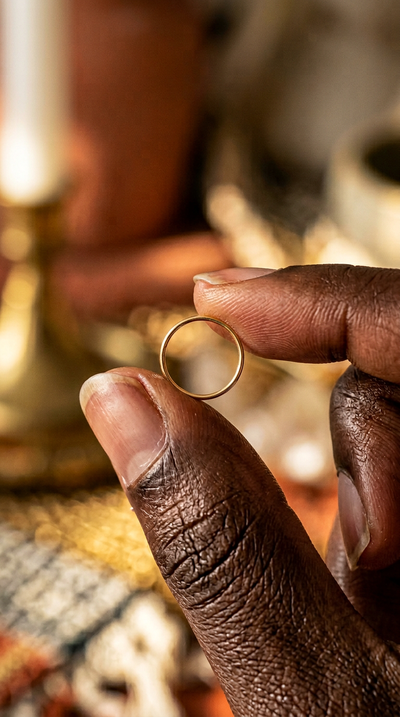
New 14ct solid gold hoop


Cartilage Piercing Healing: How Long Does It Really Take?

- Cartilage healing ranges from 3 months (helix) to 18 months (rook) depending on location
- Cartilage heals 3-10x slower than lobes because of limited blood supply
- Every cartilage piercing looks healed on the outside long before the internal channel matures
- The biggest setback is changing jewellery too early based on external appearance
- Consistent aftercare and patience are the only factors that reliably support healing
Healing times overview
All cartilage piercings heal significantly slower than lobe piercings. The reason is biological: cartilage has no direct blood supply. Blood carries the immune cells and nutrients needed for tissue repair. Less blood flow means slower healing. This is not something you can change — it is fundamental to how cartilage tissue works.
| Piercing | Healing Time | Why |
|---|---|---|
| Lobe | 6-8 weeks | Soft tissue, excellent blood flow |
| Helix (standard) | 3-6 months | Thin cartilage, moderate blood flow |
| Forward helix | 6-12 months | Thicker cartilage, less blood flow |
| Tragus | 3-6 months | Moderate thickness, compact area |
| Conch | 6-12 months | Thick, flat cartilage, limited blood flow |
| Daith | 6-12 months | Deep fold, thick cartilage, hard to clean |
| Rook | 6-18 months | Thickest ear cartilage, minimal blood flow |
Healing by piercing type
Fastest: Helix and Tragus (3-6 months)
The helix and tragus use relatively thin cartilage with better blood supply than inner-ear locations. They are the most beginner-friendly cartilage piercings from a healing perspective. Most people can switch to a hoop at month 3-4 with piercer approval.
Middle: Conch and Daith (6-12 months)
These piercings pass through thicker cartilage with less blood flow. The daith has the additional challenge of being difficult to clean due to its deep inner-ear position. Both require significant patience.
Slowest: Rook (6-18 months)
The rook passes through the thickest cartilage in the ear — the antihelix. Some people need the full 18 months. This is normal, not a problem. The rook is the piercing that most rewards patience.
What affects healing speed
Cartilage thickness: thicker cartilage heals slower. This is the primary factor and you cannot change it.
Location blood flow: outer rim piercings (helix) heal faster than inner fold piercings (rook, daith).
Jewellery quality: poor-quality metals cause ongoing irritation that delays healing. 14K gold and titanium support healing; surgical steel and plated metals can hinder it.
Aftercare consistency: skipping saline, touching the piercing, or sleeping on it all delay healing.
Individual biology: age, nutrition, sleep quality, stress levels, smoking, and immune health all affect how fast your body repairs tissue. You cannot control all of these, but you can optimise the ones within your control.
Universal healing stages
Common mistakes
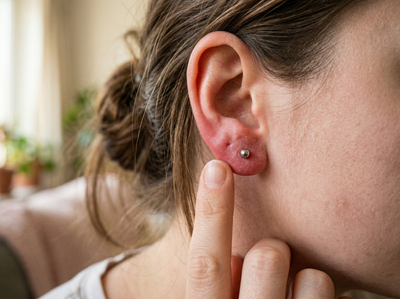
Changing jewellery too early. The number one setback. External appearance does not indicate internal maturity.
Sleeping on the piercing. Constant pressure disrupts the forming channel and causes irritation bumps.
Over-cleaning. More than twice daily with saline can dry out and irritate the tissue. Twice daily is enough.
Using harsh products. Tea tree oil, alcohol, hydrogen peroxide, and antibacterial soap all damage healing tissue.
Touching and rotating. Your hands introduce bacteria. Rotating jewellery disrupts the forming tissue. Leave it alone.