Cartilage Piercing Pain: What to Expect (1–10 Scale)
- All cartilage piercings rate 4–6 out of 10 — they hurt more than lobes but less than most people fear
- The piercing itself lasts 1–3 seconds. The anticipation is almost always worse than the reality.
- Cartilage pain comes in two phases: the initial pierce (sharp, brief) and a dull throb that follows for 20–60 minutes
- A needle piercing is significantly less painful than a gun piercing because it cuts cleanly rather than tearing
- The rook and industrial are the most painful common ear cartilage piercings. The helix is the least.
- Cartilage piercings are sore during healing (months) in a way that lobes are not — this is normal
The pain scale — every cartilage piercing ranked
Pain ratings are inherently subjective, but across the broad population of people who have had these piercings, consistent patterns emerge. The scale below reflects the consensus of thousands of experiences. Your individual result will depend on pain tolerance, the skill of your piercer, your anxiety level and, most importantly, whether you use a needle or a gun.
| Piercing | Pain (1–10) | Sensation | Duration of pierce | Post-pierce throb |
|---|---|---|---|---|
| Lobe (for reference) | 2–3 | Brief pinch in soft tissue | 1 second | Mild, fades in minutes |
| Helix | 4–5 LEAST PAINFUL | Sharp pinch + audible crunch through thin cartilage | 1–2 seconds | Moderate, fades in 30 min |
| Forward helix | 5–6 | Sharp pinch in tight cartilage fold; slightly more pressure than helix | 1–2 seconds | Moderate to significant, 30–60 min |
| Tragus | 4–5 | Pressure more than pain; muffled crunch; ear canal resonance is startling | 1–2 seconds | Moderate, fades in 30 min |
| Anti-tragus | 5–6 | More intense than tragus; thicker cartilage nub | 1–2 seconds | Significant, 30–60 min |
| Rook | 6–7 | Deep pressure through thick fold; sustained push rather than brief pierce | 2–3 seconds | Significant, 1–2 hours |
| Daith | 5–6 | Pressure and crunch combined; tight fold makes it feel more invasive than helix | 2–3 seconds | Significant, 30–90 min |
| Conch | 5–6 | Sharp pierce through flat cartilage bowl; similar to helix but deeper | 1–2 seconds | Moderate to significant, 30–60 min |
| Industrial | 6–7 MOST PAINFUL | Two separate cartilage piercings; combined trauma; placement is critical | 2 pierces, 1–2 sec each | Significant, 2–4 hours |
What each piercing actually feels like
Numbers on a scale do not capture the qualitative texture of cartilage pain. These are the sensations, described as specifically as possible:
Helix — the crunch
The helix is the most commonly reported "not as bad as I expected" piercing. The needle passes through the thin outer rim in 1–2 seconds. The dominant sensation is an audible and physical crunch as the needle passes through cartilage — which many people describe as feeling like biting down on a hard crisp. It is sharp but brief. The crunch sensation is specific to cartilage piercings — lobe piercings do not have it because there is no cartilage to pass through.
Tragus — the pressure
The tragus is almost always described as pressure rather than pain. People expect it to hurt more (it sits next to the ear canal) but most find it surprisingly manageable. The key sensation is a feeling of being pushed, not cut. There is also a distinctive audible element — the needle passing through the cartilage creates a sound that resonates inside the ear canal, which is startling the first time but not painful.
Rook — the sustained push
The rook is different from all other cartilage piercings because the fold is significantly thicker than helix or tragus. The needle has to travel further to pass through. Instead of a brief crunch, the sensation is more of a sustained push lasting 2–3 seconds as the needle works through the fold. It is the cartilage piercing that most consistently produces a genuine "ow" rather than a "huh, that was it." The post-pierce throb is also more pronounced, lasting 1–2 hours in many cases.
Daith — the fold crunch
The daith is similar to the rook in anatomy — it also passes through a cartilage fold — but the fold is slightly thinner and the approach is from a different angle, making it generally slightly less painful than the rook. The sensation is a crunch combined with pressure, more intense than helix but less intense than rook for most people.
Industrial — double
An industrial piercing is two helix piercings connected by a single barbell. The pain is two separate pierce events, usually done in quick succession. Each is a 4–5 like the helix, but the combined effect of two fresh piercing traumas in the same ear, plus the subsequent pain of the longer healing period, puts it at the top of the common cartilage pain rankings. The positioning of the two holes is also more critical than any other piercing — slightly off placement means the barbell runs at an angle and causes chronic soreness throughout healing.
Why cartilage hurts more than lobes
Cartilage piercings are consistently rated 2–4 points higher on the pain scale than lobe piercings, and there are two anatomical reasons for this difference.
Cartilage has more resistance. The needle must push through rigid, firm tissue rather than soft, pliable tissue. This resistance requires more force and creates more sensation. Even a sharp, experienced needle requires sustained pressure against cartilage, whereas a lobe yields almost immediately.
Cartilage has more nerve endings per cubic centimetre. Cartilage is denser tissue than lobe fat, and the nerve endings within it register pressure differently. The crunch sensation specific to cartilage piercings is a direct result of nerve endings in the cartilage matrix responding to the disruption of the tissue structure.
However, both of these factors operate over 1–3 seconds. The additional pain compared to a lobe is real, but it is brief additional pain — not prolonged additional pain.
Needle vs gun — why it makes a real difference
The method of piercing affects pain significantly, especially for cartilage. On a lobe, the gun vs needle difference is noticeable but tolerable. On cartilage, it is the difference between a manageable experience and an unnecessarily traumatic one.
| Needle | Gun | |
|---|---|---|
| Mechanism | Hollow needle cuts a clean channel | Blunt-tipped stud forced through by spring pressure |
| Cartilage interaction | Slices cleanly — minimal surrounding trauma | Shatters and compresses cartilage — significant surrounding trauma |
| Pain during pierce | 4–5/10 (helix example) | 6–7/10 for same location |
| Post-pierce pain | Moderate, fades in 30–60 min | Significant, can last hours |
| Healing pain | Lower — less tissue trauma to heal | Higher — shattered cartilage heals slowly and painfully |
| Safe for cartilage? | Yes — industry standard | No — UKAPP advises against cartilage gun piercing |
The UK Association of Professional Piercers (UKAPP) and its international equivalent (APP) both recommend against using piercing guns on cartilage. This is not aesthetics — it is a genuine clinical concern. The impact force of a gun can shatter cartilage, causing nerve damage and a healing process that takes significantly longer and is measurably more painful throughout. Always choose a needle piercer for any cartilage piercing.
Healing pain — the longer story
The piercing itself lasts seconds. The healing period lasts 6–12 months. During this time, the piercing is not constantly painful, but it is consistently more sensitive than a healed lobe would be. Here is what to expect:
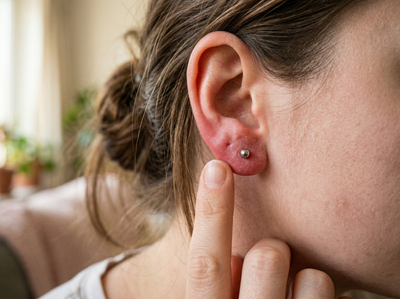
Week 1–2: The piercing is tender to touch, mildly throbbing at rest, and noticeably sore when bumped or pressed. Swelling peaks in week 1 and causes the jewellery to feel tight. Most people describe this as a 2–3/10 background soreness with occasional 4–5 spikes when the piercing is disturbed.
Month 1–3: The constant soreness fades but the piercing remains reactive. Sleeping on it, bumping it with a phone or headphone, or hair catching on it can cause immediate soreness. Good days and bad days alternate, which is normal for cartilage and does not mean anything is wrong.
Month 3–6: After the downsize appointment (where the initial long post is swapped for a shorter one), most people notice a significant reduction in day-to-day soreness. The piercing may occasionally ache after sleeping on it or after extended headphone use, but baseline comfort is much improved.
Month 6–12: For most piercings, this is the slow approach to fully healed. The occasional soreness that was common in month 1 is now rare. The piercing feels like a normal part of the ear rather than an active wound.
How to reduce pain on the day
You cannot eliminate cartilage piercing pain, but several factors genuinely affect how intense it feels:
Choose a needle piercer. This is the single biggest pain-reduction choice you can make. A sharp, skilled piercer with a correct-gauge hollow needle produces significantly less trauma than any gun.
Eat beforehand. A full stomach stabilises blood sugar, which affects pain perception. Do not pierce fasted. A light meal 1–2 hours before your appointment is ideal.
Stay hydrated. Dehydration raises cortisol, which amplifies pain signals. Drink water normally on the day of your piercing.
Avoid alcohol the night before. Alcohol thins the blood (more bleeding) and disrupts sleep (lower pain tolerance). A good night’s sleep is one of the most reliable pain-tolerance boosters.
Do not take ibuprofen beforehand. Ibuprofen is a blood thinner and increases bleeding during the procedure, which makes both the piercer’s job harder and the post-pierce healing slower. After the piercing, ibuprofen is fine for pain relief.
Breathe through it. Holding your breath increases perceived pain. A deep, slow exhale timed with the needle is the most effective in-the-moment pain reduction technique, and experienced piercers will ask you to do exactly this.