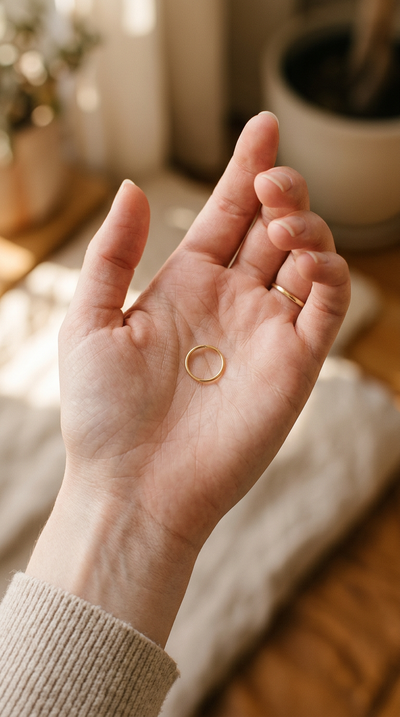
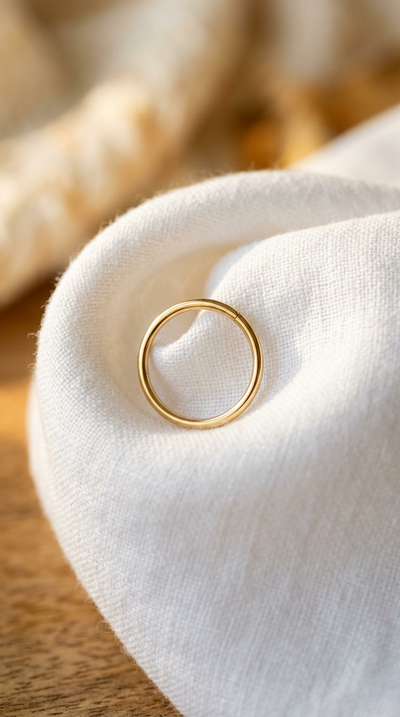
New 14ct Solid Gold Piercing Hoop
Tragus Piercing and Headphones: Can You Still Wear AirPods?
- Yes, you can wear AirPods and most earbuds with a healed tragus piercing — the right jewellery makes all the difference
- During healing (first 3–4 months): avoid earbuds in the pierced ear entirely
- A flat-back labret stud is the most headphone-friendly tragus jewellery — the disc sits flush and does not interfere
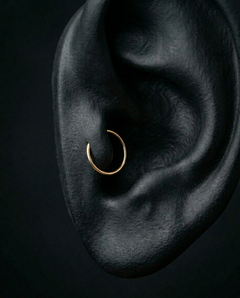
- Snug seamless hoops (5–6mm) coexist with most earbuds once the piercing is healed
- Over-ear headphones are generally safe for tragus piercings at all stages
- Bone conduction headphones bypass the ear entirely — the best option during healing
The short answer
A tragus piercing does not end your relationship with earbuds. Once healed, the vast majority of people wear AirPods, Galaxy Buds, and similar earbuds alongside their tragus jewellery without any issues. The key variables are timing (how far along your healing is), jewellery type (stud vs hoop), and earbud design (hard shell vs silicone tip).
The one non-negotiable rule: no earbuds in the pierced ear during healing. Earbuds press directly against the tragus, which is exactly where your fresh piercing is. That pressure introduces bacteria, disrupts the healing channel, and almost guarantees an irritation bump or infection. This is the single most important rule in this entire guide.
Headphone timeline
Headphone types compared
| Headphone type | During healing | After healing | Notes |
|---|---|---|---|
| AirPods (hard shell) | No — press on tragus | Yes — with flat-back stud or snug hoop | Hard shell sits in outer ear bowl. Minor contact with tragus area but usually fine once healed. |
| AirPods Pro (silicone tips) | No — seal presses on canal | Yes — may push against hoop slightly | Silicone tip inserts deeper. Can press a hoop inward. Flat-back stud is ideal for these. |
| Galaxy Buds / similar | No | Yes — similar to AirPods | Varies by model. Bean-shaped buds tend to have less tragus contact than round designs. |
| Over-ear (cups) | Usually fine | Yes | Cups sit around the ear, not on the tragus. Tight-fitting models may press the ear inward slightly. |
| On-ear (pads) | Caution — pressure varies | Yes | Pads rest on the ear, which can transmit pressure to the tragus. Looser fits are better. |
| Bone conduction BEST FOR HEALING | Yes — no ear contact | Yes | Sit on the cheekbone, not in the ear. Zero tragus contact. The ideal solution during healing. |
Best jewellery for headphone users
The jewellery in your tragus determines how well earbuds coexist with the piercing. Here is the breakdown by jewellery type:
Flat-back labret stud — best choice
The flat disc sits behind the tragus, completely flush with the skin. It does not protrude into the ear canal entrance at all. Standard AirPods and most earbuds sit alongside a flat-back stud with zero interference. If you are a daily earbud user, a flat-back stud is the permanent answer.
Seamless hoop (5–6mm) — works well
A snug hoop that hugs the tragus closely does not extend significantly into the earbud zone. Most people can wear standard AirPods comfortably alongside a 5–6mm hoop. You may feel the ring when inserting the earbud, and the earbud may press against the ring slightly, but this is typically not painful or problematic once the piercing is fully healed.
Larger hoops (7–8mm) — may interfere
A larger hoop extends further from the tragus and can physically block earbud insertion or get pressed painfully when the earbud is in place. If you prefer a larger hoop for style, consider swapping to a flat-back stud before commuting or gym sessions where earbuds are needed.
CBR (captive bead ring) — least compatible
The bead adds bulk at the lowest point of the ring, exactly where earbuds tend to sit. This makes CBRs the least earbud-friendly tragus jewellery. If earbud compatibility matters to you, avoid CBRs for the tragus.
Bone conduction: the healing solution
If you are getting a tragus piercing and headphone use is non-negotiable during healing, bone conduction headphones are the answer. These sit on the cheekbone in front of the ear and transmit sound through vibrations in the skull bone, bypassing the ear canal entirely.
Zero tragus contact. The headphone does not touch the tragus, the ear canal, or any part of the ear. This means zero pressure on the piercing, zero bacteria transfer, and zero healing disruption.
Open-ear design. You can still hear ambient sound, which makes bone conduction headphones excellent for commuting, cycling, and office use where awareness matters.
The trade-off: Sound quality is not as rich as sealed in-ear or over-ear headphones. Bass is weaker. Noise isolation is minimal. For casual listening, calls, and podcasts, they are perfectly adequate. For immersive music listening, they are a compromise.
Popular bone conduction brands include Shokz (formerly AfterShokz), which is the market leader. Most models are under £80 and are widely regarded as the best headphone option for people with ear piercings.
Headphone-related problems
Irritation bump from earbuds
If a bump forms at the tragus piercing and you have been using earbuds, the earbud pressure is the most likely cause. Stop using earbuds in the affected ear immediately. Clean the piercing with saline twice daily. Do not remove the jewellery. The bump should begin to flatten within 1–2 weeks once the pressure source is removed. If it persists beyond 3 weeks, see your piercer.
Earbud pushing the hoop into cartilage
This happens when the hoop is too large (7–8mm) and the earbud presses the ring inward against the tragus. The solution: size down to a 5–6mm hoop, or switch to a flat-back stud for earbud use. A snug hoop that hugs the tragus closely sits below the earbud contact zone.
Soreness after extended earbud sessions
Even a fully healed tragus can become sore after several hours of continuous earbud use. This is not a piercing problem — it is a pressure problem. Take breaks every 1–2 hours. Switch ears if possible. Use over-ear headphones for extended listening sessions to give the tragus a rest.
Earbud not staying in
A tragus hoop can occasionally interfere with earbud seating, especially silicone-tipped earbuds that rely on a seal. If the earbud keeps falling out, the hoop is disrupting the seal. Solutions: switch to a flat-back stud, use a smaller hoop, or try a different earbud tip size. Many earbuds come with multiple tip sizes — a smaller tip may avoid the hoop entirely.
Planning ahead: piercing day tips
If you have not yet been pierced and headphone use is a concern, here are some practical steps to plan ahead:
Get pierced on the non-dominant ear side. If you tend to hold your phone to your right ear, get pierced on the left. This reduces accidental contact during the critical early healing weeks.
Buy bone conduction headphones before your appointment. Having them ready means you do not need to go without music or podcasts during the 3–4 month earbud-free healing period.
Start with a flat-back stud. Your piercer will almost certainly default to this, but confirm in advance. The flat-back is essential for eventual earbud compatibility.
Schedule the piercing before a low-earbud period. If you know you have a holiday or a quieter work period coming up, time the piercing so the most sensitive healing weeks coincide with lower headphone demand.