New 14ct Solid Gold Piercing Hoop
Tragus Hoop Size Guide: 5mm, 6mm, 7mm & 8mm Compared
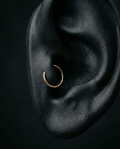
- Tragus hoops range from 5mm to 8mm inner diameter — much smaller than nose or conch hoops
- 6mm is the most popular tragus hoop size — fits the majority of ears with a snug, clean look
- 5mm only works for very small tragus piercings placed close to the edge — too tight for most people
- 8mm will look noticeably loose on most tragus piercings and may interfere with earbuds
- Standard tragus gauge is 18G (1.0mm) or 16G (1.2mm) — check before ordering
- Your piercing placement relative to the tragus edge is the key factor in choosing diameter
How tragus hoops are measured
Tragus hoops follow the same measurement system as all body piercing rings: inner diameter and gauge.
Inner diameter is the distance across the inside of the hoop. A “6mm tragus hoop” means 6mm from one inner edge to the opposite inner edge. This controls how tightly the ring hugs the tragus — how much of a gap exists between the ring and the ear.
Gauge is the wire thickness. Tragus piercings are typically 18G (1.0mm) or 16G (1.2mm). This is thicker than a standard nostril piercing (20G) but thinner than a septum piercing (16G). See our gauge comparison guide for the full breakdown.
5mm vs 6mm vs 7mm vs 8mm
| Diameter | Fit | Look | Best for |
|---|---|---|---|
| 5mm | Very snug | Skin-tight, barely visible ring | Very small tragus, piercing very close to edge |
| 6mm MOST POPULAR | Snug | Clean hug around the tragus, minimal gap | Standard tragus, most ear anatomies |
| 7mm | Comfortable | Slight gap between ring and tragus | Thicker tragus, piercing set back from edge |
| 8mm | Relaxed | Noticeable gap, ring hangs slightly | Larger ears, preference for visible ring |
5mm — extremely snug
5mm is the tightest tragus hoop commonly available. It sits almost flush against the tragus with virtually no visible gap. This creates a “barely there” aesthetic — the ring reads as a thin gold line wrapping around the tragus edge rather than a distinct hoop.
However, 5mm only works if your piercing is very close to the outer edge of the tragus. If the piercing is placed even slightly further back — which is common, as many piercers position the hole toward the centre of the tragus for stability — a 5mm ring will pinch. It will press into the tissue, cause irritation, and may not close properly around the cartilage.
Rule of thumb: only order 5mm if you have measured and confirmed the distance from your piercing hole to the tragus edge is under 4mm.
6mm — the sweet spot
6mm is the most commonly purchased tragus hoop size and the one we recommend as a starting point for most people. It fits snugly around the tragus with a small, intentional gap that looks clean and deliberate. The ring sits close enough to the ear to look like it belongs, but loose enough that it does not press into the cartilage.
For a standard tragus piercing on an average-sized ear, 6mm is almost always right. It works with most piercing placements, accommodates typical tragus thickness, and creates the classic “tiny gold hoop on the tragus” look that drives most people to search for this jewellery.
7mm — a little more room
7mm creates a slightly more visible ring with a noticeable (but not excessive) gap between the hoop and the tragus. This is the size to choose if 6mm feels tight, if your tragus cartilage is thicker than average, or if your piercing is positioned further from the outer edge.
7mm also works well if you plan to stack the tragus hoop with other ear piercings. The slightly larger ring gives visual breathing room and avoids the tragus hoop looking cramped next to adjacent piercings (forward helix, for example).
8mm — the relaxed fit
8mm is large for a tragus. The ring will hang visibly away from the tragus and create a looser, more bohemian aesthetic. Some people like this look intentionally — a slightly oversized hoop can be a deliberate style choice. But for most people seeking a snug, minimal tragus ring, 8mm is too big.
The other practical concern with 8mm on the tragus: it may interfere with earbuds. A larger ring protrudes further into the ear canal entrance, which can make inserting AirPods or similar earbuds awkward or uncomfortable.
How to measure your tragus
Tragus gauge guide
| Gauge | Thickness | Common for |
|---|---|---|
| 20G (0.8mm) | Thinnest | Some healed tragus piercings, dainty aesthetic. Not standard for initial piercing. |
| 18G (1.0mm) COMMON | Standard thin | Many UK piercers use 18G for tragus. Good balance of delicacy and strength. |
| 16G (1.2mm) COMMON | Standard thick | Many piercers use 16G for cartilage piercings including tragus. More robust wire. |
The tragus sits at the border between 18G and 16G territory. Both are widely used, and the “standard” depends on your piercer’s preference. If you do not know your gauge, check with your piercer or measure your current jewellery with callipers. Getting the gauge right is essential — a 16G ring will not fit through an 18G piercing without stretching.
Stud vs hoop for tragus
Most tragus piercings start with a flat-back labret stud during healing. The stud sits flush against the back of the tragus (inside the ear canal entrance) and does not move. This is ideal for healing because the tragus is in a high-contact area — headphones, fingers, and sleeping pressure all affect it.
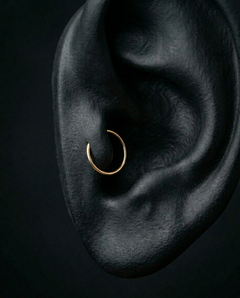
Once healed (typically 4–8 months for cartilage), you can switch to a hoop. The hoop wraps around the outer edge of the tragus, creating a small ring that frames the entrance to the ear canal. This is a distinctly different aesthetic from the stud — more visible, more decorative, more of a statement.
| Flat-back stud | Seamless hoop | |
|---|---|---|
| Look | Single point on the tragus | Ring wrapping the tragus edge |
| Headphones | Less interference, flat back sits flush | Ring may press against earbuds |
| Healing | Ideal — no movement in the channel | Not for healing — movement irritates |
| Sleeping | Less likely to catch on pillow | Ring can press or twist during sleep |
| Style | Subtle, discreet | Visible, decorative, statement |
Many people own both and alternate depending on the situation — stud for work or gym (especially when wearing earbuds), hoop for evenings and weekends when the piercing gets to be a visible accessory.
Tragus hoops and headphones
This is one of the most common concerns with tragus hoops, and it deserves a direct answer:
AirPods and in-ear earbuds: A snug 5–6mm hoop usually does not interfere with standard AirPods. The ring wraps tightly around the tragus and does not protrude significantly into the ear canal entrance. However, silicone-tipped earbuds that create a seal inside the ear canal may push against the ring, especially if the hoop is 7mm or larger.
Over-ear headphones: Generally fine with a tragus hoop. Over-ear cups sit around the ear, not on the tragus. However, the padding may rest against the tragus on tight-fitting headphones, pressing the ring into the cartilage. If this happens, adjust the headphone fit or switch to a stud for extended listening sessions.
During healing: Avoid earbuds entirely in the pierced ear for at least the first 3 months. Use over-ear headphones on the opposite ear, or bone conduction headphones that bypass the ear entirely. Once healed, you can resume earbud use, but a flat-back stud will always be more headphone-friendly than a hoop.
Common mistakes
Ordering based on nostril size. If your nostril hoop is 8mm, your tragus hoop is almost certainly not 8mm. The tragus is a smaller location. Most people need 6mm for the tragus, even if they wear 8mm on the nose. Always measure the tragus independently.
Switching to a hoop too early. Tragus piercings take 4–8 months to heal. Cartilage heals slowly and is easily irritated by the movement of a hoop. Wait until your piercer confirms the piercing is fully mature before switching. Rushing this almost always results in an irritation bump.
Forgetting about gauge. Diameter and gauge are both required. Ordering the right diameter in the wrong gauge means the ring either will not fit through the piercing or will be too loose in the channel. Confirm both numbers before purchasing.
Cheap materials on thick cartilage. The tragus is dense cartilage that heals slowly and reacts strongly to nickel and low-quality metals. Gold-plated and surgical steel are common causes of tragus irritation bumps. Use 14K solid gold or implant-grade titanium only.