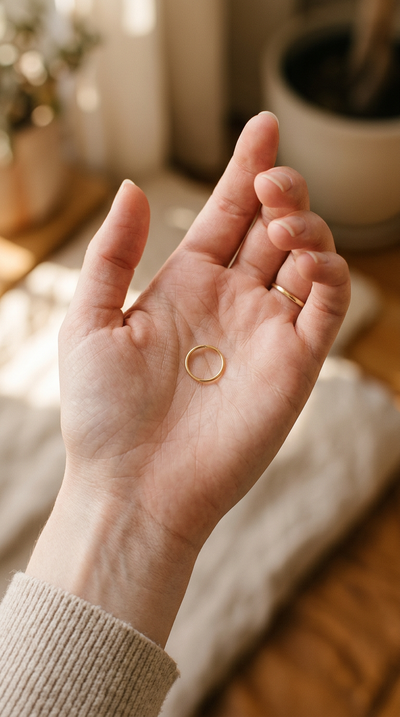
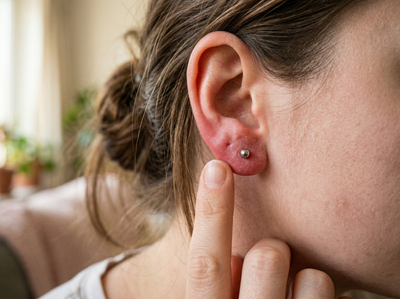
New 14ct Solid Gold Piercing Hoop
Rook vs Daith Piercing: Which Should You Get?
- Rook: upper antihelix fold, pain 6-7/10, healing 6-18 months, curved barbells & hoops
- Daith: innermost ear fold (near ear canal), pain 5-6/10, healing 6-12 months, rings & hearts
- Daith has the migraine connection claim; rook is purely aesthetic
- Both require significant patience during healing — neither is a quick-healing piercing
- You can get both on the same ear, but heal one fully before piercing the other
Two inner ear piercings, very different vibes
The rook and the daith are both inner ear cartilage piercings, and they’re often confused because they’re located relatively close to each other. But they create distinctly different looks, sit in different anatomical positions, and have meaningfully different healing experiences.
The rook pierces the antihelix — the thick ridge that divides the inner and outer sections of your ear. It’s a bold, dramatic piercing that sits relatively high in the ear and catches the eye with a curved barbell or hoop nestled into the fold.
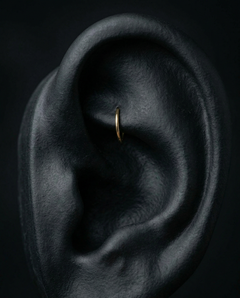
The daith pierces the innermost fold of the ear, right where the helix root meets the ear canal. It’s a more tucked-away piercing that’s famous for both its aesthetic appeal and the (unproven but widely discussed) migraine relief claim.
Head-to-head comparison
| Rook | Daith | |
|---|---|---|
| Location | Upper antihelix fold | Innermost ear fold (crus of helix) |
| Pain | 6-7/10 | 5-6/10 |
| Healing | 6-18 months | 6-12 months |
| Starting jewellery | Curved barbell | Curved barbell or captive bead ring |
| Healed jewellery | Hoops (6-8mm), curved barbells | Rings, hearts, clickers (6-10mm) |
| Visibility | More visible from front | Hidden inside the ear |
| Earbuds | No interference | Can interfere during healing |
| Unique factor | Dramatic fold placement | Migraine relief claim |
| Anatomy needed | Pronounced antihelix ridge | Defined inner ear fold |
Pain comparison
The rook is typically rated slightly more painful than the daith. This is primarily because the antihelix cartilage (rook) is generally thicker than the crus of the helix (daith). More tissue resistance equals more sensation during the pierce.
However, some people find the daith more uncomfortable due to the awkward piercing angle — the needle enters from inside the ear, which can feel more invasive. Pain is subjective, and individual experiences vary.
Healing comparison
Both are long-healing piercings, but the rook typically takes longer:
Rook: 6-18 months. The thicker cartilage of the antihelix has extremely limited blood supply, making it one of the slowest-healing ear piercings. Some people need the full 18 months.
Daith: 6-12 months. Still slow, but the cartilage is slightly thinner and the fold typically receives marginally better circulation. Most daith piercings are functionally healed by month 9-12.
Jewellery options
This is where the two piercings differ most dramatically in terms of aesthetic:
Rook jewellery is relatively simple — curved barbells during healing, seamless hoops once healed. The rook’s aesthetic is clean, minimal, and architectural. A small gold hoop in the rook fold creates an elegant, understated look.
Daith jewellery offers more variety and personality. Heart-shaped rings, ornate clickers, gemstone-studded pieces — the daith’s position inside the ear creates a natural frame for decorative jewellery. It’s where many people go bold with their jewellery choices.
The migraine question
The daith piercing is widely associated with migraine relief, based on the theory that the piercing point corresponds to an acupuncture pressure point. This is the single biggest differentiator between rook and daith in terms of why people choose one over the other.
The evidence: there is currently no scientific proof that daith piercings treat migraines. No peer-reviewed study has confirmed the mechanism. The NHS does not recommend it as a migraine treatment.
Anecdotal reports: many people swear by it. Online forums and social media are filled with personal accounts of migraine reduction after a daith piercing. These reports, while not scientifically validated, are hard to dismiss entirely.
The rook: has no migraine connection whatsoever. If you’re choosing purely for aesthetics, the migraine factor is irrelevant. If you’re considering a daith partly for migraines, go in with realistic expectations.
Which should you get?
Get a rook if: you want a visible statement piercing, you prefer clean/minimal jewellery, you like the dramatic fold placement, you use earbuds regularly (the rook doesn’t interfere), or your anatomy suits it well.
Get a daith if: you want a more hidden piercing, you love decorative jewellery (hearts, clickers), you’re curious about the migraine connection, you want a slightly less painful experience, or you prefer the “inner ear treasure” aesthetic.
Get both: a rook and daith on the same ear creates a beautiful combination — the rook sits above, the daith sits below, framing the conch area between them. Just heal one completely before getting the other (12+ months between piercings is a safe rule).