New 14ct Solid Gold Piercing Hoop
Rook Piercing Pain: What to Expect (1-10 Scale)
- Rook piercing pain is rated 6-7 out of 10 — one of the more intense ear piercings
- The actual piercing takes only 1-2 seconds; the sharp pain fades within minutes
- Thick antihelix cartilage is the reason — more tissue resistance means more sensation
- Pain is manageable: most people say it was better than they expected once it was done
- Soreness and throbbing can last 1-3 days post-piercing, then gradually eases
Rook piercing pain: the honest answer
Let’s be straightforward: a rook piercing hurts more than most ear piercings. On a scale of 1-10, most people rate it at 6-7 out of 10. That places it above a helix (4-5/10), above a tragus (5-6/10), and roughly on par with — or slightly above — a daith or conch piercing.
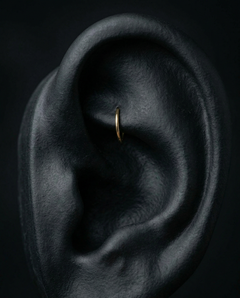
The reason is anatomy. The rook passes through the antihelix — one of the thickest sections of ear cartilage. The needle meets significant resistance, which translates directly to sensation. It’s not the sharpness that people remember — it’s the pressure.
How does it compare to other piercings?
| Piercing | Pain Level | Why |
|---|---|---|
| Lobe | 2-3/10 | Soft tissue, minimal resistance |
| Helix | 4-5/10 | Thin cartilage |
| Tragus | 5-6/10 | Thick but small area |
| Conch | 5-6/10 | Flat, thick cartilage |
| Daith | 5-6/10 | Awkward angle, thick fold |
| Rook | 6-7/10 | Thickest ear cartilage |
| Industrial | 7-8/10 | Two piercings at once |
What does it feel like?
The rook piercing experience unfolds in distinct phases:
The clamp (if used): a firm squeeze on the antihelix fold. Some piercers use freehand technique instead. The clamp itself creates a dull pressure — uncomfortable, but not painful.
The needle: this is the intense part. You’ll feel strong pressure followed by a sharp, hot sensation as the needle passes through the cartilage. The whole process takes 1-2 seconds. Most people describe it as a deep pinch with a burning edge.
Jewellery insertion: your piercer threads the curved barbell through the fresh channel. This creates a secondary wave of pressure — less sharp than the needle, but achey and uncomfortable. Some people find this part more unpleasant than the needle itself.
Immediately after: a throbbing warmth that gradually subsides over 15-30 minutes. Many people feel a rush of adrenaline followed by relief. The worst is over.
Pain after the piercing
How to reduce the pain
Choose an experienced piercer. A confident, precise piercer works faster and cleaner. The difference between a 1-second and a 3-second needle pass is significant when you’re feeling it.
Eat before your appointment. Low blood sugar increases pain perception and the risk of feeling faint. Have a proper meal 1-2 hours before.
Breathe. Deep, slow breaths during the piercing reduce tension in your body. Most piercers will tell you to take a deep breath in, then pierce on the exhale.
Avoid caffeine and alcohol. Caffeine increases anxiety and pain sensitivity. Alcohol thins the blood and increases bleeding and swelling.
Don’t overthink it. The anticipation is often worse than the piercing. People who go in relaxed consistently report lower pain ratings than those who arrive anxious.