Key takeaways
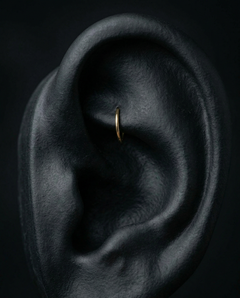
- Rook piercings take 6-18 months to fully heal — one of the longest ear piercing healing times
- The thick antihelix cartilage has limited blood supply, which slows natural healing
- It will look healed on the outside long before the internal channel is fully formed
- The most common mistake is changing jewellery too early (before 6 months minimum)
- Saline solution twice daily and zero touching are the foundations of successful healing
Rook healing: the complete timeline
Rook piercings heal in stages, and the timeline can vary significantly from person to person. The single most important thing to understand is this: your rook will look healed months before it actually is. The outside skin closes relatively quickly, but the internal cartilage channel takes much longer to stabilise. Treat every timeline milestone as a minimum, not a target.
Day 1-3
Fresh piercing — acute inflammation
Significant swelling, redness, warmth, and throbbing. The area may swell enough that the barbell balls sit close to the skin. This is normal. Clear or pale yellow discharge (lymph fluid) is expected and healthy. Do not touch, rotate, or clean with anything other than saline.
Week 1-2
Peak swelling subsides
The worst of the swelling passes. Crusty discharge forms around the barbell — this is dried lymph and is a sign of normal healing. Don’t pick at it. Your saline soak will soften and remove it gently. Sleeping on this ear will be impossible without pain.
Week 3-4
Settling in
Discharge reduces. The piercing starts to feel like a normal part of your ear — less actively aware of it. You may notice occasional twinges, especially if you accidentally bump it. Continue saline twice daily.
Month 2-3
The deceptive calm
It looks good. It feels fine. The temptation to change jewellery is strong. Don’t. The internal channel is still fragile. A flare-up at this stage (irritation bump, renewed swelling) is extremely common and usually caused by accidental trauma or premature jewellery changes.
Month 4-6
Intermediate healing
The piercing channel is strengthening. You may be able to downsize your barbell length (your piercer should do this — don’t attempt it yourself). Some people experience a second wave of sensitivity around month 4-5. This is normal and temporary.
Month 6-8
Possible jewellery change
With your piercer’s approval, you may be able to switch to a hoop at this stage. Have your piercer assess the channel before attempting this. If there’s any lingering sensitivity, wait longer.
Month 9-12
Late healing
Most rook piercings are functionally healed by month 12. The channel is established and tolerates jewellery changes. However, the tissue is still maturing and will continue to strengthen over time.
Month 12-18
Full maturity
Some rook piercings need the full 18 months, particularly in people with thicker cartilage, slower healing genetics, or those who experienced setbacks during healing. At this stage, the piercing is robust and fully mature.
The number one healing mistake
Changing jewellery before month 6. The rook looks healed by month 2-3, and it’s incredibly tempting to swap to a beautiful hoop at this point. But the internal channel is still forming, and forcing a hoop through an immature channel can set healing back by months. Wait. Check with your piercer. Be patient.
What’s normal during healing
Clear or pale yellow discharge: this is lymph fluid, not pus. It’s a healthy sign of healing. It dries into crusts around the jewellery.
Occasional swelling flare-ups: cartilage piercings can swell intermittently throughout the healing period, especially after being bumped or slept on. This doesn’t mean something is wrong.
Itching: a positive sign — it means tissue is regenerating. Don’t scratch or touch.
Slight redness around the holes: normal for months. Cartilage heals slowly and the tissue around the entry/exit points may remain slightly pink for a long time.
Warning signs: when to worry
Green or dark yellow discharge: could indicate infection. See a doctor or visit your piercer.
Increasing pain after week 2: pain should gradually decrease, not get worse. If it’s escalating, something may be wrong.
Red streaks spreading from the piercing: a possible sign of spreading infection. Seek medical attention promptly.
A persistent bump that doesn’t respond to saline: this could be an irritation bump (common and treatable) or a keloid (less common, may need medical assessment). Your piercer can help diagnose the difference.
Aftercare protocol
Clean twice daily with sterile saline solution (0.9% NaCl). Spray onto the piercing, let it sit for 30 seconds, then pat dry with clean non-woven gauze or kitchen roll.
Never touch it with unwashed hands. Don’t twist, rotate, or “check” the jewellery. Movement disrupts the forming tissue.
Don’t sleep on it. For 6+ months, avoid putting pressure on the pierced ear. A travel pillow with a hole is the most popular solution.
Keep hair, phones, and headphones away. Hair products, phone bacteria, and headphone pressure are common irritation sources.
No swimming for at least 4-8 weeks. Pools, hot tubs, and natural water contain bacteria that can infect a healing piercing.
For healed rook piercings
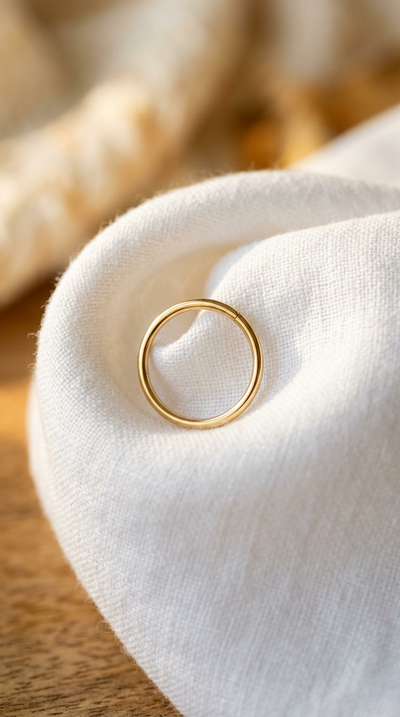
14K Solid Gold Rook Ring
The reward at the end of healing. Seamless hoop, 6-8mm. 18G/20G. Nickel-free.
Shop rook rings →
Frequently asked questions
Why does the rook take so long to heal?
The antihelix is one of the thickest cartilage areas in the ear. Cartilage has very limited blood supply compared to soft tissue like the earlobe. Blood carries the immune cells and nutrients needed for healing — less blood flow means slower repair. It’s simply biology.
When can I change to a hoop?
At the earliest, 6 months — but only with your piercer’s approval. Many piercers prefer to wait 8-12 months for rook piercings to ensure the channel is truly mature. Switching too early is the most common cause of healing setbacks.
My rook piercing keeps getting irritation bumps. What do I do?
Irritation bumps are almost always caused by: sleeping on it, touching it, poor jewellery quality, or premature jewellery changes. Return to strict saline-only care, eliminate the irritant, and be patient. They typically resolve within 2-4 weeks once the cause is addressed. If it persists, visit your piercer.
Can I speed up rook piercing healing?
You can’t speed it up, but you can avoid slowing it down. Good nutrition, adequate sleep, no smoking, consistent saline cleaning, and not touching the piercing give your body the best environment to heal at its natural pace. There are no shortcuts.
←
Back to the complete rook piercing guide
Covers rook types, full pain chart, healing timeline, sizing, aftercare, and FAQ
Ready for your rook ring?
14K solid gold, handmade to your size. 6-8mm including half sizes. Nickel-free, hypoallergenic.
Shop rook rings →
S
Stepoy
Piercing Jewellery Specialists
We craft handmade 14K solid gold piercing jewellery and publish in-depth guides to help you make informed decisions about your piercings. Every guide is written with care, accuracy, and a genuine commitment to your piercing health.