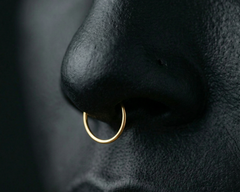
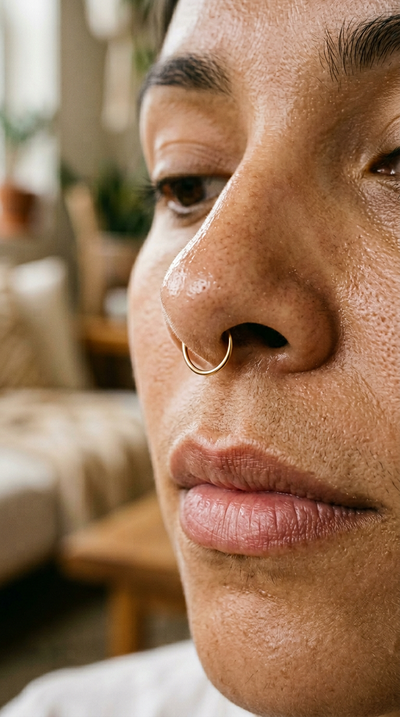
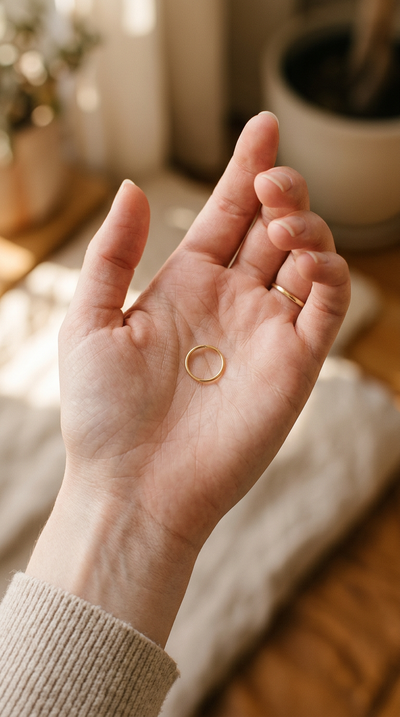
New 14ct Solid Gold Piercing Hoop


Gold Nose Ring vs Stud: Which Is Right for You?
- Studs (L-shape, corkscrew, bone) are best during healing — stable and low movement
- Hoops (seamless rings) are the most popular post-healing choice for aesthetic impact
- Most piercers recommend healing with a stud, then switching to a hoop at 3-6 months
- 8mm is the most popular nose ring diameter — visible but not oversized
- 14K solid gold is ideal for nose jewellery because of constant moisture exposure inside the nose
Ring vs stud: the big decision
This is the most common question in nostril piercing: hoop or stud? The answer depends on where you are in your piercing journey. During healing, studs win for practicality. Once healed, the choice is purely aesthetic — and most people end up owning both, switching between them depending on their mood and outfit.
The short answer: start with a stud for healing. Switch to a hoop once healed. Keep both in rotation for variety. A 14K gold seamless hoop is the most popular long-term choice.
All nostril jewellery types
Seamless hoop (nose ring)
A continuous circle with no visible join. The classic nose ring look. Creates a clean, elegant circle against the nostril. The most popular post-healing option. Available from 6mm (very snug) to 12mm (statement).
L-shape stud
A straight post that bends at a 90-degree angle inside the nostril. Easy to insert and remove. The most common starter jewellery. Secure and comfortable for daily wear.
Corkscrew stud
A post with a spiral curve that threads through the piercing. More secure than L-shape because the spiral grips the inside of the nostril. Slightly harder to insert but less likely to fall out.
Bone stud
A straight post with a small ball on the end that pops through the piercing. The simplest design. Easy to insert but can fall out more easily than L-shape or corkscrew. Best for fully healed piercings.
Flat-back labret
A post with a flat disc on the inside. The most secure and comfortable option for healing. The flat back sits flush inside the nostril, preventing snagging. Some piercers prefer this as initial jewellery.
Comparison table
| Type | Best for | Security | Ease of use | Healing? |
|---|---|---|---|---|
| Seamless hoop | Healed piercings | Good | Moderate | After healing |
| L-shape stud | Healing + daily wear | Good | Easy | Yes |
| Corkscrew | Active lifestyles | Very good | Moderate | Yes |
| Bone stud | Quick changes | Fair | Very easy | Healed only |
| Flat-back labret | Healing | Excellent | Requires tool | Best option |
Which is best for healing?
Flat-back labret or L-shape stud. Both are stable, low-movement options that let the piercing channel form without disruption. Hoops move too much during healing, which can cause irritation bumps and delayed healing.
When to switch to a hoop: month 3-4 at the earliest, with piercer approval. Some piercers recommend waiting 6 months for the most stable transition. The hoop looks just as good at month 6 as it would at month 2 — but at month 6 your piercing is ready for it.
Nose ring size guide
| Size | Look | Best for |
|---|---|---|
| 6-7mm | Very snug, sits tight to nostril | Subtle, barely visible ring |
| 8mm Popular | Classic nose ring | Most popular, visible but elegant |
| 9-10mm | Relaxed, more visible loop | Statement, bohemian aesthetic |
| 11-12mm | Maximum impact | Bold, dramatic hoop |