Key takeaways
- Helix bumps are irritation bumps (granulation tissue) — not infections and not keloids in the vast majority of cases
- The helix is bump-prone because it sits on the outer ear rim — the most exposed position for sleeping pressure, hair snagging and hat/headband friction
- The #1 cause: sleeping on the pierced ear. #2: hair wrapping around or snagging on the jewellery
- Treatment: remove the irritation source, switch to safe metal, saline only — most bumps flatten in 2–4 weeks
- Forward helix piercings are even more bump-prone than standard helix because of their proximity to glasses temples and sunglasses arms
- 14K solid gold or implant-grade titanium eliminates material-related bumps permanently
What a helix bump actually is
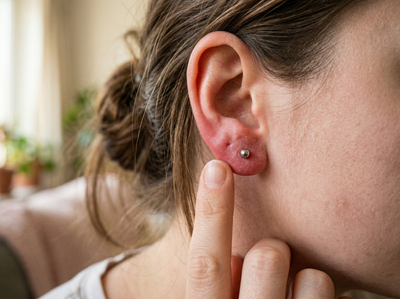
The bump beside your helix piercing is a granuloma — excess healing tissue that forms when the piercing channel is repeatedly disrupted. It is your body’s healing response piling up faster than it can resolve, because something keeps restarting the process.
This is not an infection (no thick pus, no spreading redness, no fever). It is not a keloid (not genetic, not growing beyond the wound, not hard and shiny). It is an irritation response — a symptom with a specific cause. Find the cause, remove it, and the bump resolves itself within 2–4 weeks as the body reabsorbs the excess tissue.
Why the helix is especially vulnerable
The helix sits on the outermost rim of the ear — the most exposed cartilage position on the entire ear. This placement creates a unique set of daily irritation sources:
Maximum sleeping exposure. When you sleep on your side, the helix is the first point of contact between your ear and the pillow. The entire weight of your head compresses the jewellery into the thin cartilage rim. Unlike the conch (which sits in a bowl) or the tragus (which is partially shielded), the helix takes the full force of sleeping pressure with no cushioning.
Hair snagging. The outer ear rim is a natural trap for hair. Individual strands wrap around studs, loop through hoops, and catch on jewellery posts. Every snag pulls the jewellery, creating a micro-trauma that triggers the bump response. People with long, fine or curly hair experience this more frequently.
Clothing and accessories. Pulling jumpers, hoodies and turtlenecks over your head catches helix jewellery. Scarves, beanies, headbands and hats rub against the helix. Over-ear headphone cups rest directly on the outer rim. Each contact point creates friction on the piercing.
Glasses and sunglasses. The temples (arms) of glasses pass directly over or near the helix piercing, depending on placement. Forward helix piercings are particularly affected — the glasses arm may rest against or press on the jewellery every time you wear them.
Thin cartilage with limited blood supply. The helix rim is thinner cartilage than the conch or tragus. While this means it can heal slightly faster in ideal conditions (4–6 months), it also means the tissue has less resilience to repeated trauma. A bump can form quickly from even moderate irritation.
The causes, ranked
#1 Most common
Sleeping on it
The helix takes full pillow pressure during side sleeping. The outer rim has no cushioning — the jewellery is compressed directly into the thin cartilage edge. A travel pillow with the ear in the hole is the single most effective prevention and treatment measure.
#2 Very common
Hair snagging
Hair wraps around studs, loops through hoops, and catches on post ends. Each snag is a micro-trauma. Long, fine and curly hair types are most affected. Tying hair back during healing significantly reduces bump risk.
#3 Common
Wrong material
Nickel in surgical steel or base metal under gold plating causes chronic inflammation. The helix’s thin cartilage is reactive — a material bump appears faster here than on thicker cartilage like the conch. Switch to 14K gold or implant-grade titanium.
#4 Common
Clothing & accessories
Jumpers, hoodies, scarves, beanies and hats all catch or rub helix jewellery. Forward helix piercings add glasses temple arms to this list. Be conscious of what passes over your ear during healing.
#5 Occasional
Touching & twisting
Adjusting the stud, playing with a hoop, checking the bump. The helix is easy to reach and tempting to fiddle with. Every touch moves metal inside the wound and introduces bacteria.
#6 Occasional
Over-ear headphones
The padded cups of over-ear headphones rest on or near the helix rim. Extended sessions compress the jewellery into the cartilage. Use earbuds (which do not contact the helix) during healing.
Forward helix: extra bump risk
Forward helix piercings (on the front fold of the ear, near the head) are even more bump-prone than standard helix. They sit in a tighter cartilage fold that traps moisture and hair products, and they are in the direct path of glasses arms. If you wear glasses daily and have a forward helix bump, the glasses are very likely the cause. Consider switching to contact lenses during healing, or adjust the temple arm angle with an optician so it does not rest on the piercing.
Bump vs keloid vs infection
| Irritation bump | Keloid | Infection |
|---|
| What it is | Excess granulation tissue | Genetic scar overgrowth | Bacterial invasion |
| Look | Small, soft, flesh/pink | Hard, shiny, rubbery, grows beyond wound | Red, swollen, hot |
| Pain | Tender when touched | Usually painless | Throbbing, escalating |
| Discharge | Clear/pale yellow lymph | None | Thick green/white pus |
| How common | Very — majority of bumps | Rare — genetic | Uncommon with aftercare |
| Treatment | Remove cause — self-resolves | Dermatologist | Doctor (antibiotics) |
| Resolves? | Yes — 2–4 weeks | Not without medical treatment | Yes — with antibiotics |
Helix keloid concern
The helix is one of the ear positions where keloids are most discussed online — partly because the outer rim is highly visible, so any bump causes disproportionate concern. True keloids are genetic, run in families, and are most common in people of African, Asian and Hispanic descent. If your bump appeared after a specific event (sleeping, snagging, material change) and sits at the piercing hole, it is almost certainly an irritation bump. If you are unsure, a dermatologist can give a definitive diagnosis.
How to treat it
Identify your cause
Check the cause grid above. Be honest: are you sleeping on the pierced side? Has your hair been catching on the jewellery? Are you wearing hats or headbands? The helix’s most common triggers are all external physical pressures.
Eliminate the pressure or snagging
Sleeping → travel pillow or switch sides. Hair → tie back during healing, check for strands wrapped around the jewellery. Clothing → be conscious when dressing, unbutton shirts instead of pulling over head. Glasses → adjust temple angle or use contacts during healing.
Check your material
Surgical steel, gold-plated, sterling silver, or unknown alloy → visit your piercer for a swap to implant-grade titanium (ASTM F-136) or 14K solid gold (nickel-free alloy). The helix’s thin cartilage reacts to nickel quickly — material bumps appear within days on the helix.
Saline only, twice a day
Sterile saline spray (0.9% sodium chloride). Spray the bump and both sides of the piercing morning and night. No tea tree oil, no aspirin paste, no chamomile, no crushed paracetamol. These cause chemical irritation that makes helix bumps worse.
Wait 2–4 weeks
The helix responds relatively quickly to treatment because the cartilage is thinner than the conch. Expect first visible improvement within 3–5 days, and full resolution within 2–4 weeks. Stubborn bumps (older, larger, or with multiple causes) may take 4–6 weeks.
Nickel-free · safe
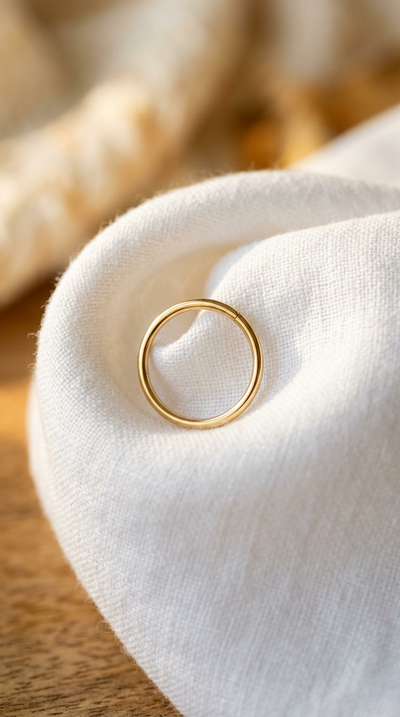
14K Gold Helix Ring
14K solid gold, nickel-free alloy. Eliminates material bumps. 18G & 20G, 6-8mm.
Shop bump-free rings ->Recovery timeline
Day 1–3
No visible change
The bump looks the same. Internal healing has begun. If you swapped jewellery, expect mild tenderness as the tissue adjusts to the new piece.
Day 3–7
First improvement
Tenderness fades. The bump may feel softer or look slightly flatter. Redness begins to reduce. The helix’s thinner cartilage responds faster than the conch — early signs often appear within the first week.
Week 2–3
Visibly smaller
The bump is noticeably reduced. Daily fluctuation is normal. Continue saline, continue avoiding pressure. The overall trend is clearly downward.
Week 3–4
Mostly flat
Most helix bumps are flat or nearly flat by week 4. A slight colour or texture difference may remain for another 2–3 weeks as the skin fully normalises.
Week 4–6
Stubborn bumps
If the bump persists, revisit causes. The helix is often affected by multiple simultaneous triggers (e.g. sleeping + hair snagging). Addressing only one may not be enough. See your piercer if no improvement by week 6.
Why material matters on the helix
The helix is thin cartilage with a short piercing channel. This means the metal-to-tissue contact ratio is high relative to the tissue volume — a small piece of reactive metal has a proportionally large effect. Material bumps appear on the helix faster than on thicker cartilage locations like the conch.
| Material | Nickel | Helix bump risk |
|---|
| 14K solid gold SAFEST | None (nickel-free alloy) | Near zero |
| Implant-grade titanium | None (ASTM F-136) | Near zero |
| “Surgical steel” | 10–14% | High — fast reaction on thin cartilage |
| Gold-plated | In base metal | High once plating wears |
| Sterling silver | Trace + oxidises | Moderate — can stain helix tissue permanently |
Sterling silver warning: silver oxidises inside piercings, producing black tarnish that can permanently stain the tissue around the helix piercing. This discolouration (called argyria) is cosmetically irreversible. Never wear sterling silver in a helix piercing — healed or otherwise. For the full material comparison, see our gold-plated vs solid gold guide.
Multiple helix piercings and bumps
Many people have two, three or even four helix piercings on the same ear (stacked helix or triple helix). Multiple piercings increase bump risk because of compounding pressure — each piercing is an additional friction point during sleeping, and healing multiple cartilage wounds simultaneously strains the body’s healing resources.
If one piercing has a bump: treat it using the protocol above. The other piercings may be fine and do not need intervention unless they also show symptoms.
If multiple piercings have bumps: the cause is almost certainly systemic — sleeping on the ear, material quality across all piercings, or over-cleaning. Fix the root cause and all bumps should improve together.
Prevention for stacks: heal one helix piercing fully (4–6 months) before getting the next. Healing two or three cartilage piercings simultaneously on the same ear dramatically increases complication rates. Space them out, and use safe material for all of them from the start.
What not to do
No tea tree oil. Chemical irritant on wound tissue. Causes more helix bumps than it fixes. Professional piercers universally advise against it.
No popping or squeezing. Not a spot. It is solid tissue, not fluid. Squeezing causes trauma and makes the bump larger.
No removing the jewellery entirely. The helix can begin to close within hours. A sealed hole can trap irritation or infection inside the tissue. Keep jewellery in — change the material if needed.
No switching to a hoop “to help it heal.” If you got the bump with a stud, a hoop introduces rotation that will worsen it. Stay in a flat-back stud until the bump is fully resolved and the piercing is fully matured.
No piercing gun jewellery. If your helix was pierced with a gun (butterfly-back stud), the jewellery itself is a bump cause. Gun studs are too short, use butterfly backs that trap debris, and are made from low-quality metal. Have a professional piercer replace it with a flat-back labret stud in titanium or 14K gold.
Gun-pierced helix
Helix piercings done with a gun (common at high-street jewellers and pharmacies) are significantly more likely to develop bumps than needle-pierced helixes. The gun forces a blunt stud through the cartilage, causing micro-fractures and trauma that a hollow needle does not. If your helix was gun-pierced and has a persistent bump, the piercing method itself may be contributing. Have a professional piercer assess the situation and replace the gun jewellery with appropriate flat-back labret jewellery.
How to prevent helix bumps
Sleep management. Travel pillow, donut pillow, or opposite side. The helix is the most sleep-exposed piercing on the ear. This one habit change prevents the majority of helix bumps.
Hair management. Tie long hair back during healing. Check for strands wrapped around the jewellery morning and night. If you find hair looped around your stud, gently unwrap it — do not pull or yank.
Safe material from day one. Implant-grade titanium or 14K solid gold. The helix’s thin cartilage reacts fast to nickel — investing in quality initial jewellery avoids weeks of bump troubleshooting.
Needle, not gun. Always get cartilage piercings with a hollow needle from a professional piercer. Never a piercing gun. This single choice reduces bump risk, infection risk and healing time.
Dress carefully. During healing, unbutton shirts before removing them. Put on hats and scarves gently. Be conscious of anything that passes over or presses against the helix.
Adjust glasses if needed. If glasses temple arms rest on your helix, ask an optician to adjust the angle so they pass above or below the piercing. For forward helix piercings, this is often essential.
When to see a professional
Bump not improving after 4 weeks of consistent cause removal and saline care. Your piercer can check for hidden issues like incorrect post length, placement problems or undetected snagging points.
Bump growing beyond the piercing site, hard, shiny and unresponsive to treatment. Possible keloid — see a dermatologist.
Infection signs — see a doctor
Thick green or white pus, spreading redness across the ear, throbbing pain that escalates, warmth, significant swelling, or fever. Do not remove the jewellery — leave it in so the wound can drain. See your GP or a walk-in clinic for antibiotic assessment.
Frequently asked questions
Is my helix bump a keloid?
Almost certainly not. Keloids are genetic, grow beyond the wound boundaries, are hard and shiny, and do not resolve on their own. An irritation bump sits at the piercing hole, appeared after a trigger event, and resolves when the cause is removed. If keloids do not run in your family, the probability is extremely low. A dermatologist can give a definitive diagnosis if you are concerned.
My helix was pierced with a gun — is that why I have a bump?
Likely contributing. Piercing guns force blunt studs through cartilage, causing micro-fractures and trauma that hollow needles do not. Gun studs are also typically too short and made from low-quality nickel-containing metal with butterfly backs that trap bacteria. Visit a professional piercer to replace the gun jewellery with a properly fitted flat-back labret in titanium or 14K gold. This alone often resolves the bump.
I have a triple helix and one bump — will the others get bumps too?
Not necessarily. If the bump is caused by localised snagging or pressure on one specific piercing, the others may be unaffected. However, if the cause is systemic (sleeping on the ear, material quality), the other piercings may develop bumps over time. Treat the existing bump using the protocol above and address any systemic causes to protect the others.
Can I wear over-ear headphones with a helix bump?
Not until the bump has resolved. Over-ear headphone cups rest on or near the helix rim, compressing the jewellery. Switch to earbuds (AirPods, etc.) which sit inside the ear canal and do not contact the helix. Resume over-ear headphones only after the bump has been completely flat for at least 2 weeks.
How long does a helix bump take to go away?
Typically 2–4 weeks once the cause is removed. The helix responds slightly faster than the conch because the cartilage is thinner. Expect first visible improvement within 3–5 days. Stubborn bumps with multiple causes can take 4–6 weeks. If no improvement after 6 weeks of consistent treatment, see your piercer.
Will tea tree oil help my helix bump?
No. Tea tree oil is a chemical irritant on wound tissue and frequently makes helix bumps worse. It is not sterile, not an antibiotic, and not suitable for use inside piercings. Professional piercers and dermatologists consistently advise against it. Use sterile saline spray only.
←
Helix Piercing Healing: Your Complete Timeline
Week-by-week healing, aftercare, and when to switch to a hoop
S
Stepoy
Piercing Jewellery Specialists
We craft handmade 14K solid gold piercing jewellery and publish in-depth guides to help you make informed decisions about your piercings.