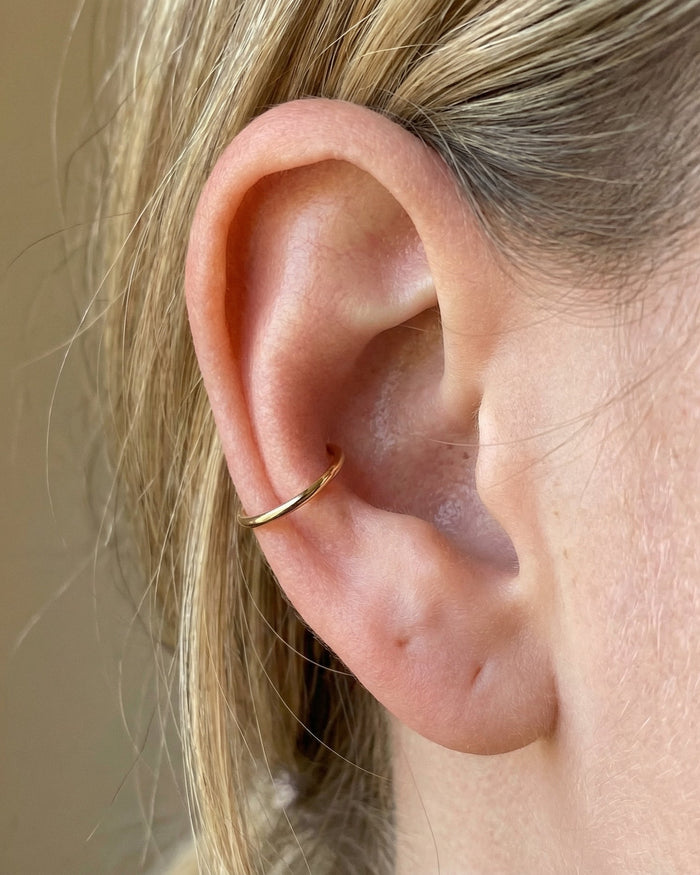
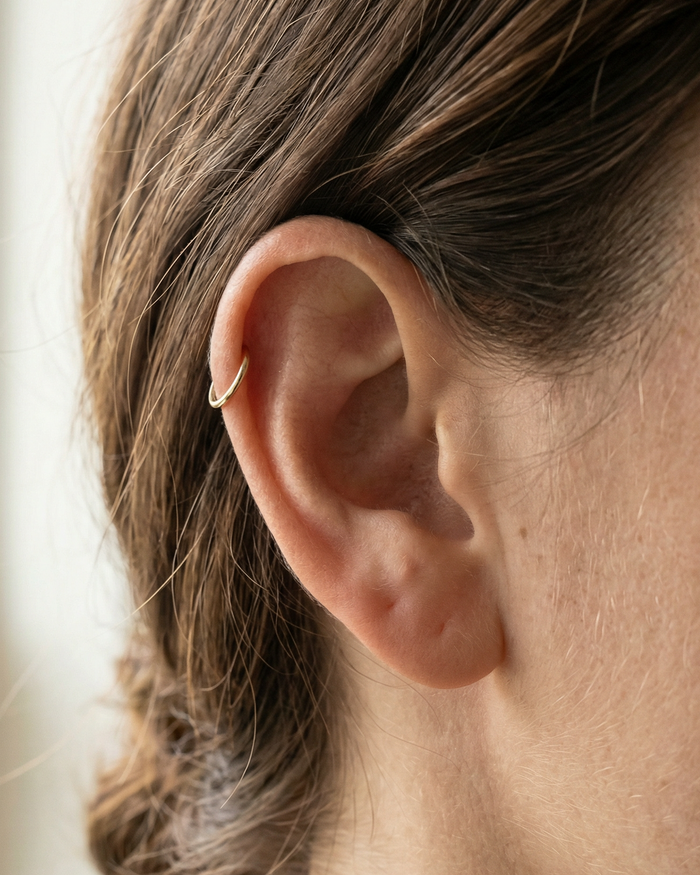
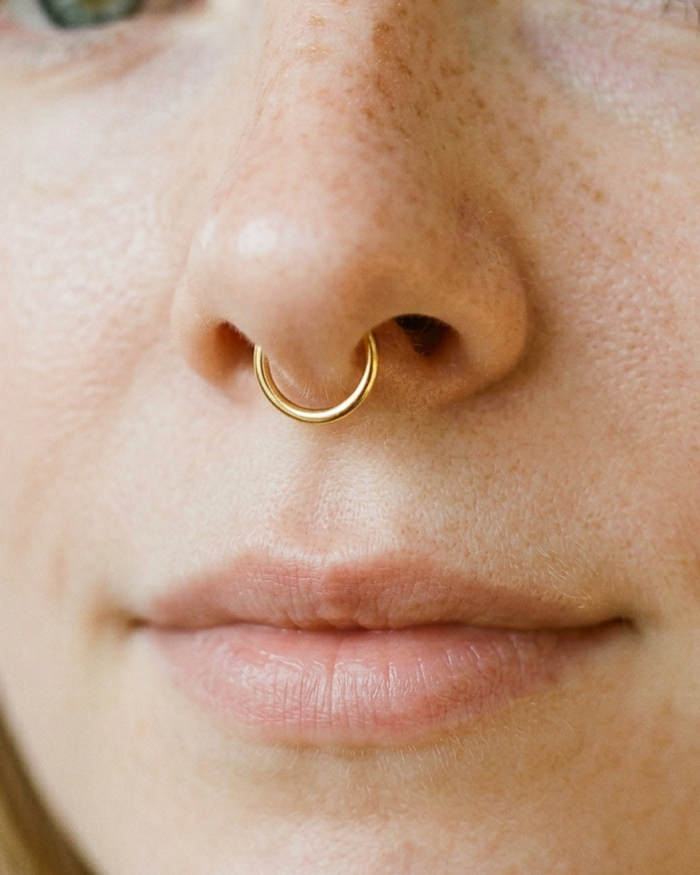
New 14ct Solid Gold Hoop


18G vs 20G Daith Rings: How to Choose the Right Gauge
Two daith rings can look almost identical in a photograph and still feel quite different to wear. The first step is to find out what gauge is already in your healed piercing. Then you can choose the diameter and style that suit it.
- Gauge is wire thickness: 18G is about 1.0mm; 20G is about 0.8mm.
- Match the gauge of jewellery already worn comfortably in your healed daith.
- Check inner diameter separately. Gauge and ring size answer different questions.
- If you do not know your gauge, ask your piercer before ordering.
What does gauge mean?
Gauge describes the thickness of the part of the ring that passes through the piercing. The numbers run backwards: 18G is thicker than 20G. In approximate metric terms, 18G is 1.0mm and 20G is 0.8mm. You may also come across 16G, which is about 1.2mm, on jewellery from other makers or in an existing piercing.
This is separate from the hoop’s inner diameter, measured across the empty space inside it. A ring can have the right gauge and still feel too close or too loose around your ear if the diameter is wrong.
18G and 20G side by side
| Gauge | Approx. wire thickness | Appearance | What to check |
|---|---|---|---|
| 18G | 1.0mm | A slightly more defined line | Does your current healed daith wear 18G comfortably? |
| 20G | 0.8mm | A finer line | Is this your current gauge, and is the chosen hoop suitable for your anatomy? |
The finer look of 20G may appeal to you, but appearance alone is not a reason to change gauge. The appropriate choice depends on your existing piercing, the ring design and a professional’s assessment when you are unsure. A 16G piercing should not be assumed to take an 18G or 20G ring just because a thinner wire can pass through it.
How can you check your current gauge?
What about the inner diameter?
Diameter depends on the position of the piercing and the shape of your ear. A close fit on one person may press into another person’s cartilage. Start with the dimensions of a comfortable existing ring, then compare the available sizes on the product page. If you have no reliable measurement, a piercer can assess the space the hoop needs.
STEPOY’s current daith collection is the most useful place to compare the available options: browse 14ct gold daith rings. Choose only for a fully healed piercing and check the individual product’s current variants before ordering.
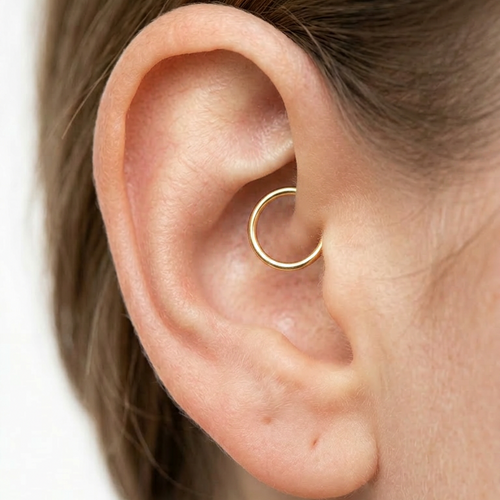
What if you want to change gauge?
A smaller gauge number means a thicker wire. Moving from 20G to 18G therefore means increasing thickness; never push jewellery through resistance. Moving from 18G to 20G may feel easier at first, but a channel can narrow over time and the new fit should still be assessed for comfort and stability.
If you are changing the size or style of jewellery, speak with a professional piercer. The Association of Professional Piercers advises that a piercer can help choose the right size and type for a healed piercing, and notes that even a healed channel can shrink after jewellery removal. Read its guidance on healed piercings.
Does another piercing use the same gauge?
Not necessarily. Your conch, helix or septum may use a different thickness and diameter from your daith. Keep the measurements for each placement separately, even when you want matching gold hoops across an ear stack.