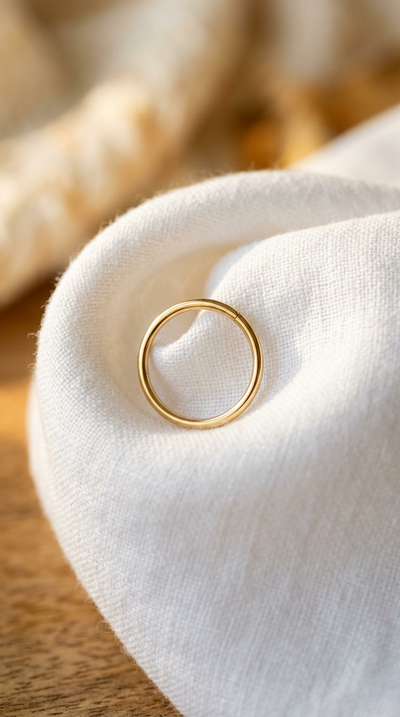
New 14ct Solid Gold Piercing Hoop
Rook Jewellery: Curved Barbells, Hoops & Gold Rings
- Curved barbells are used during healing; hoops become an option once fully healed (6+ months)
- 14K solid gold and implant-grade titanium are the safest metals for rook piercings
- Most rook piercings suit 6-8mm hoops — 7mm is the most popular size
- Avoid gold-plated, surgical steel, and fashion jewellery — they contain irritants
- The right size makes all the difference: too large looks awkward, too small pinches the fold
Rook jewellery types explained
Curved barbell
The standard starting jewellery for every rook piercing. The gentle curve follows the natural shape of the antihelix fold, and the barbell design keeps the piercing stable during healing. The two decorative ends (often small balls or gems) sit on either side of the fold. This is what your piercer will install, and you’ll wear it for at least 6 months.
Seamless hoop (ring)
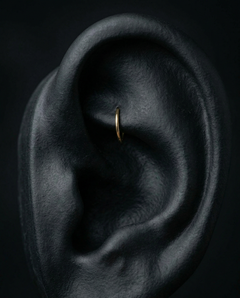
The most popular post-healing option. A seamless hoop creates a clean, continuous circle that nestles into the rook fold. No visible join or clasp. In 14K gold, it catches the light beautifully. Sizes range from 6mm (very snug, hidden look) to 8mm (more visible, statement look). This is the quintessential rook aesthetic.
Clicker ring
A hinged ring that clicks shut. Easier to insert and remove than a seamless hoop, which makes it popular for people who want to change jewellery more frequently. Available in plain designs and decorative styles with gems or patterns. Slightly chunkier than a seamless hoop due to the hinge mechanism.
Choosing the right size
Size is the most critical decision for rook jewellery. The antihelix fold varies in depth and thickness from person to person, so there’s no one-size-fits-all answer. Here’s how the most common sizes look:
| Size | Look | Best for |
|---|---|---|
| 6mm | Very snug, nestled deep in fold | Hidden rook, small ears, discreet style |
| 6.5mm | Snug with slight visibility | Between hidden and classic |
| 7mm Most popular | Classic fit, natural curve | Most ear anatomies, balanced look |
| 7.5mm | Relaxed fit with room | Slightly larger folds |
| 8mm | More visible above fold | Larger rook folds, statement style |
Metal guide
The long healing time of a rook piercing (6-18 months) means the metal quality of your jewellery is absolutely critical. Your body is in contact with this material for over a year. Choose wrong, and you’re risking prolonged irritation, allergic reactions, or infection.
| Metal | Verdict | Notes |
|---|---|---|
| 14K solid gold | ✓ Excellent | Biocompatible, hypoallergenic, beautiful. The gold standard for healed rook piercings. |
| Implant-grade titanium (ASTM F136) | ✓ Excellent | Lightest option, completely nickel-free. Best for initial healing jewellery. |
| 18K solid gold | ✓ Good | Softer than 14K, scratches more easily. Beautiful colour but less durable. |
| Surgical steel (316L) | ⚠ Caution | Contains nickel. Fine for some people, but risky for the 10-15% with nickel sensitivity. |
| Gold-plated | ✗ Avoid | Plating flakes off inside the piercing channel. Exposes base metals. Never use in healing piercings. |
| Fashion / mystery metals | ✗ Avoid | Unknown composition. High risk of nickel, lead, and other irritants. |
Understanding gauge
Gauge refers to the thickness of the wire that passes through your piercing. For rook piercings:
16G (1.2mm) — the most common gauge for rook piercings. Standard thickness that most piercers use.
18G (1.0mm) — thinner, creating a more delicate look. Some piercers prefer this for smaller ears or more refined aesthetics.
20G (0.8mm) — the thinnest common option. Very delicate, but may not be strong enough for the rook’s thick cartilage in all cases.
When to change your jewellery
First downsize (month 2-4): your piercer may shorten the barbell once initial swelling has resolved. This prevents the longer healing barbell from snagging on things. Your piercer should do this — don’t attempt it yourself.
Switch to a hoop (month 6-12): the moment most people are waiting for. A curved barbell works well for healing, but a hoop is where the rook really shines aesthetically. Only switch when your piercer confirms the channel is mature.
Ongoing changes: once fully healed, you can change rook jewellery at home. Always wash your hands, use clean jewellery, and avoid forcing anything. If it hurts, stop and try again later or visit your piercer.