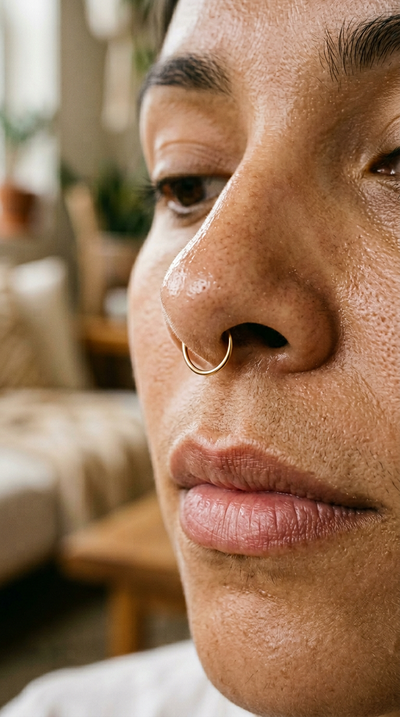
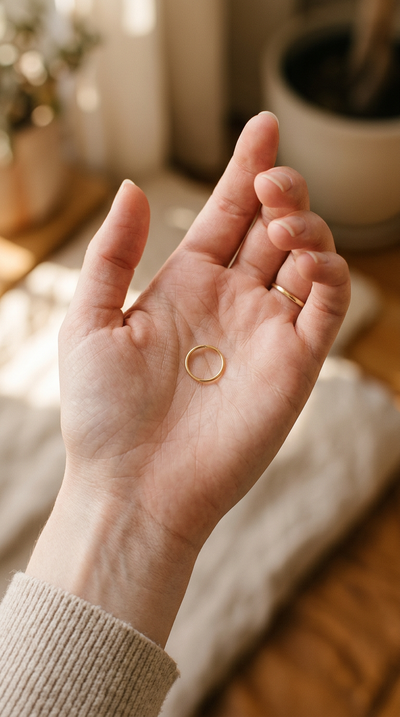
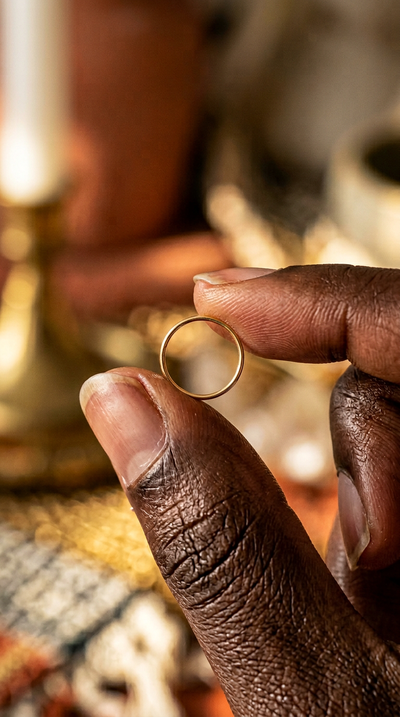
New 14ct Solid Gold Piercing Hoop


Cross 14ct Solid Gold Conch Ring
Cross 14ct Solid Gold Conch Ring


Gold-Plated vs Solid Gold Nose Rings: Why Material Matters
- Gold-plated nose rings have a thin gold coating over a base metal (usually brass or nickel-containing steel) — the plating wears off within weeks to months
- Gold-filled is thicker than plating but still has a base metal core that can cause reactions once the gold layer wears through
- 14K solid gold is gold all the way through — no coating, no base metal, no degradation over time
- Nickel in base metals is the number one cause of piercing irritation, redness, bumps and allergic reactions in the UK
- Solid gold costs more upfront but lasts decades — plated jewellery needs replacing every few months, making it more expensive long-term
The problem with “gold” nose rings
Search for “gold nose ring” online and you will find hundreds of options from £2 to £80+. They all look gold. They all say “gold” in the listing title. But the word “gold” on its own tells you almost nothing about what the ring is actually made from. A £3 gold nose ring and a £45 gold nose ring are fundamentally different products made from completely different materials.
The confusion is deliberate. Sellers use terms like “gold tone”, “gold colour”, “gold plated”, “gold filled”, “gold vermeil” and “solid gold” interchangeably — even though each one refers to a very different construction. If you do not know the difference, you end up putting a brass or nickel-alloy ring in your piercing and wondering why it turns green, itches, or gives you a bump.
What each type actually means
Gold-plated
A base metal ring (typically brass, copper or stainless steel) with an extremely thin layer of gold applied to the surface through electroplating. The gold layer is usually 0.5–2.5 microns thick — for context, a human hair is roughly 70 microns. The gold coating is so thin that friction, sweat and body chemistry begin to wear it away within days of continuous wear. Once the plating erodes, the base metal underneath is exposed directly to your piercing tissue.
Typical base metals: brass (copper + zinc), stainless steel (contains 10–14% nickel), or zinc alloy. All of these can cause irritation, allergic reactions and discolouration.
Gold-filled
A step up from plating. Gold-filled jewellery has a thicker gold layer that is mechanically bonded to a base metal core (usually brass). By regulation, the gold layer must account for at least 5% of the total weight. This makes it more durable than plating — the gold layer can last months or even a year or two with gentle surface wear. However, in a piercing that is worn 24/7, the constant contact with body fluids and tissue accelerates wear. Eventually, the gold layer thins, cracks, or wears through at friction points, exposing the brass core.
The catch: gold-filled is often marketed as “almost as good as solid gold”. For earrings on healed lobes, that may be partly true. For nose piercings that sit inside a channel of tissue, it is not. The base metal core is still there, and your body will eventually meet it.
Gold vermeil
A specific type of plating where the base metal is sterling silver rather than brass or steel, and the gold layer is at least 2.5 microns thick. Better than standard plating, but still a coated product. The gold layer wears away, and sterling silver oxidises in the body, potentially staining the piercing channel black. Not suitable for long-term wear inside a piercing.
14K solid gold RECOMMENDED
The entire ring — every fraction of a millimetre — is made from 14-karat gold alloy. There is no base metal underneath. There is no coating on top. The gold goes all the way through. 14K means 58.3% pure gold, alloyed with metals like palladium, silver and copper for structural strength. When properly made for body jewellery, 14K solid gold contains zero nickel.
You can cut a solid gold ring in half and both halves will be gold. You can wear it for ten years and the surface will be exactly the same material as the day you bought it. This is the fundamental difference: no degradation, no reveal, no surprises.
Side-by-side comparison
| Gold-plated | Gold-filled | 14K solid gold | |
|---|---|---|---|
| Gold content | Surface only (0.5–2.5μm) | 5% of total weight | 58.3% throughout |
| Base metal | Brass / steel / zinc | Brass | None |
| Nickel risk | High | Moderate | None (when nickel-free alloy) |
| Tarnish | Yes — plating flakes | Eventually — gold layer wears | No |
| Safe for piercings | No | Not recommended | Yes — excellent |
| Lifespan in piercing | Days to weeks | Months to 1–2 years | Decades |
| Price (nose hoop) | £2–£8 | £10–£20 | £30–£60+ |
| Cost over 5 years | £60–£200+ (constant replacement) | £30–£80 (periodic replacement) | £30–£60 (one purchase) |
What happens when plating wears off
This is the part that sellers of plated jewellery do not show you. Here is the typical timeline when you wear a gold-plated nose ring continuously:
With 14K solid gold, none of this happens. Month one looks the same as month twelve, which looks the same as year five. The surface composition never changes because there is no hidden layer underneath.
The nickel problem
Nickel is the most common contact allergen in the United Kingdom. Studies estimate that 15–20% of women and 2–5% of men have a nickel allergy. Many more have a sensitivity that only becomes apparent when the metal is in prolonged contact with open tissue — which is exactly what happens inside a piercing.
Nickel is present in the base metals used for gold-plated and many gold-filled products. Stainless steel (commonly labelled “surgical steel”) contains 10–14% nickel. Brass contains trace amounts. Even some cheap 14K gold uses nickel as an alloy metal to cut costs.
Symptoms of a nickel reaction in a nose piercing include persistent redness around the piercing site, itching or burning sensation, clear or yellowish discharge, a bump forming next to the piercing (often mistaken for a keloid), and the piercing channel feeling tender months after it should have healed.
How to tell the difference before buying
It is nearly impossible to tell gold-plated from solid gold by looking at a product photo. Both look identical when new. Instead, use these indicators:
Price. A solid gold seamless nose hoop cannot be made for £5. The raw gold alone costs more than that. If the price seems too good to be true for “gold”, it is plated. A 14K solid gold nose ring in the UK typically starts from £25–£35 for the thinnest gauges.
Material declaration. Reputable sellers state the exact material: “14K solid gold” or “585 gold” (585 refers to 58.5% gold content). Vague terms like “gold colour”, “gold tone”, “premium gold” or just “gold” without a karat number are red flags. Look for the specific karat and the word “solid”.
Weight. Gold is dense. A solid gold nose hoop feels noticeably heavier than a plated brass ring of the same size. This is harder to judge online but obvious once you hold the real thing.
Hallmarks. In the UK, gold items above a certain weight must carry a hallmark from one of the four Assay Offices. Nose rings are often below the weight threshold for mandatory hallmarking, so the absence of a hallmark does not necessarily mean it is fake. However, a seller who can provide assay documentation or references their gold source is more trustworthy than one who cannot.
Why 14K and not 18K or 24K?
Pure gold (24K) is too soft for body jewellery. A 24K nose ring in 22G or 20G wire would bend, kink and deform with minimal handling. It would not hold its circular shape through daily wear. 18K gold (75% pure) is better but still softer than ideal for the thin wire gauges used in seamless hoops.
14K gold (58.3% pure) has the ideal balance. Enough gold to be fully hypoallergenic and resistant to tarnish. Enough alloy metal to give the wire structural integrity, spring and shape retention. This is why 14K is the body piercing industry standard worldwide — it performs better in thin gauges than any other karat.
The alloy metals in quality 14K body jewellery are palladium, silver and copper. Palladium is itself a precious metal that enhances strength without adding allergen risk. This combination produces a warm yellow gold tone that does not fade or discolour, with the mechanical properties needed to survive daily insertion, removal and wear in a piercing.
Choosing the right nose ring
Once you have decided on 14K solid gold, you still need to choose the right size and gauge for your piercing. Two measurements matter:
Diameter (inner width). This is the distance across the inside of the hoop. Common sizes for nostril piercings are 6mm (very snug, hugs the nostril closely), 7mm (most popular — sits neatly without being too tight), and 8mm (slightly looser, more visible ring shape). If you are not sure which size to choose, see our nose ring size guide for measuring instructions.
Gauge (wire thickness). The gauge refers to the thickness of the wire the ring is made from. Standard nose piercing gauges are 22G (thinnest, 0.64mm — most delicate look), 20G (most common, 0.81mm — standard for most piercings in the UK) and 18G (thickest, 1.02mm — slightly bolder). See our gauge comparison guide for help choosing.
Caring for solid gold
Daily wear: no special maintenance required. 14K solid gold does not react to water, sweat, soap, or normal skin chemistry. You can shower with it, sleep in it, and exercise with it. It will not tarnish, corrode or change colour.
Cleaning: rinse under warm water occasionally to remove any buildup of skin oils or cosmetic products. A gentle wipe with a soft cloth restores the original lustre. Do not use abrasive cleaners or harsh chemicals — they are unnecessary and can micro-scratch the surface.
Storage: when not worn, store your nose ring in a small pouch or zip-lock bag. Thin-gauge gold rings (especially 22G) can bend if thrown loosely into a drawer with other jewellery. Keep them in their circular shape and away from items that could snag or crush them.