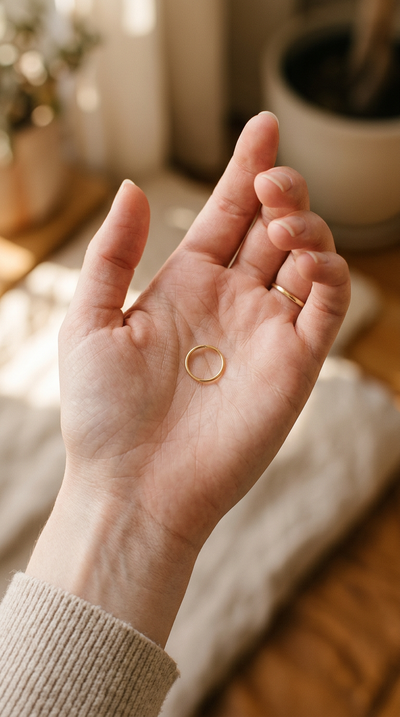
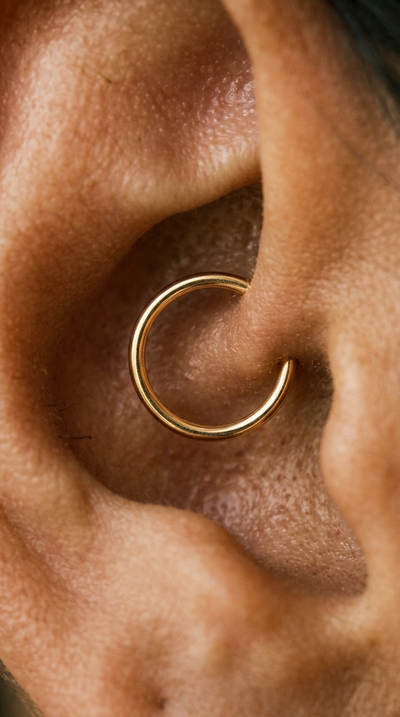
New 14ct solid gold hoop


Infected Daith Piercing: Signs, Treatment & Prevention
- Most daith problems are irritation bumps, not true infection
- The daith is especially bump-prone due to its deep, enclosed location
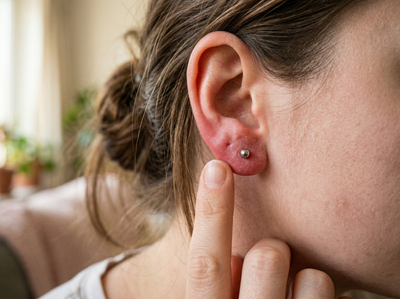
- Infection signs: green/yellow pus, increasing pain, spreading redness, fever
- Do NOT remove jewellery from an infected daith — it can trap infection inside
- Earbuds are a leading cause of daith irritation and infection during healing
Infection vs irritation: key differences
| Symptom | Irritation | Infection |
|---|---|---|
| Discharge | Clear or pale yellow | Green, dark yellow, grey |
| Smell | None or mild | Foul, unpleasant |
| Pain | Mild, comes and goes | Persistent, worsening |
| Redness | Around piercing only | Spreading outward |
| Bump | Fluid-filled, not warm | Abscess: warm, painful |
| Fever | No | Possible |
Detailed infection signs
Coloured discharge: the most reliable indicator. Clear lymph is healthy; green, opaque yellow, or grey discharge suggests bacterial infection.
Escalating pain: daith pain should decrease after week 1-2. If it intensifies, investigate.
Heat: compare both ears by touch. Significant warmth difference suggests infection.
Swelling that increases: some initial swelling is normal. Swelling that gets worse after the first week is not.
Treatment steps
1. Keep jewellery in. It provides a drainage channel. Removing it traps infection.
2. See a doctor. Oral antibiotics are typically needed for cartilage infections.
3. Continue saline care 2-3 times daily alongside antibiotics.
4. Complete the full antibiotic course. Do not stop early.
Daith irritation bumps
The daith is one of the most bump-prone piercings. The enclosed, deep location means moisture accumulates, earbuds create pressure, and it is difficult to clean thoroughly. Irritation bumps are extremely common and usually resolve with improved care.
Top causes for daith bumps: earbuds (number one cause), sleeping on the ear, touching or fiddling, poor-quality jewellery, and harsh cleaning products.
Treatment: remove the cause. Switch to quality jewellery (14K gold or titanium). Strict saline-only cleaning. Give it 2-4 weeks. Persistent bumps after 4+ weeks of improved care need piercer assessment.
Prevention protocol
No earbuds during healing. Over-ear headphones only.
Saline only. No tea tree oil, no alcohol, no hydrogen peroxide.
Do not touch. The daith is especially tempting to fiddle with. Resist.
Quality jewellery from day one. 14K gold or implant-grade titanium. The daith is not the place for cheap metals.
Keep the area dry. After showering, gently dry inside the ear fold. Trapped moisture encourages bacterial growth.