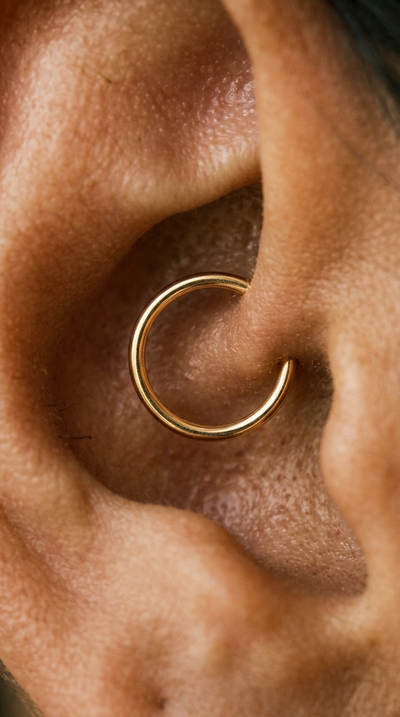
New 14ct solid gold hoop


Daith Jewellery: 14K Gold Rings, Hearts & Hoops
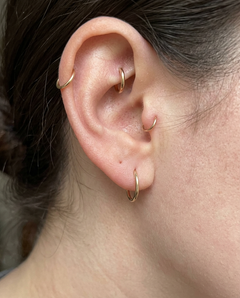
- Daith piercings offer the most jewellery variety of any ear piercing — hoops, hearts, clickers, and decorative rings
- Heart-shaped daith rings are one of the most iconic piercing jewellery styles
- Most daith piercings suit 7-8mm hoops; 6mm for a snug look, 9-10mm for a bolder style
- 14K solid gold is ideal for the daith because the deep, moisture-prone location demands quality materials
- Start with a curved barbell or captive ring during healing, then switch after 6+ months
Daith jewellery types
Seamless hoop
A continuous ring with no visible closure. Creates a clean, minimal look nestled inside the ear fold. The most versatile choice — works for every daith anatomy and style preference.
Heart-shaped ring
The iconic daith jewellery. A wire shaped into a heart that sits beautifully inside the inner ear fold. The daith is the only piercing where heart rings look natural — the fold frames the heart shape perfectly.
Clicker ring
A hinged ring that clicks shut. Available in plain and ornate designs. Easier to insert and remove than seamless hoops, which makes it popular for people who like to change jewellery frequently.
Curved barbell
The standard healing jewellery. A gently curved bar with decorative ends. Stable, secure, and practical during the 6-12 month healing period. Less aesthetic than hoops but functionally superior for fresh piercings.
The heart ring
Heart-shaped daith rings have become a cultural phenomenon. The inner ear fold naturally frames the heart shape in a way that no other piercing location can replicate. In 14K gold, a daith heart ring catches the light beautifully and creates a subtle, romantic accent.
Sizing hearts: heart rings are measured by their overall height. A 7-8mm heart ring fits most daith anatomies. The heart shape means the ring sits slightly differently than a round hoop — the pointed bottom of the heart extends slightly further into the fold.
Size guide
| Size | Look | Best for |
|---|---|---|
| 6mm | Very snug, tight to fold | Small ears, minimal look |
| 7mm Popular | Classic fit, nestled in fold | Most anatomies |
| 8mm Popular | Slightly more visible | Average to larger folds |
| 9mm | More prominent | Larger daith folds |
| 10mm | Statement size | Bold, decorative pieces |
Metal guide
The daith sits in a deep, enclosed part of the ear where moisture and warmth can accumulate. This makes metal quality even more critical than for piercings in more exposed locations.
| Metal | Verdict | Notes |
|---|---|---|
| 14K solid gold | Excellent | Best for long-term daith wear. No tarnish, no nickel, no reaction. |
| Titanium (ASTM F136) | Excellent | Lightest option. Best for initial healing. |
| Surgical steel | Caution | Contains nickel. The daith's enclosed location increases sensitivity risk. |
| Gold-plated | Avoid | Plating degrades faster in moisture-prone daith location. |
When to change jewellery
First change (month 6-8): from healing barbell/ring to your chosen hoop or heart. Your piercer should do this change — the daith is difficult to access for self-change, especially the first time.
Subsequent changes: once fully healed (9-12 months), you can change daith jewellery at home with practice. Clean hands, clean jewellery, and patience. The deep location requires a mirror and good lighting. If it feels difficult, visit your piercer.