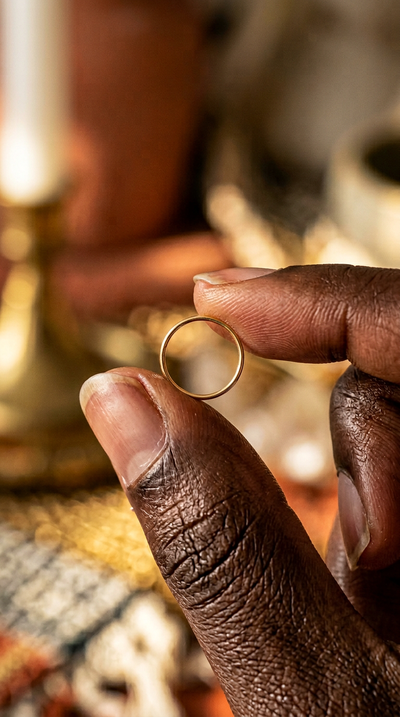
New 14ct solid gold hoop


18G vs 20G Conch Ring: Which Gauge Fits Best?
- Gauge measures wire thickness — a lower number means thicker wire (16G is thicker than 18G, which is thicker than 20G)
- 16G (1.2mm) is the most common conch gauge in the UK — standard at the majority of piercing studios
- 18G (1.0mm) is also widely used, especially for people who want a slightly finer hoop
- 20G (0.8mm) is uncommon for conch but works if your piercing was done at this gauge
- Gauge matters more for conch hoops than for studs — a hoop travels a long path and the wire is fully visible around the ear rim
- You can wear a thinner gauge in a thicker piercing, but not the reverse without stretching
What gauge means for the conch
Gauge is the thickness of the wire or post that passes through your conch piercing. The numbering follows the American Wire Gauge (AWG) system: lower number = thicker wire.
On a conch piercing, gauge affects two things differently depending on whether you wear a stud or a hoop:
With a flat-back stud: gauge is the thickness of the post inside the piercing channel. It is invisible — the post sits entirely within the cartilage. Gauge affects fit and security but has no visual impact. A correct gauge fills the channel snugly; a thinner gauge allows more post movement.
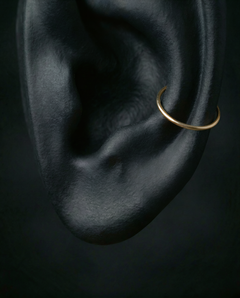
With a conch hoop: gauge becomes a major visual element. The wire exits the piercing, wraps around the outer helix rim, and travels a path of 10–14mm that is fully visible from the side. At this scale, the thickness of the wire determines whether the hoop reads as a bold statement ring or a delicate thread. Gauge is more visually impactful on a conch hoop than on any other ear piercing because of this long visible path.
16G vs 18G vs 20G: compared
| Gauge | Thickness | Conch hoop visual | Feel | Conch use |
|---|---|---|---|---|
| 16G UK STANDARD | 1.27mm | Bold, defined ring — the wire is clearly visible wrapping the ear | Substantial, secure, you feel it in the channel | Most common conch gauge. Standard at majority of UK studios. |
| 18G | 1.02mm | Clean, balanced line — visible but not chunky | Comfortable, moderate presence | Common alternative. Popular for finer, more refined hoop look. |
| 20G | 0.81mm | Delicate thread — barely-there wire around the ear | Very light, barely noticeable | Uncommon for conch. Nostril standard, occasionally used for conch. |
The visual difference is significant. A 16G conch hoop has an unmistakably bold presence — the wire has substance, catches light strongly, and reads as a deliberate feature. An 18G hoop is noticeably finer, creating a more jewellery-like, less piercing-like aesthetic. A 20G hoop is thread-thin, barely registering as a ring from a few feet away.
16G — the conch standard
Wire thickness: 1.27mm.
The look: A conch hoop in 16G is a statement. The wire has real visual weight as it wraps around the helix rim. In 14K gold, the thicker wire reflects more light, creating a warm, glowing band around the ear edge. This is the gauge that produces the dramatic “ear-wrapping ring” effect that makes conch hoops one of the most eye-catching piercings.
Who it suits: anyone who wants their conch hoop to be a visible feature. 16G is the standard piercing gauge at most UK studios, which means the majority of healed conch piercings in the UK are 16G. If you were pierced at a professional studio and are unsure of your gauge, 16G is the most likely answer.
Practical advantages: 16G wire is the sturdiest option. On a conch hoop that travels 10–14mm around the ear, structural rigidity matters. 16G holds its circular shape better than thinner gauges, resists accidental bending when caught on hair or clothing, and opens and closes with a predictable spring that makes insertion easier. For the conch specifically, where the hoop path is long and the ring is handled less frequently (and therefore less practised), 16G is the most forgiving gauge.
18G — the refined option
Wire thickness: 1.02mm.
The look: A step down in visual weight from 16G. The hoop reads as a clean, refined line rather than a bold band. In 14K gold, 18G creates a delicate gold thread wrapping the ear — more fine jewellery, less body piercing. People who prefer their conch hoop to complement their ear stack rather than dominate it often prefer 18G.
Who it suits: people who want the conch hoop look but with a lighter touch. 18G is also the standard gauge for tragus and helix piercings, so if you are building an ear stack and want matching wire thickness across tragus, helix and conch, 18G creates visual consistency. Note that your conch must have been pierced at 18G or larger to wear 18G jewellery — if it was pierced at 16G, an 18G ring will fit through (thinner in thicker = fine) but will sit slightly loose in the channel.
Practical considerations: 18G is slightly more flexible than 16G. On a large conch hoop (10–12mm), the thinner wire means the ring is a little more prone to losing its shape if handled roughly. In 14K gold, which is softer than titanium, handle 18G conch hoops with care when opening and closing.
20G — the delicate extreme
Wire thickness: 0.81mm.
The look: Ultra-fine. A 20G conch hoop in a 10mm diameter is one of the most delicate pieces of body jewellery you can wear. The wire is thin enough that the hoop reads as a glint of gold catching light around the ear rim rather than a defined ring. From conversational distance, it may not register as a hoop at all — just a subtle golden line.
Who it suits: people who want maximum subtlety from their conch hoop. 20G is the standard gauge for nostril piercings, so if you wear a 20G nose ring and want visual continuity between nose and ear, 20G on the conch creates that match. Note: 20G is uncommon as an initial conch piercing gauge. Most UK piercers use 16G or 14G for conch. If your piercing was done at 16G, a 20G ring will fit but with significant extra room in the channel.
Practical considerations: 20G wire on a large conch hoop is fragile. A 12mm ring in 20G 14K gold is easy to bend, kink or deform. Opening and closing the seamless gap requires a gentle touch. If you choose 20G for the conch, handle the ring with care and consider having your piercer insert it the first time. Once in, it is fine for daily wear — the risk is during handling, not wearing.
How to check your gauge
Gauge for studs vs hoops
The gauge question plays out differently depending on what style you wear:
Flat-back stud: gauge determines the post thickness inside the channel. The post is invisible, so gauge has zero visual impact. The only consideration is fit: match the gauge to your piercing. A snug-fitting post keeps the stud stable and reduces movement inside the healing channel. If you are wearing a stud, gauge is a purely functional decision — just match your piercing.
Seamless hoop: gauge becomes a visual and structural decision. The wire wraps around the outer ear rim for 10–14mm of visible path. Thicker wire (16G) creates a bolder visual; thinner wire (18G/20G) creates a finer one. Thicker wire also holds shape better through the long hoop path, making 16G the more structurally reliable choice for conch hoops specifically.
The conch-specific factor: a conch hoop is larger than a tragus or helix hoop. At 10–12mm diameter, the ring is big enough that wire thickness is a significant portion of the visual impression. On a 6mm tragus hoop, the difference between 18G and 20G is subtle. On a 10mm conch hoop, it is obvious. This makes gauge choice more consequential on the conch than on smaller ear piercings.
Gauge and material
Material interacts with gauge in ways that matter at conch hoop sizes:
14K gold at 16G: the optimal combination for conch hoops. The thicker wire gives gold enough structural mass to maintain its circular shape through the long hoop path. 16G gold has a warm, substantial presence wrapping the ear and springs back predictably when opened and closed. This is the most popular combination among conch hoop wearers.
14K gold at 18G: works well but requires more careful handling. The thinner gold wire is softer and more prone to kinking if over-bent during opening. Once in the piercing, it wears beautifully — the concern is only during insertion and removal. If you plan to leave the hoop in long-term without frequent changes, 18G gold is an excellent choice.
14K gold at 20G: viable but fragile at conch hoop diameters. A 10–12mm ring in 20G gold is easy to deform. Consider having your piercer handle insertion. Once in place, it is fine — daily wear does not put the same stress on the ring as handling does.
Titanium at any gauge: harder than gold, holds shape well regardless of thickness. If you want 18G or 20G on the conch and are concerned about deformation, titanium is more forgiving. The trade-off: titanium only comes in silver-grey or anodised colours, not the warm gold tone.
Gauge across your ear stack
If you are building a curated ear with multiple piercings, knowing gauge across each position helps when planning purchases:
| Piercing | Standard gauge | Thickness |
|---|---|---|
| Conch THIS GUIDE | 16G or 14G | 1.2–1.6mm |
| Helix | 18G or 16G | 1.0–1.2mm |
| Tragus | 18G or 16G | 1.0–1.2mm |
| Daith | 16G or 18G | 1.0–1.2mm |
| Rook | 16G or 18G | 1.0–1.2mm |
| Lobe | 20G or 18G | 0.8–1.0mm |
| Nostril | 20G or 18G | 0.8–1.0mm |
| Septum | 16G or 14G | 1.2–1.6mm |
Matching strategy: conch and septum share the same gauge range (16G/14G). Tragus and helix share a range (18G/16G). If your conch is 16G and your helix is 18G, the wire thicknesses differ — the conch hoop will look slightly bolder than the helix hoop. Some people prefer this hierarchy (bolder ring on the larger piercing, finer ring on the smaller one). Others prefer to wear 18G across all ear piercings for uniformity, accepting the looser fit in the conch channel. Both approaches are valid.
For the complete gauge breakdown across all piercings, see our master gauge comparison guide.
Which gauge to choose
1. What were you pierced at? Always start here. Match your jewellery gauge to your piercing gauge. If 16G, buy 16G. If 18G, buy 18G. This is the safest and most comfortable option.
2. What look do you want? For a bold, dramatic conch hoop that wraps the ear with presence: 16G. For a refined, jewellery-like hoop that reads as delicate: 18G. For a barely-there thread of gold: 20G.
3. Stud or hoop? If you are wearing a flat-back stud, gauge is purely functional — just match your piercing. If you are wearing or planning a hoop, gauge becomes a visual and structural decision that deserves thought.
4. Ear stack consistency? If all your other ear piercings are 18G and you want visual uniformity, 18G on the conch matches (assuming your conch channel is 18G or larger). If you prefer a gauge hierarchy (thicker for larger piercings), 16G conch with 18G helix and tragus creates a natural visual progression.