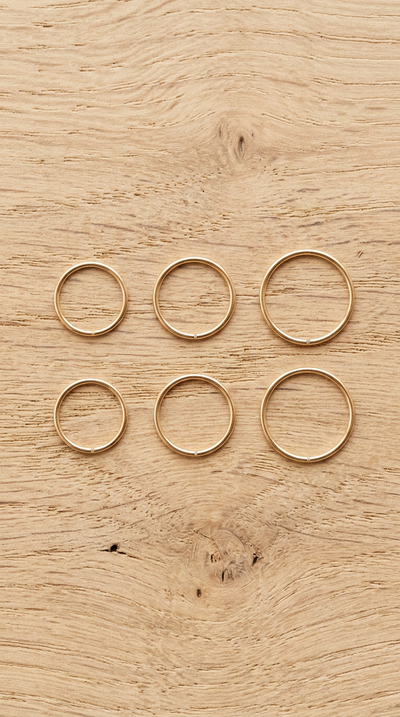
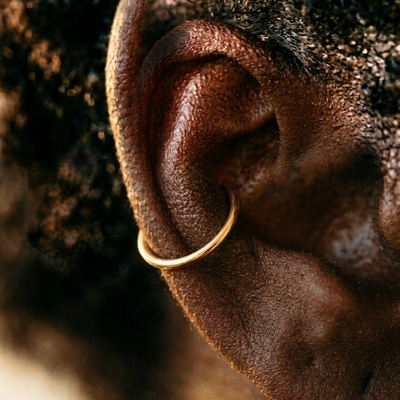
New 14ct solid gold hoop


Conch Piercing for Men: Styles & Ring Recommendations
- The conch is one of the most masculine-presenting ear piercings — a gold hoop wrapping the ear reads as bold and intentional
- Men typically need 10–12mm conch hoops due to larger ear anatomy — measure before ordering
- A plain seamless hoop in 14K yellow gold or a simple flat-back stud are the most popular choices for men
- The conch works well as a solo piercing or as part of a curated ear stack
- 16G is the standard gauge — the thicker wire suits the bolder aesthetic most men prefer
- Healing takes 6–12 months and sleeping pressure is the main challenge
Why men choose the conch
The conch has become one of the most sought-after ear piercings for men in recent years, and the reason is straightforward: the hoop wraps the entire ear. No other ear piercing creates a ring that encircles from the inner ear to the outer rim. On a man, this reads as confident, deliberate, and unmistakably stylish without being elaborate.
Unlike lobe piercings, which are common and expected, or helix piercings, which can appear small and subtle, the conch hoop commands attention at the right scale. It is visible in every profile view, catches light across the full width of the ear, and works with every hair length — from short fades to longer styles.
The conch is also popular with men because it sits in a relatively protected position. The piercing is on the flat inner ear, not on an exposed edge that catches on clothing or helmets. During healing, it is less vulnerable to accidental knocks than a helix or tragus.
Best styles for men
Seamless gold hoop — the signature look
A plain seamless hoop in 14K yellow gold is the most popular conch jewellery choice for men. No gems, no decoration, no clasp visible — just a clean circle of gold wrapping the ear. The simplicity is the point. It communicates taste and confidence without competing for attention.
In 16G, the wire has real visual substance. It does not look delicate or fragile — it looks intentional and robust. This thicker gauge suits the masculine aesthetic that most men seek from a conch piercing.
Flat-back stud — the understated option
A plain flat-back labret stud in gold or titanium creates a single point of metal on the inner ear. This is the most discreet conch jewellery option. It is visible from certain angles but not immediately obvious. For men who want a piercing they can feel but not always show, the stud is the answer.
A plain gold disc top (no gem, no design) gives the cleanest, most masculine stud look. A small black titanium or matte finish disc is another popular option for men who prefer a cooler tone.
16G seamless ring in white gold
White gold offers the visual tone of silver or platinum without the oxidation risks of sterling silver. For men who prefer cooler metal tones over warm yellow gold, a white gold conch hoop creates a sleek, modern look. White gold also pairs well with watches and other silver-toned accessories.
Sizing for men
Men generally have slightly larger ears than women, which affects conch hoop sizing. The distance from the conch to the helix rim is typically greater on a larger ear, meaning you may need a larger diameter than the “standard” recommendations designed for average ear sizes.
| Ear size | Recommended diameter | Notes |
|---|---|---|
| Average male ear | 10–12mm MOST COMMON | Most men fall in this range. 10mm for a snug fit, 12mm for a more visible ring. |
| Smaller male ear | 9–10mm | If your ears are on the compact side. Measure to confirm. |
| Larger male ear | 12mm | Larger ears need a wider arc. 12mm is standard for bigger anatomy. |
Gauge: 16G is standard for conch piercings and is what we recommend for men. The thicker wire creates a bolder ring that suits the typically stronger facial proportions of male anatomy. 18G is available for a daintier look, but most men prefer the visual weight of 16G.
For detailed measuring instructions, see our conch hoop size guide.
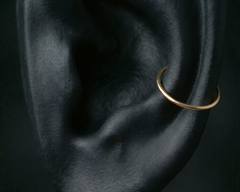
Conch in an ear stack
While the conch works beautifully as a solo piercing, it also anchors a curated ear stack for men who want a more layered look. Here are the combinations that work best:
Conch hoop + helix stud
The conch hoop provides the drama. A small gold stud on the helix (upper ear rim) adds a second point of interest without competing with the hoop. This combination reads as curated but not overdone.
Conch hoop + lobe ring
A gold hoop on the conch paired with a small gold hoop on the lobe creates vertical symmetry on the ear. Two rings, two different sizes, same metal. Clean and cohesive.
Conch stud + tragus stud
For men who prefer studs over hoops, a plain conch stud paired with a plain tragus stud creates a subtle two-point layout. Both are visible from the front, framing the ear canal entrance. Understated and refined.
Conch hoop + helix hoop
Two hoops on the same ear — a large conch hoop and a smaller helix hoop — creates a layered ring effect. The conch wraps the lower ear while the helix wraps the upper rim. In matching 14K gold, this combination is visually striking and increasingly popular with men.
Conch piercings at work
Workplace acceptance of men’s ear piercings has shifted dramatically in recent years. In creative, tech, hospitality and retail industries, ear piercings on men are broadly accepted. In more conservative fields (finance, law, traditional corporate), attitudes vary.
The stud advantage: A flat-back conch stud is the most discreet option. From the front, it is barely visible. From the side, it reads as a small metallic point. In conservative workplaces, a plain stud in a neutral metal (white gold or titanium) is unlikely to draw attention.
The hoop reality: A conch hoop is visible and will be noticed. If your workplace has explicit jewellery policies, check them before getting a conch. If the policy is ambiguous, consider starting with a stud during the healing period (which you need to do anyway) and gauging reactions before switching to a hoop.
Hair as a tool: Men with longer hair or styles that cover the ears can easily conceal a conch piercing when needed. Short-haired men cannot hide a conch hoop — it is visible from every angle. Factor this into your decision if discretion matters.
Materials for men
The same material rules apply regardless of gender, but men’s style preferences do influence the choice:
14K yellow gold: The most popular choice. Warm tone, premium look, matches watches and rings. A 16G yellow gold conch hoop is the quintessential men’s conch jewellery.
14K white gold: Cooler tone, similar to platinum or silver. Pairs well with silver watches, stainless steel accessories, and monochrome wardrobes. No oxidation risk unlike actual silver.
Implant-grade titanium: Most affordable. Dark, matte silver tone. Good for the healing phase. Many men start with titanium and upgrade to gold once healed. Can be anodised to black for a more industrial look.
Pain and healing for men
Pain and healing do not differ by gender. The conch is the same cartilage regardless of who is wearing it. But there are a few practical considerations:
Pain: Rated 5–7 out of 10 on average. The conch is thick, flat cartilage with limited blood supply. The needle pass creates strong pressure and a warm, stinging sensation. It is over in seconds. See our pain guide for the full breakdown.
Healing: 6–12 months. The main challenge is sleeping pressure — if you sleep on the pierced side, expect extended healing and potential bumps. Use a travel pillow with a hole or train yourself to sleep on the opposite side. See our healing guide for the week-by-week timeline.
Headphones: If you use over-ear headphones regularly for gaming, work or commuting, the conch requires planning. Earbuds are fully compatible at all stages. Over-ear headphones should be avoided on the pierced ear during healing. See our headphones guide for the full breakdown.
One ear or both?
This is a personal choice, but here are the considerations:
One ear (most common for men): A single conch hoop on one ear is the standard approach. It creates asymmetry, which most people find more visually interesting than matching both sides. It also means you have one headphone-friendly ear at all times.
Both ears: Symmetrical conch hoops on both ears make a stronger statement. This works well if you have other piercings and want full symmetry across both ears. The practical downside: healing two conch piercings simultaneously means you cannot sleep on either side. Most piercers recommend doing one ear first, healing completely, then doing the other.
Which side? There is no cultural significance to which ear you pierce in the UK in 2025. Choose based on practicality: if you sleep on your right side, pierce the left ear (so you can sleep on your preferred side during healing). If you wear a watch on your left wrist and want the gold to match in profile photos, pierce the left ear.