New 14ct Solid Gold Piercing Hoop
Anti-Tragus Piercing: Everything You Need to Know
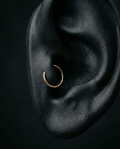
- The anti-tragus is the small cartilage ridge directly opposite the tragus, above the earlobe
- Pain is moderate: 5-7 out of 10 — the cartilage here is thick and compact
- Healing takes 6-12 months — longer than the tragus due to thicker cartilage
- Not everyone has enough anti-tragus cartilage for this piercing — anatomy check is essential
- Best jewellery: small curved barbell or 6-7mm hoop once healed
What is an anti-tragus piercing?
The anti-tragus is the small, raised ridge of cartilage that sits directly opposite the tragus — on the other side of the ear canal opening, just above where the earlobe begins. While the tragus is the small flap in front of the ear canal, the anti-tragus is its mirror image on the lower side.
It is one of the less common ear piercings, partly because not everyone has enough anti-tragus cartilage to support jewellery, and partly because it is overshadowed by its more popular neighbour. But for those with the right anatomy, the anti-tragus creates a unique, eye-catching accent that pairs beautifully with tragus, lobe, and conch piercings.
Anti-tragus vs tragus: comparison
| Anti-Tragus | Tragus | |
|---|---|---|
| Location | Ridge opposite tragus, above lobe | Cartilage flap in front of ear canal |
| Pain | 5-7/10 | 5-6/10 |
| Healing | 6-12 months | 3-6 months |
| Jewellery | Curved barbell, small hoop | Flat-back stud, small hoop |
| Anatomy needed | Pronounced ridge required | Most ears suitable |
| Popularity | Less common, unique | Very popular |
| Earbuds | Usually no interference | Avoid during healing |
How much does it hurt?
The anti-tragus is rated 5-7 out of 10 — slightly more painful than the tragus itself. The cartilage on this ridge is dense and compact, and the piercing area is small, which means the piercer works in tight quarters. Many people describe a sharp, intense pressure that lasts 1-2 seconds.
The pain is brief but intense. The compact anatomy means the needle passes through thick cartilage in a small space. Post-piercing, the area settles to a dull ache within 30 minutes.
Healing timeline
Best jewellery
During healing: curved barbell is the standard choice. The curve follows the natural shape of the anti-tragus ridge, and the barbell design is more stable than a hoop in this small area.
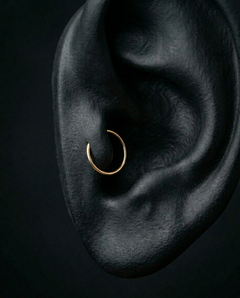
Once healed: a small seamless hoop (6-7mm) or a decorative curved barbell. The anti-tragus accommodates small jewellery — anything too large overwhelms the ridge and looks disproportionate.
| Size | Look | Best for |
|---|---|---|
| 6mm Popular | Snug, close to ridge | Most anti-tragus anatomies |
| 7mm | Slightly more visible | Larger ridges |
| 8mm | More prominent | Bold style preference |
Anatomy requirements
The anti-tragus is one of the most anatomy-dependent piercings. Your ridge needs to be:
Pronounced enough: there must be a defined ridge of cartilage with enough tissue for the needle to pass through safely. Flat or barely-there anti-tragus ridges cannot support this piercing.
Thick enough: the cartilage needs sufficient depth to hold jewellery securely without risk of rejection or migration.
Separated from the lobe: the anti-tragus sits right above the earlobe. If the transition between cartilage and soft tissue is too gradual, the piercing may not have a clear anchor point.