


Visible space
An extra 0.5mm may leave a little more space between the hoop and the skin, without creating the looser look of a full 1mm step.

PIERCING HOOP SIZE GUIDE · E8
In a close-fitting piercing hoop, half a millimetre may change the visible gap, the pressure against the skin and the overall line of the ring. This guide explains when that small step may be worth considering—and when a full size change could be more useful.

THE SHORT ANSWER
A 0.5mm increase does not transform a hoop, but it may refine a fit that is nearly right. The effect tends to be clearer in smaller nostril and cartilage hoops, where the ring already sits close to the tissue.
WHAT ACTUALLY CHANGES?
Inner diameter is only one part of fit. Piercing height, tissue thickness, angle and the amount of movement you prefer all affect how the same hoop may sit.
An extra 0.5mm may leave a little more space between the hoop and the skin, without creating the looser look of a full 1mm step.
Where a close-fitting hoop presses or leaves an indentation, a half size may offer useful relief while keeping a neat silhouette.
A small increase in diameter can allow slightly more natural movement, particularly around a low nostril or compact cartilage placement.
THREE COMMON HALF-SIZE DECISIONS
These are decision routes rather than universal fit rules. Use a comfortable current hoop—or a professional measurement—as your starting point.
A measured middle point when 6mm feels close but 7mm looks more open than intended.
View the 6.5mm route →Often worth considering when 7mm presses slightly and 8mm leaves more visible space.
View the 7.5mm route →A subtler adjustment for a placement that already sits comfortably around the 8–9mm range.
View the 8.5mm route →
WHEN 0.5MM MAY HELP
It may be useful when you already know that one diameter is only slightly too close, while the next whole size creates more space than you want. It is not a substitute for confirming your gauge and approximate inner diameter first.
LOCATION CHANGES THE RESULT
A low nostril, a compact forward helix and a second lobe all meet the hoop differently. Placement should guide the choice, rather than a single “standard” diameter.
Often most visible when the hoop follows the lower curve of the nostril closely.
Tissue thickness and piercing angle can influence both clearance and movement.
Small diameters make minor changes proportionally more noticeable.
A half size may help align neighbouring hoops without making them identical.
BEFORE YOU ORDER
Measure straight across the inside of a comfortable current hoop. Do not include the wire.
Gauge is wire thickness. Changing from 20G to 18G is not the same as changing the inner diameter.
Notice indentation, pulling and visible clearance rather than relying only on the size label.
Select 0.5mm for a small refinement, or a full millimetre when the existing fit is clearly wrong.
NOT SURE OF THE STARTING SIZE?
CHOOSE YOUR NEXT STEP
Each product route retains its own diameter and gauge selectors. Check both before adding a made-to-order hoop to your basket.
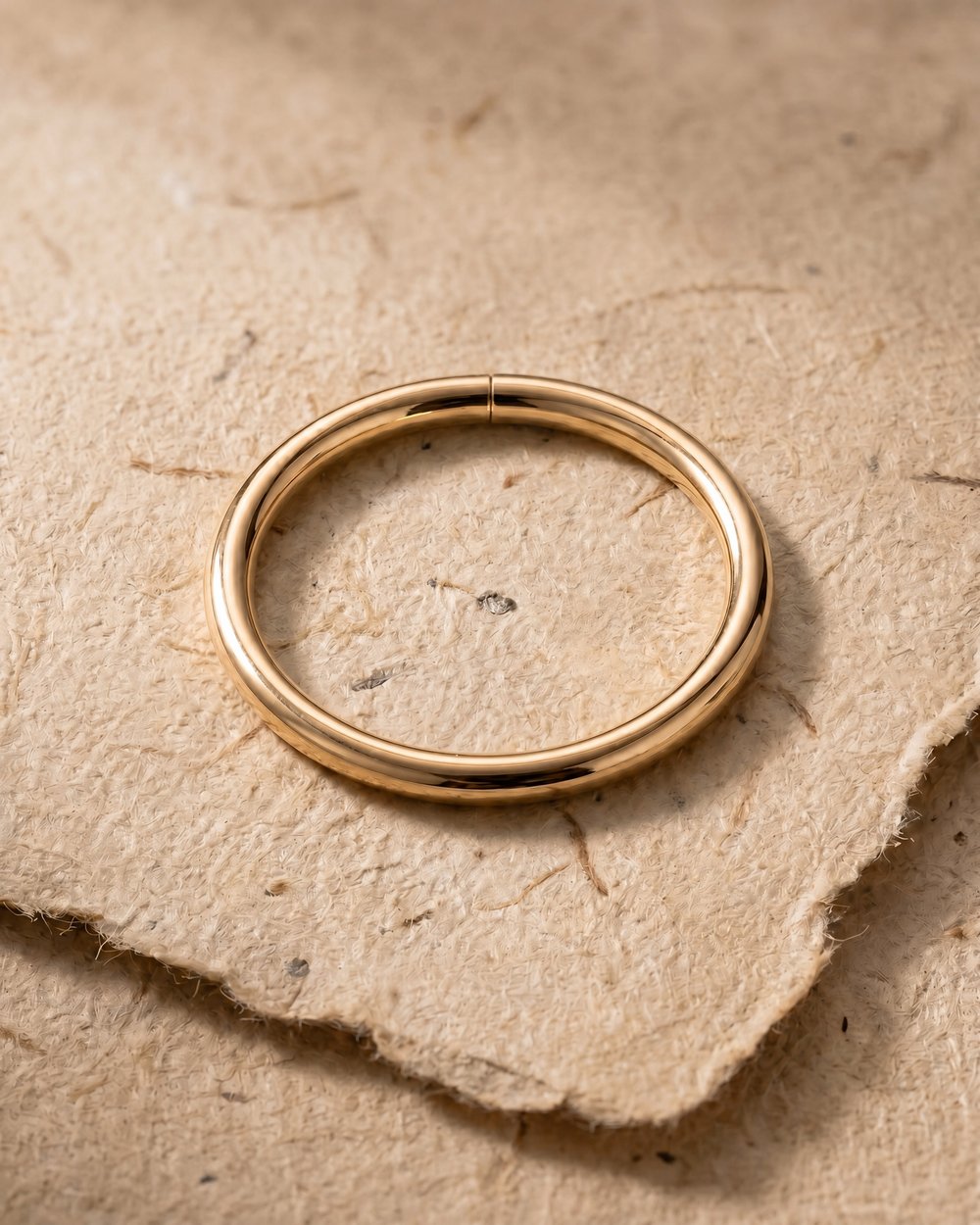
£38.00
5.5mm, 6.5mm, 7.5mm, 8.5mm, 9.5mm and 10.5mm inner diameters.
Shop half sizes →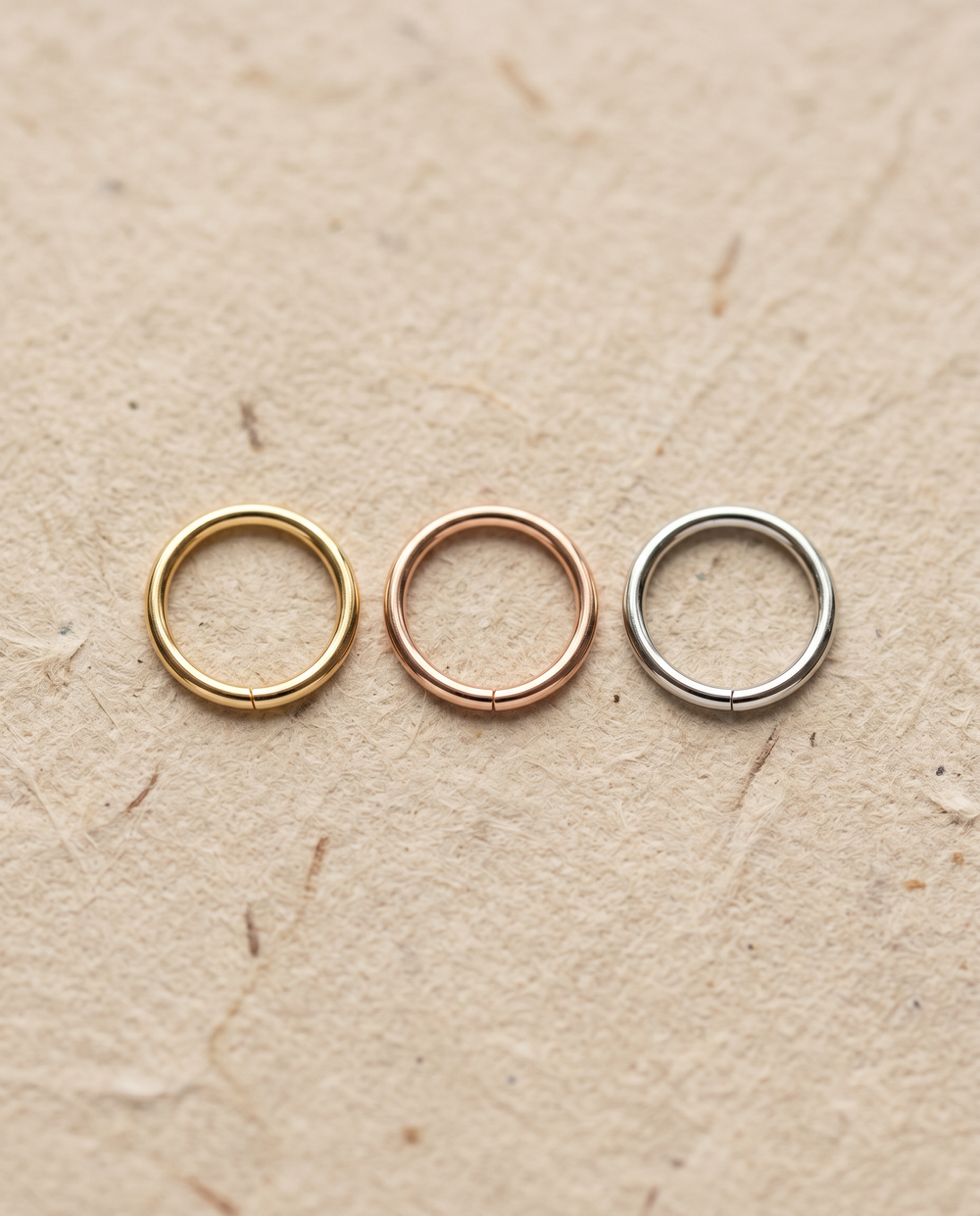
£38.00
Whole inner diameters for healed nostril, cartilage and lobe piercings.
Shop whole sizes →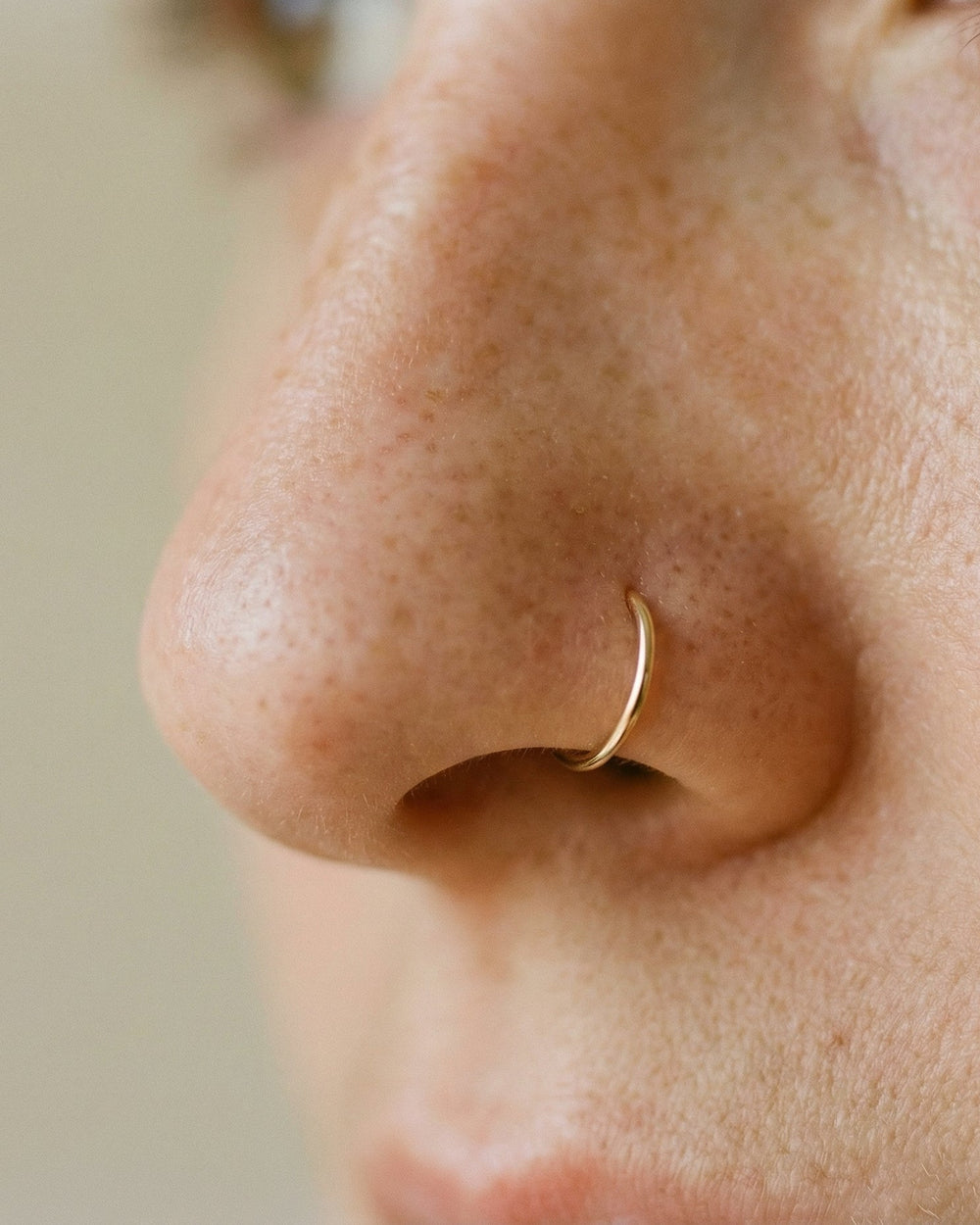
£38.00
A focused route for selecting the diameter and gauge of a healed nostril piercing.
View nose rings →QUICK ANSWERS
Short answers to the questions that commonly come up before choosing a whole or half-size piercing hoop.
It can be. The difference may be most noticeable when the current hoop sits close to the nostril, as a small change affects both visible space and pressure. Anatomy and piercing placement still matter.
A 7.5mm inner diameter may be a useful option between the two, provided the gauge is correct and the piercing is fully healed.
No. Gauge describes the thickness of the wire; inner diameter describes the space inside the hoop. They should be checked separately.
A snug hoop may sit close without pressing into the skin. If it leaves an indentation, feels sore or pulls on the piercing, a little more room may be appropriate.
Measure straight across the inside of the ring, from one inner edge to the other. Do not include the thickness of the wire.