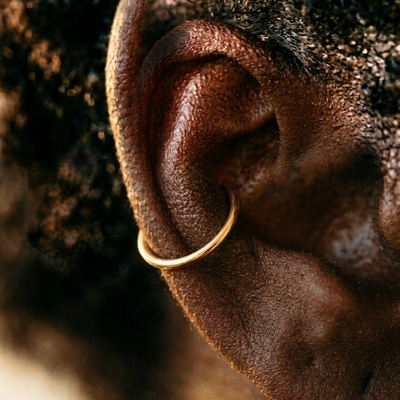
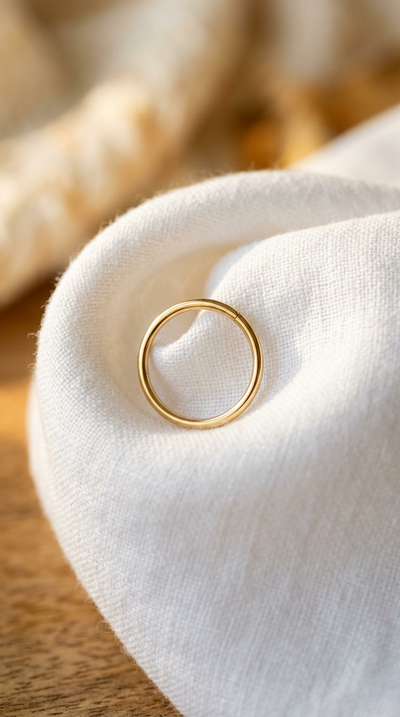
New 14ct solid gold hoop


Conch Piercing Jewellery: Hoops, Studs & Gold Rings
- Inner conch: 8-9mm hoops or decorative studs. Outer conch: 10-12mm hoops for the wrap effect
- Always start with a flat-back stud during healing, regardless of your final jewellery goal
- 14K solid gold is ideal for conch piercings — the thick cartilage needs quality material
- The stud-to-hoop switch should happen no earlier than month 6, ideally month 9
- Half sizes (8.5mm, 9.5mm, 10.5mm) help achieve the perfect wrap fit
Conch jewellery types
Flat-back labret stud
The standard healing jewellery and a popular permanent option for inner conch. A decorative front (ball, gemstone, disc) with a flat back that sits flush against the inner ear. Secure, comfortable, and minimises movement during healing.
Seamless hoop
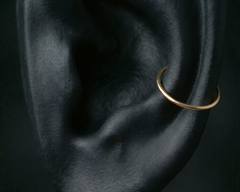
The iconic conch look, especially for outer conch. A continuous ring that passes through the piercing and wraps around the outer ear edge. Creates the dramatic conch hoop aesthetic that makes this piercing so popular. Only for fully healed piercings.
Clicker ring
A hinged ring that clicks shut. Easier to insert than seamless hoops, especially useful for conch piercings where access can be tricky. Available in plain and decorative styles.
Complete size chart
| Size | Best for | Look |
|---|---|---|
| 8mm | Inner conch (small ears) | Snug hoop in bowl |
| 9mm | Inner conch (standard) | Classic inner conch hoop |
| 10mm Popular | Outer conch | Classic edge wrap |
| 10.5mm | Between standard and bold | Comfortable wrap with room |
| 11mm | Outer conch (larger ears) | Relaxed wrap |
| 12mm | Statement outer conch | Bold, dramatic wrap |
Metal guide
| Metal | Verdict | Notes |
|---|---|---|
| 14K solid gold | Excellent | Best for long-term conch wear. No tarnish, no nickel. |
| Titanium (ASTM F136) | Excellent | Lightest option. Ideal for initial healing. |
| Surgical steel | Caution | Contains nickel. 6-12 month healing makes this risky. |
| Gold-plated | Avoid | Plating degrades over months of continuous wear. |
The stud-to-hoop transition
Month 0-6: flat-back stud. No exceptions. The stud keeps the piercing stable while the internal channel forms.
Month 6-9: possible transition window. Have your piercer assess the channel. If there is zero tenderness, no discharge, and the piercing feels completely settled, a switch may be possible.
Month 9-12: the ideal transition window. Most conch piercings are mature enough at this stage. Your piercer should perform the first hoop insertion to ensure correct sizing and clean installation.
After first hoop: you may experience mild sensitivity for 1-2 weeks as the channel adjusts to the new shape. This is normal. If significant pain or swelling occurs, switch back to the stud and wait longer.
Gauge guide
16G (1.2mm): common for conch piercings, especially outer conch. Provides stability for larger hoops.
18G (1.0mm): also common. Creates a slightly finer look. Works well for both inner and outer conch.
20G (0.8mm): less common for conch due to the thick cartilage, but used for more delicate aesthetics.