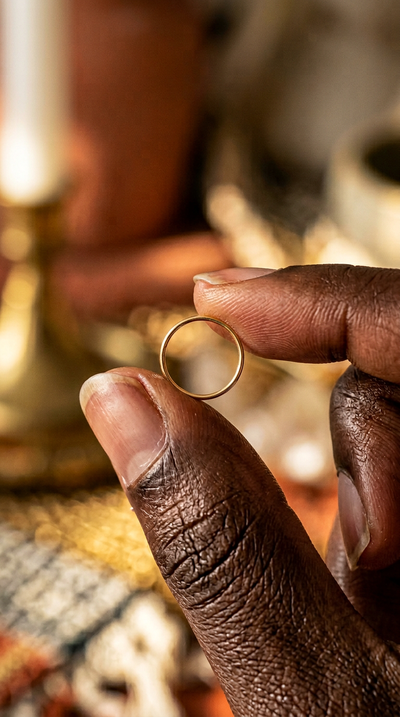
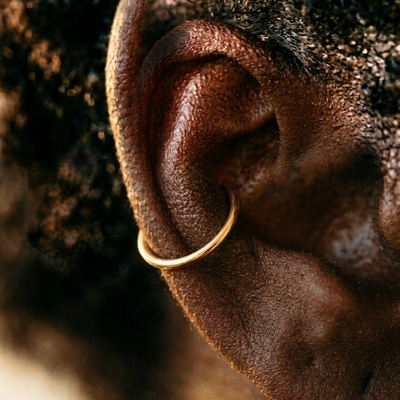
New 14ct solid gold hoop
Conch Piercing and Headphones: AirPods, Over-Ear & Solutions
- Earbuds (AirPods, Galaxy Buds) work perfectly with conch piercings — they sit in the ear canal, not on the conch
- Over-ear headphones are the problem — the padding presses directly on the conch area and the hoop wrapping the helix
- A flat-back conch stud causes fewer headphone issues than a conch hoop
- During healing (6–12 months): avoid over-ear headphones on the pierced ear entirely
- Earbuds are the safest headphone option at every stage of conch healing
- Bone conduction headphones bypass the ear completely — ideal during healing
The opposite of the tragus problem
If you have read about tragus piercings and headphones, you know the tragus issue is earbuds: they press directly on the tragus cartilage. The conch is the mirror image. Earbuds are perfectly fine — they sit inside the ear canal, nowhere near the conch. The problem is over-ear headphones.
Over-ear headphones have padded cups that rest on or around the ear. The padding presses against the flat surface of the concha — exactly where a conch stud sits. And if you are wearing a conch hoop, the padding presses the ring into the helix rim, pushing the entire hoop against the ear edge.
This does not mean you can never use over-ear headphones again. It means you need to understand which combinations work, which cause problems, and how to manage both your piercing and your headphone habits.
Headphone types compared
| Headphone type | During healing | With stud | With hoop | Notes |
|---|---|---|---|---|
| AirPods / earbuds BEST | Yes — safe | No conflict | No conflict | Sit in ear canal, not on conch. Perfect at all stages. |
| AirPods Pro (silicone) | Yes — safe | No conflict | No conflict | Seal sits deeper in canal. No conch contact. |
| Over-ear (loose fit) | Risky — avoid | Tolerable | Uncomfortable | Larger cups may clear the conch with minimal pressure. |
| Over-ear (tight fit) | No | Pressure on stud | Pushes hoop into rim | Tight clamping force presses directly on conch area. |
| On-ear (pads) | No | Direct pressure | Very uncomfortable | Pads sit directly on the ear, pressing on everything. |
| Bone conduction HEALING SAFE | Yes — no contact | No conflict | No conflict | Sit on cheekbone. Zero ear contact. Ideal during healing. |
Earbuds: your best friend
If you are getting a conch piercing, earbuds should become your primary headphone. They are completely compatible with the conch at every stage — healing, healed with a stud, and healed with a hoop. Here is why:
Location. Earbuds sit inside the ear canal. The conch piercing is on the flat cartilage bowl above and behind the canal entrance. There is no physical contact between the earbud and the conch jewellery.
No pressure. Earbuds are held in place by the ear canal shape, not by pressing against the conch. Even a conch hoop that wraps the helix rim sits well above and behind where an earbud sits.
During healing. You can use earbuds from day one of a conch piercing (though be gentle when inserting them to avoid bumping the stud). This is a significant advantage over the tragus, where earbuds must be avoided for months.
Over-ear headphones: the real challenge
Over-ear headphones are the primary headphone concern for conch piercings. The issue is straightforward: the padded cups press against the outer ear, and the conch sits on the inner surface of that same ear. Pressure from outside translates directly to pressure on the piercing from inside.
With a flat-back stud
A flat-back conch stud sits flush against the back of the conch. When over-ear padding presses the ear inward, the stud is pushed slightly into the conch cartilage. For short sessions, this is usually tolerable. The pressure is distributed across the flat disc, not concentrated on a single point. For long sessions (2+ hours), it can become noticeably uncomfortable.
Tips: Choose over-ear headphones with large, deep ear cups that create space around the ear rather than compressing it. Memory foam pads tend to mould around the ear more gently than stiff pads. Loosen the headband to reduce clamping force.
With a conch hoop
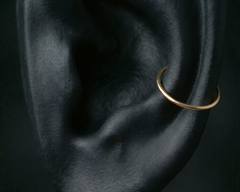
A conch hoop wraps around the helix rim — the outer edge of the ear. Over-ear headphone padding rests on exactly this area. The padding pushes the ring inward against the rim, creating a pressure point that can become painful quickly. This is the least compatible combination in the entire headphone-vs-piercing landscape.
Tips: Switch to a flat-back stud before long over-ear headphone sessions. If you must wear the hoop with over-ear headphones, limit sessions to 30–60 minutes and take breaks. Position the hoop so the thickest part (the join area) is behind the ear, away from the padding contact point.
With on-ear headphones
On-ear pads sit directly on the ear, pressing everything flat. This is the worst headphone type for conch piercings — worse than over-ear, because on-ear pads compress the ear rather than cupping around it. Avoid on-ear headphones with a conch piercing at all stages.
Headphone timeline
Best jewellery for headphone users
Your conch jewellery choice directly affects headphone compatibility. Here is the ranking for people who use over-ear headphones regularly:
1. Flat-back labret stud (best). The flat disc distributes over-ear headphone pressure evenly. No protrusion, no catching. This is the daily-wear choice for people who use over-ear headphones for work, gaming, or commuting.
2. Small seamless hoop (10mm, snug). A properly fitted hoop that hugs the helix rim closely creates a smaller pressure point than a loose hoop. Not as headphone-friendly as a stud, but manageable for shorter sessions.
3. Large seamless hoop (12mm). More ring surface exposed to headphone padding. More discomfort. Not ideal for regular over-ear use.
Bone conduction headphones
Bone conduction headphones are the universal solution for any ear piercing that conflicts with traditional headphones. They sit on the cheekbone in front of the ear, transmitting sound through skull vibration. Zero ear contact.
For conch piercings specifically: Bone conduction headphones are ideal during the 6–12 month healing period when over-ear headphones should be avoided. They eliminate the need to choose between music and healing. After healing, they remain a good alternative for situations where earbuds are not suitable (running, cycling, outdoor activities where you need ambient sound awareness).
Sound quality trade-off: Bone conduction lacks the bass depth and noise isolation of sealed headphones. For music production, critical listening, or noisy environments, they are not a replacement. For podcasts, calls, casual music, and commuting, they are more than adequate.
UK recommendations: Shokz (formerly AfterShokz) dominates the bone conduction market. The OpenRun range (£80–£130) is the most popular choice. Lightweight, sweat-resistant, and comfortable for all-day wear.
Making over-ear headphones work
If over-ear headphones are non-negotiable in your life (professional audio, studio work, gaming), here are specific strategies:
Choose large ear cups. The larger the cup, the more space around the ear, and the less direct pressure on the conch. Headphones marketed as “around-ear” rather than “on-ear” are better. Look for cups that fully enclose the ear with room to spare.
Memory foam pads. Stiff, dense pads transmit pressure directly. Memory foam moulds around the ear’s contours and distributes pressure more evenly. Some headphones offer aftermarket pad upgrades in thicker memory foam — these can make a meaningful difference.
Loosen the headband. Clamping force is the enemy. A loose fit reduces how hard the pads press against the ear. Some headphones have adjustable clamping — set it as loose as you can while keeping the headphones on your head.
Wear a stud, not a hoop. If you know you will be wearing over-ear headphones for an extended period, swap to a flat-back stud beforehand. The flat disc is dramatically more comfortable under headphone padding than a hoop pressing against the helix rim.
Take breaks. Every 60–90 minutes, remove the headphones and let the ear decompress for 5–10 minutes. This prevents sustained pressure from causing irritation.
Conch vs tragus: headphone comparison
If you are choosing between a conch and a tragus piercing and headphone use matters to you, here is the direct comparison:
| Conch piercing | Tragus piercing | |
|---|---|---|
| Earbuds (AirPods) | No conflict at all | Conflict during healing, manageable after |
| Over-ear | Conflict — especially with hoop | Minimal conflict |
| Best headphone type | Earbuds | Over-ear |
| During healing | Earbuds from day 1 | No earbuds for 3–4 months |
In short: the conch is the better choice for earbud users, and the tragus is the better choice for over-ear headphone users. If you use both types equally, the conch is generally more manageable because earbuds are easier to switch to than over-ear alternatives.
Headphone-related problems
Irritation bump from headphone pressure
The most common conch headphone issue. Over-ear headphones press the stud or hoop into the cartilage, causing a pressure bump. Stop using over-ear headphones on that ear. Clean with saline twice daily. The bump should begin to resolve within 1–2 weeks once the pressure source is removed.
Hoop getting pushed out of position
Over-ear padding can shift the conch hoop, pushing it upward or twisting it on the helix rim. After removing headphones, gently reposition the ring to its natural resting point. If the ring is displaced frequently, the diameter may be too loose — a snugger hoop (try 1mm smaller) will resist displacement better.
Soreness after long sessions
Even a fully healed conch can become sore after several hours of over-ear headphone use. This is pressure fatigue, not a piercing problem. Take breaks every 60–90 minutes. Switch to earbuds for the remainder of the session. If soreness is persistent, swap to a flat-back stud for all headphone sessions.