


Structure before styling
Nose Ring
Types
Explained
The right nose ring type is not only the one you like looking at. Its opening, end detail and wearing direction should also make sense for how often you change jewellery—and what you worry about at checkout.
Find my nose ring type ↓A curved or complete line that follows the nostril edge.
A broad everyday term that may refer to a hoop—or nose jewellery generally.
A visible front end with an internal stem or backing rather than a hoop line.
The useful overview
Seven nose ring structures at a glance
Closure type affects handling and appearance. It does not replace the need to choose a suitable gauge and inner diameter.
| Type | Structure | Visible result | May suit |
|---|---|---|---|
| Seamless hoop | Twist-open ends meet together | Continuous, minimal line | Long-term everyday wear |
| Misaligned hoop | Ends remain intentionally offset | Visible structural opening | Those who do not want to align the ends |
| Ball end hoop | Open hoop with a small fixed ball | Clean curve with one endpoint | Those who prefer a clearer stopping point |
| Connected double ring | One directional connected piece | Two visible hoop lines | A layered look through one piercing |
| Motif open hoop | Open hoop with a small design | Pictorial focal point | More personal styling |
| Clicker or segment ring | Hinge or removable segment | Complete ring line | More frequent jewellery changes |
| Captive bead ring | Bead held between ring ends | Ring with a central ball | Traditional piercing styling |
Seamless nose hoop
For one uninterrupted line
A seamless hoop opens by gently twisting the ends sideways. Once they are brought back together, the join becomes visually quiet and the ring reads as one continuous curve.

Two open-ended alternatives
If aligning a seamless join is not your preference
Misaligned hoop
The opening is part of the design
The ends are intentionally offset rather than closed into one seamless join. The visible opening is not damage or a manufacturing error.
- No need to make the two ends disappear
- A deliberately asymmetric structure
- Useful when you prefer a clearly identifiable opening
Ball end hoop
One curve with a defined endpoint
A small fixed ball sits at one end of the open hoop. It adds a subtle detail and may help make the opening feel more controlled.
- No seamless ends to align
- A visible stopping point
- More structure than a completely plain open hoop
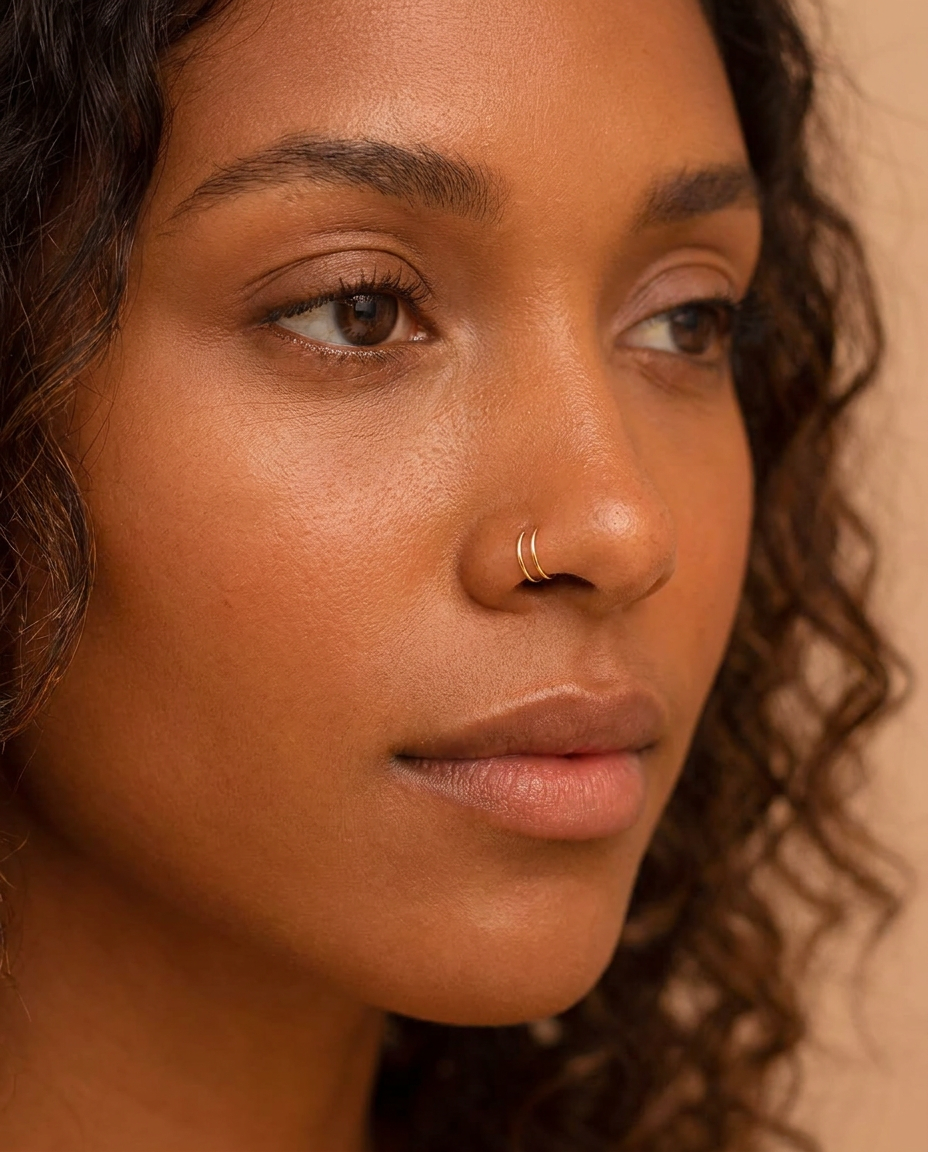
Connected double nose ring
Two visible lines. One healed piercing.
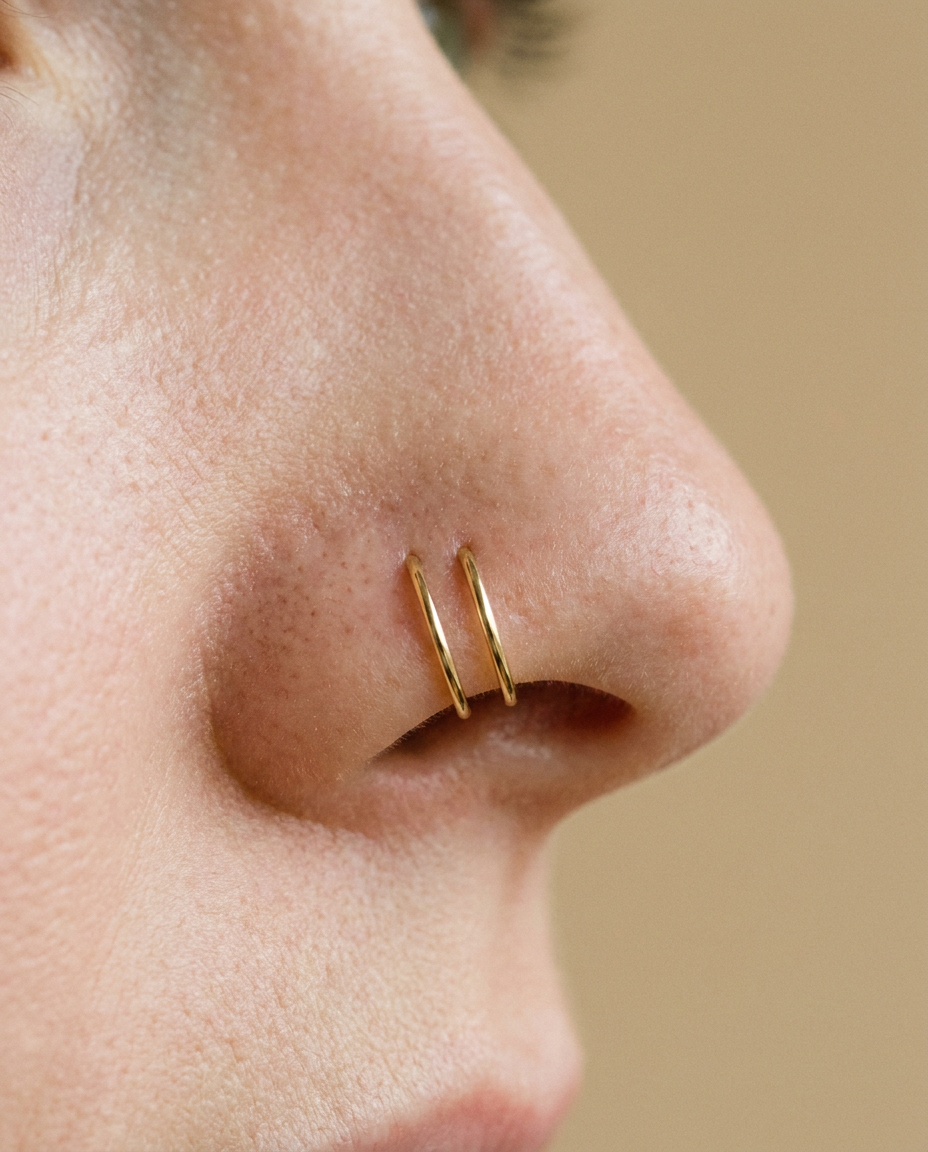
The connected double design is one directional piece of jewellery. It passes through one fully healed nostril piercing and creates a layered appearance from the outside.
05 · Motif open hoop
When a plain line feels too quiet
A small design at one open end turns the hoop into a focal point. Motif direction may change with the piercing channel and placement, so a perfectly front-facing result should not be assumed.
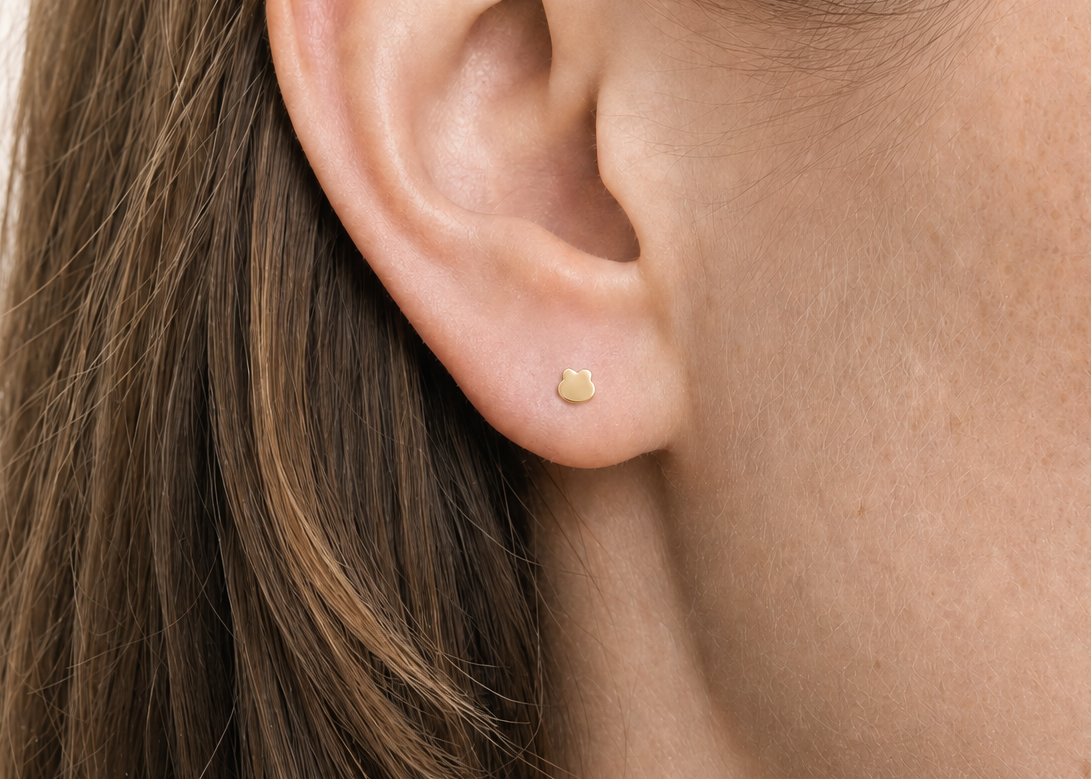
Simple outlines
Hearts, stars, flowers and compact animals tend to read most clearly at a tiny scale.
A small story
Choose an animal, hobby or familiar symbol that feels more specific than a plain hoop.
Placement matters
The same motif may sit differently in a nostril, lobe or cartilage piercing.
Other structures worth knowing
Clickers, segments, captive beads and studs
Clicker or hinged ring
A small hinge and catch open the ring. It may be useful for frequent changes, although the hinge remains part of the structure.
Segment ring
A removable or hinged section completes the circle. The exact opening method depends on the design.
Captive bead ring
A bead sits between the ring ends. Unlike a ball end hoop, the bead participates in closing the circle.
Nose stud
L-bends, screws, nose bones and flat-back labrets use an internal stem or backing rather than a hoop line.
Handling is personal
Which type is easiest to put in?
There is no single answer. Diameter, gauge, nail length, dexterity and how often you change jewellery all affect handling.
For fully healed piercings: this guide is not intended as jewellery-changing advice for a healing nostril piercing.
Choose by the concern
What are you trying to avoid?
Start with the sentence that sounds most like you.
Shop by structure
Three STEPOY starting points
Choose the visible result first, then confirm diameter and gauge on the relevant product page.
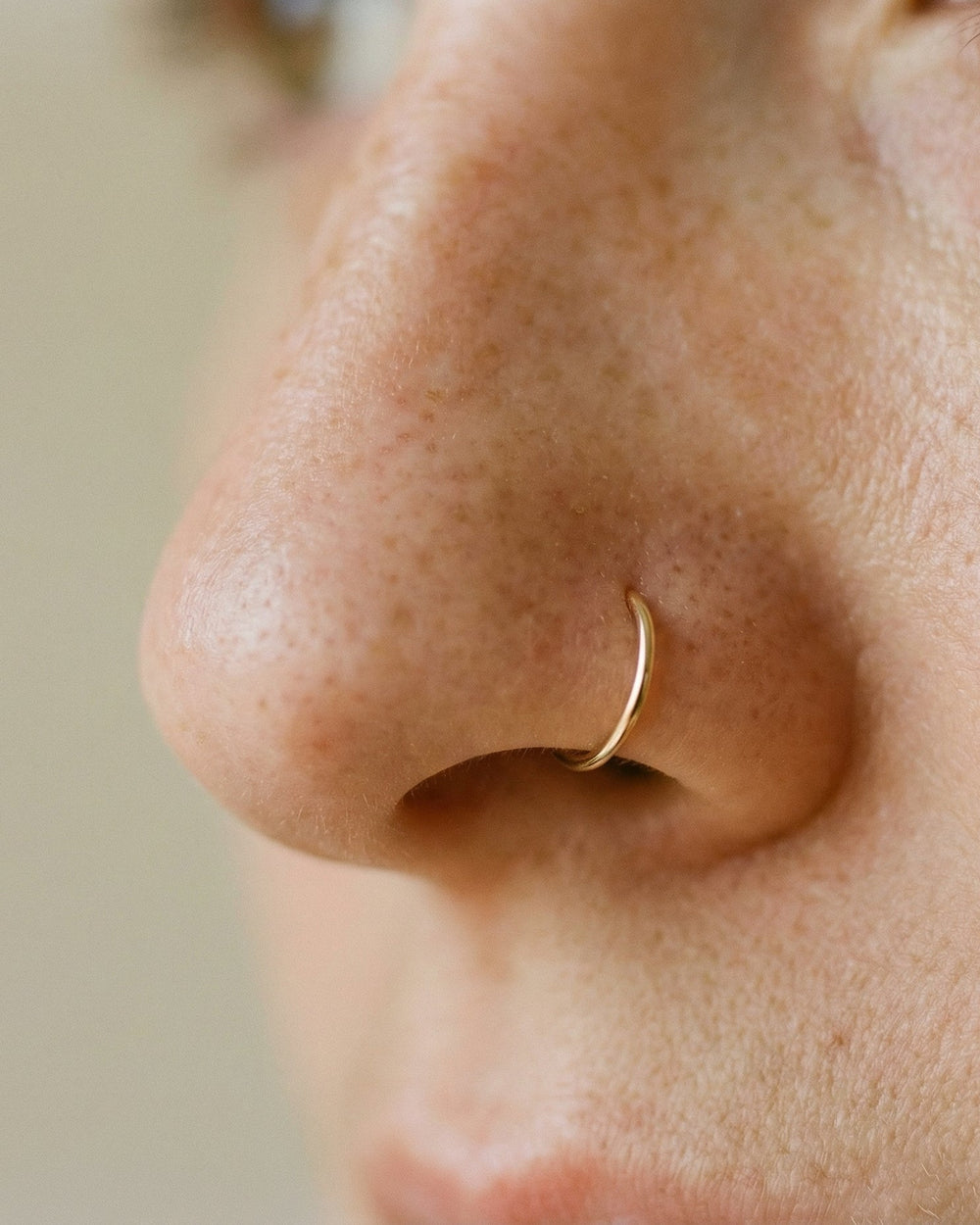
Structure is only one decision
Type, diameter and gauge do different jobs
Type
Controls the opening, endpoint and visible design.
Inner diameter
Controls clearance and how closely the hoop follows the nostril.
Gauge
Controls wire thickness and must suit the healed piercing channel.
Questions before choosing
Nose ring types FAQ
What are the main types of nose rings?
Common structures include seamless hoops, misaligned or open hoops, ball end hoops, connected double rings, motif hoops, clickers, segment rings and captive bead rings. Studs form a separate category.
What is the easiest nose ring to put in?
A hinged clicker may be easier for frequent changes, while a misaligned or ball end hoop avoids aligning a seamless join. Ease also depends on diameter, gauge, nails and dexterity.
What is the difference between a seamless hoop and a clicker?
A seamless hoop opens by twisting the wire ends sideways. A clicker uses a small hinge and catch.
What is the difference between a ball end and captive bead ring?
A ball end is fixed to one end of an open hoop. A captive bead sits between two ring ends and forms part of the closed-ring structure.
Does a double nose ring require two piercings?
A connected double nose ring creates two visible lines while passing through one fully healed nostril piercing.
Which nose ring type looks most minimal?
A plain seamless hoop usually creates the most continuous and restrained line, although diameter, gauge and fit also influence the result.