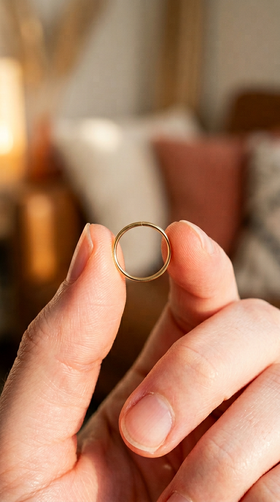
New 14ct Solid Gold Hoop


14K Gold vs. Other Metals: Why Solid Gold Seamless Hoops Are Your Best Bet
- 14K solid gold and implant-grade titanium are the only two metals endorsed by the APP for initial piercings. Both are nickel-free and biocompatible
- Surgical steel contains 10–14% nickel despite its medical-sounding name. It is not suitable for people with nickel sensitivity (10–15% of the population)
- Sterling silver tarnishes inside piercings and can permanently stain the tissue. It should never be used in unhealed piercings
- Gold-plated and gold-filled are not solid gold — the base metal is exposed over time, causing reactions
- 14K gold is the only metal that combines biocompatibility, tarnish resistance, warm colour, lasting value, and all-day wearability without removal
The complete metal comparison
Before we examine each metal individually, here is the full comparison at a glance. This table covers the six criteria that matter most for piercing jewellery:
| Metal | Nickel-free | Tarnish-proof | Weight feel | Colour options | Typical cost | APP-approved |
|---|---|---|---|---|---|---|
| 14K Solid Gold Best overall | Yes (with proper alloy) | Yes | Moderate — feels substantial | Yellow, rose, white | £30–60 | Yes |
| Implant-Grade Titanium (ASTM F-136) | Yes | Yes | Very light | Silver-grey, anodised colours | £15–35 | Yes |
| Niobium | Yes | Yes | Moderate | Silver-grey, anodised colours | £15–30 | Yes |
| 316L Surgical Steel | No (10–14% nickel) | Mostly | Heavy | Silver only | £5–15 | Conditional |
| Sterling Silver (925) | Yes | No — tarnishes | Moderate | Silver | £8–20 | No |
| Gold-Plated / Gold-Filled | No (base metal) | No — coating wears | Varies | Gold tone (temporary) | £3–15 | No |
Why 14K solid gold leads the field
At 58.3% pure gold alloyed with palladium, silver, and copper, 14K solid gold is the only piercing metal that scores well across every criterion simultaneously: biocompatible, tarnish-proof, aesthetically warm, durable in fine gauges, and retains material value indefinitely.
Biocompatibility: why the alloy matters
Pure gold (24K) is one of the most biocompatible metals known to medicine — it is why gold is used in dental crowns and medical implants. In 14K gold body jewellery, the alloy metals added for structural strength must also be biocompatible. A properly formulated 14K body jewellery alloy uses palladium, silver, and copper — all low-reactivity metals. Critically, it contains zero nickel.
This matters because nickel is the single most common cause of contact dermatitis from jewellery. Studies estimate that 10–15% of the general population has a nickel allergy, with rates higher among women (15–20%) due to greater lifetime jewellery exposure. If you have ever had a rash, redness, or itching from cheap earrings, there is a strong chance you are nickel-sensitive — and 14K solid gold with a nickel-free alloy eliminates this risk entirely.
Tarnish resistance: wear it forever, literally
14K gold does not tarnish, oxidise, or change colour. You can shower in it, sleep in it, swim in it, exercise in it, and leave it in your piercing for years without ever removing it. The surface remains the same rich gold colour on day 1,000 as it was on day 1. This is because the gold content is high enough to resist the oxidation reactions that cause tarnishing in lower-karat gold and other metals.
Durability in fine gauges
Piercing jewellery is thin — 20G wire is only 0.8mm thick. At this gauge, material strength matters enormously. 14K gold has enough structural alloy to maintain its shape without being brittle. Higher-karat gold (18K, 22K) is softer and more prone to bending and deformation at fine gauges. 14K is the sweet spot: strong enough to hold a perfect circle, soft enough to twist open for insertion (especially when annealed).
Long-term value
Unlike every other piercing metal, solid gold retains intrinsic material value. A 14K gold seamless hoop can be recycled or resold for its gold content. It is, in a real sense, a tiny investment you wear in your ear. Titanium and steel have no resale value; plated jewellery has no gold content to recover.
Implant-grade titanium — the main alternative
Titanium (specifically ASTM F-136 implant-grade) is the other metal that professional piercers trust unconditionally. It is 100% nickel-free, extremely lightweight, and highly corrosion-resistant. For initial piercings during the healing period, many piercers consider titanium the gold standard (ironically).
Long-term everyday wear
- Warm yellow, rose, or white colour
- Rich lustre — catches light beautifully
- Feels slightly substantial on the ear or nose
- Retains material value — can be recycled
- The “upgrade” choice for healed piercings
Healing & budget-conscious wear
- Silver-grey colour (or anodised options)
- Matte finish — less reflective than gold
- Ultralight — barely noticeable in the piercing
- No resale value
- Excellent during healing; many switch to gold after
Our recommendation: Use implant-grade titanium during the healing period (first 3–12 months depending on piercing location) for its light weight and proven safety. Once healed, switch to 14K solid gold for the aesthetic upgrade, the warmth of real gold, and the “set it and forget it” wearability. Many of our customers follow exactly this path.
Surgical steel — the hidden risk
316L surgical steel is the most widely available and affordable piercing metal. Its name sounds medical and safe. The reality is more complicated.
Surgical steel is an alloy of iron, chromium, molybdenum, and 10–14% nickel. The nickel is added for corrosion resistance and workability. In many people, this nickel content causes no issues. But for the estimated 10–15% of the population with nickel sensitivity, surgical steel is a direct cause of contact dermatitis: redness, itching, swelling, and irritation bumps that will not resolve until the jewellery is removed.
If you have worn surgical steel without problems: you are likely in the 85–90% without nickel sensitivity. Steel remains a viable budget option for you in healed piercings. But if you have ever had unexplained irritation bumps, redness, or itching from earrings, the culprit was almost certainly nickel — and switching to 14K solid gold or titanium will resolve it.
Sterling silver — beautiful but problematic
Sterling silver (92.5% silver, 7.5% copper) is a popular jewellery metal, but it has significant drawbacks for piercings:
Tarnishing: Silver oxidises when exposed to air, moisture, and skin oils. Inside a piercing, this tarnishing happens faster due to constant contact with bodily fluids. The black tarnish can permanently stain the piercing channel — a condition called argyria that turns the tissue grey or black. This staining is irreversible.
Softness: Sterling silver is softer than 14K gold and deforms easily in thin gauges. A silver seamless hoop will lose its circular shape faster than gold or titanium.
Our advice: Sterling silver is fine for fashion earrings in fully healed lobe piercings, worn occasionally and removed regularly. It should never be used in unhealed piercings, cartilage piercings, or as leave-in jewellery.
Gold-plated & gold-filled — not what they seem
Gold-plated jewellery has a microscopically thin layer of gold (0.5–5 microns) electroplated over a base metal — usually brass or steel. This coating wears off within days to weeks inside a piercing, exposing the base metal (and its nickel content) to your tissue. The result: skin reactions, green discolouration, and irritation bumps.
Gold-filled is better quality — a thicker gold layer mechanically bonded to brass. It lasts longer than plating (months instead of weeks) but still eventually exposes the brass core. Gold-filled contains approximately 5% gold by weight, compared to 58.3% in 14K solid gold. It is not a substitute for solid gold in piercings.
Niobium — the lesser-known option
Niobium is a hypoallergenic, nickel-free metal approved by the APP for body jewellery. It is similar to titanium in many ways: lightweight, corrosion-resistant, and can be anodised to produce a range of colours. It is slightly softer than titanium, which makes it easier to bend for seamless ring insertion.
Niobium is an excellent choice but remains niche. It is less widely available than titanium or gold, and most people are unfamiliar with it. If you want a nickel-free, hypoallergenic metal at a lower price point than gold, niobium is worth considering alongside titanium.
How to choose the right metal for your situation
| Your situation | Recommended metal | Why |
|---|---|---|
| Fresh/healing piercing | Implant-grade titanium | Lightest weight, proven healing track record, most affordable biocompatible option |
| Healed piercing, everyday wear | 14K solid gold Top pick | Warm colour, tarnish-proof, leave-in forever, retains value |
| Known nickel allergy | 14K gold or titanium | Both are 100% nickel-free with proper alloys |
| Budget-conscious, no sensitivities | Implant-grade titanium | Best value among biocompatible metals |
| Want gold look at lower cost | 14K solid gold (small size) | A small 20G/6mm solid gold hoop starts around £29 — genuinely affordable for real gold |
| Occasional fashion wear only | Sterling silver (healed lobes only) | Beautiful but tarnishes — only for occasional, short-duration wear in healed lobes |