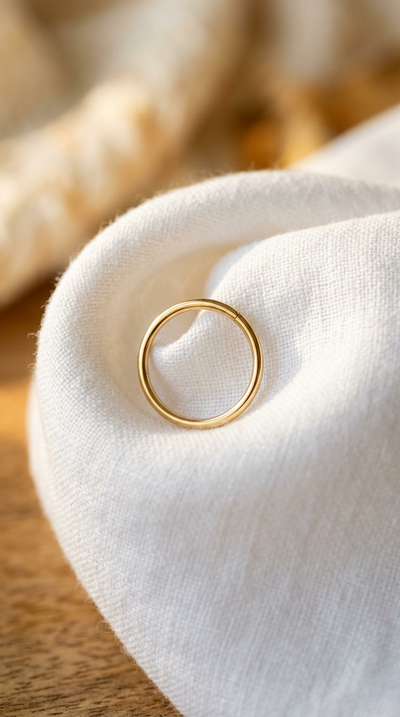
New 14ct Solid Gold Hoop
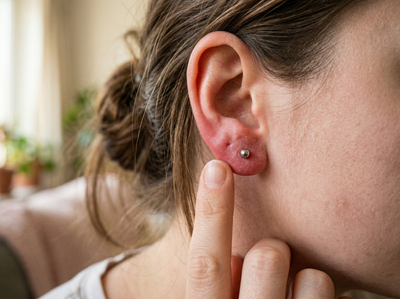
Infected Helix Piercing: Signs, Treatment & Prevention
- True infection is less common than irritation — most problems are irritation bumps
- Infection signs: green/yellow pus, increasing pain after week 2, spreading redness, fever
- Irritation signs: clear discharge, small bump near hole, intermittent mild soreness
- Do NOT remove jewellery from an infected piercing — it can trap the infection
- See a doctor for suspected infection; visit your piercer for irritation issues
Infection vs irritation: the critical difference
Most people who think their helix is infected are actually experiencing irritation. The distinction matters because the treatments are completely different. Antibiotics for irritation are pointless. Ignoring a real infection is dangerous.
| Symptom | Irritation | Infection |
|---|---|---|
| Discharge | Clear or pale yellow | Green, dark yellow, or grey |
| Smell | None or mild | Foul, unpleasant |
| Pain | Mild, intermittent | Persistent, worsening |
| Redness | Localised around holes | Spreading outward |
| Bump | Irritation bump (fluid-filled) | Abscess (warm, painful) |
| Fever | No | Possible |
Detailed infection signs
Green or dark discharge: the most reliable indicator. Healthy piercings produce clear lymph, not coloured pus.
Escalating pain: piercing pain should gradually decrease. If it worsens after week 1-2, something is wrong.
Spreading redness: redness around the holes is normal. Redness expanding outward in a starburst pattern is not.
Heat: compare the temperature of the pierced area to the same spot on the other ear. Significant warmth suggests infection.
How to treat
Step 1: Do NOT remove jewellery. The jewellery acts as a drainage channel. Removing it can trap infection inside.
Step 2: See a doctor. They can prescribe oral antibiotics if needed.
Step 3: Continue saline cleaning 2-3 times daily while on antibiotics.
Step 4: Complete the full antibiotic course. Do not stop early even if symptoms improve.
Dealing with irritation bumps
Irritation bumps are far more common than infections. They appear as small, raised bumps near the piercing holes and are caused by physical trauma, not bacteria.
Common causes: sleeping on the piercing, bumping it, poor-quality jewellery, touching it, changing jewellery too early, harsh cleaning products.
Treatment: identify and remove the cause. Return to strict saline care. Give it 2-4 weeks. Most resolve once the irritant is eliminated.
Prevention protocol
Saline only. No tea tree oil, no alcohol, no hydrogen peroxide. These damage healing tissue.
Do not touch. Hands carry bacteria. Every touch introduces risk.
Quality jewellery. 14K solid gold or implant-grade titanium only.
Clean phone and pillowcases. Both harbour bacteria that transfer to your ear.