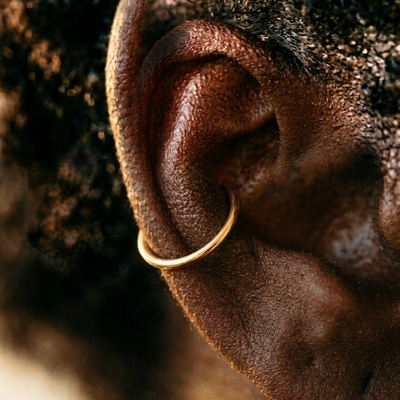
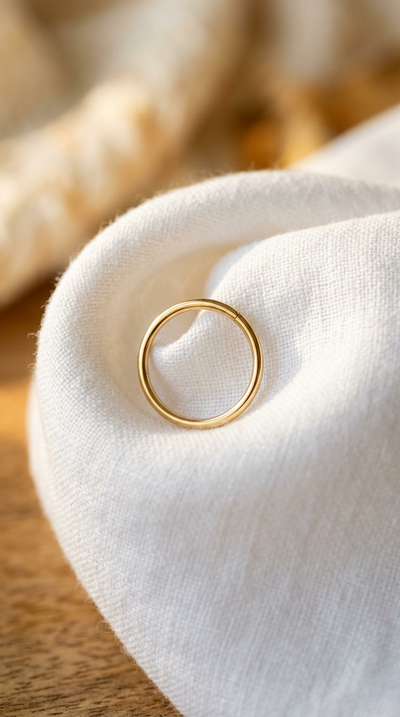
New 14ct solid gold hoop


Conch Piercing Pain: What to Expect (1-10 Scale)
- Conch piercing pain is rated 5-6 out of 10 — moderate for cartilage
- The thick, flat cartilage creates a deep pressure sensation followed by a sharp pinch
- The actual piercing takes 1-2 seconds; soreness lasts 1-3 days
- Comparable to daith and tragus pain; less intense than rook
- An experienced piercer, deep breathing, and eating beforehand all reduce perceived pain
Conch pain: the honest answer
The conch piercing is a solid 5-6 out of 10 on the pain scale. It sits in the moderate range for cartilage piercings — clearly more intense than a helix (4-5/10) but less painful than a rook (6-7/10). The flat, thick cartilage of the conch area offers more resistance to the needle than the thinner rim cartilage of the helix.
Most people describe the sensation as a deep pressure — almost like a strong squeeze — followed by a sharp, hot pinch as the needle exits. The thickness of the cartilage means the needle passes through more slowly than a helix piercing, which can make it feel more prolonged even though it still only takes 1-2 seconds.
How does it compare?
| Piercing | Pain | Why |
|---|---|---|
| Lobe | 2-3/10 | Soft tissue, minimal resistance |
| Helix | 4-5/10 | Thin cartilage on rim |
| Tragus | 5-6/10 | Thick but small cartilage flap |
| Conch | 5-6/10 | Thick, flat cartilage |
| Daith | 5-6/10 | Awkward angle, thick fold |
| Rook | 6-7/10 | Thickest ear cartilage |
What does it feel like?
The mark-up: your piercer marks the placement. No pain here — just a dot of ink.
The clamp (if used): a firm pressure on the flat cartilage. Uncomfortable but not painful. Some piercers use freehand technique instead.
The needle: strong, deep pressure followed by a sharp heat. You feel the cartilage resisting, then giving way. The whole thing takes 1-2 seconds. Most people let out a gasp or a short exhale.
Jewellery insertion: the stud is threaded through. A secondary wave of achey pressure. Less sharp than the needle, but uncomfortable.
Immediately after: throbbing warmth that subsides over 10-30 minutes. Relief that it is done. Many people say it was less bad than they expected.
Pain after the piercing
How to reduce the pain
Choose an experienced piercer. Speed and precision matter. A confident piercer works faster.
Eat 1-2 hours before. Low blood sugar increases pain sensitivity and fainting risk.
Breathe deeply. Deep breath in, piercer works on the exhale. This genuinely helps.
Skip caffeine and alcohol. Caffeine increases anxiety; alcohol thins blood and increases swelling.
Bring a friend. Distraction and emotional support reduce perceived pain.