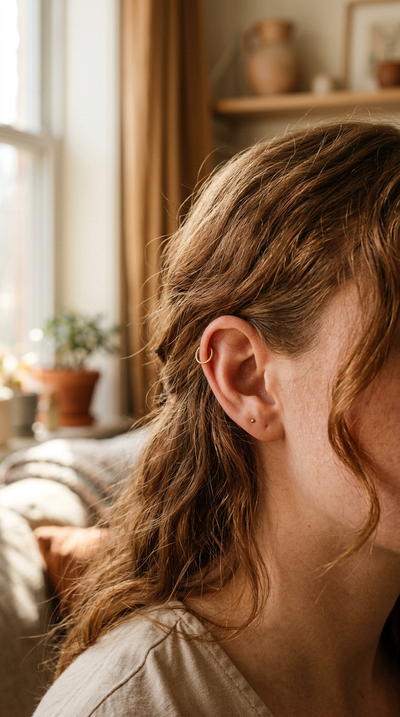
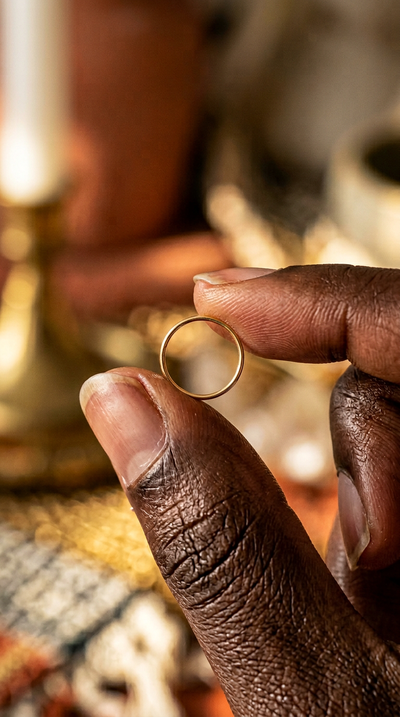
New 14ct solid gold hoop


Infected Cartilage Piercing: Signs, Treatment & Prevention
- Cartilage infections are more serious than lobe infections because cartilage has limited blood supply
- Most problems are irritation bumps, not true infection — treatment differs completely
- Infection signs: green/yellow pus, increasing pain, spreading redness, fever
- Do NOT remove jewellery from an infected cartilage piercing — it traps infection
- See a doctor for suspected infection; cartilage infections typically need oral antibiotics
Infection vs irritation: the critical difference
| Symptom | Irritation | Infection |
|---|---|---|
| Discharge | Clear or pale yellow (lymph) | Green, dark yellow, grey (pus) |
| Smell | None or mild | Foul, unpleasant |
| Pain | Mild, intermittent | Persistent, worsening |
| Redness | Localised around holes | Spreading outward |
| Swelling | Mild, comes and goes | Significant, increasing |
| Fever | No | Possible |
Detailed infection signs
Coloured discharge: the most reliable visual indicator. Healthy piercings produce clear lymph; infected piercings produce opaque, coloured pus.
Escalating pain: all cartilage piercings hurt initially, but pain should decrease after week 1-2. Pain that intensifies is a red flag.
Spreading redness: redness immediately around the holes is normal. Redness expanding outward in a starburst pattern suggests spreading infection.
Heat: compare the pierced area to the same location on the other ear. Significant warmth difference indicates inflammation or infection.
Systematic symptoms: fever, chills, or feeling unwell alongside piercing symptoms suggest the infection may be spreading. Seek medical attention promptly.
Why cartilage infections are serious
Cartilage infections deserve special attention because cartilage is avascular — it has no direct blood supply. Blood delivers immune cells and antibiotics to infected tissue. With limited blood flow, cartilage infections are harder for your body to fight naturally and harder for antibiotics to reach.
Untreated cartilage infections can lead to perichondritis (infection of the tissue surrounding the cartilage) or, in severe cases, permanent cartilage damage and deformity. This is why prompt treatment matters more for cartilage than for lobe infections.
Treatment steps
1. Keep the jewellery in. Removing it closes the channel and traps bacteria inside the tissue.
2. See a doctor. Cartilage infections typically require oral antibiotics. Topical antibiotics alone often cannot penetrate cartilage effectively.
3. Continue saline care 2-3 times daily while on antibiotics.
4. Complete the full antibiotic course. Stopping early risks antibiotic-resistant bacteria.
5. Follow up. If symptoms do not improve within 48-72 hours of starting antibiotics, return to your doctor. A different antibiotic or further assessment may be needed.
Irritation bumps by location
Different cartilage piercings are prone to bumps for different reasons:
Helix: sleeping on it and hair snagging are the top causes. Easiest to treat because the location is accessible.
Rook: changing jewellery too early is the primary cause. The thick cartilage looks healed months before it is.
Daith: earbuds and moisture are the main culprits. The enclosed location traps moisture and bacteria.
Conch: pressure from over-ear headphones and sleeping. Similar treatment to helix bumps.
Tragus: earbuds pressing directly against the piercing. Avoid in-ear earbuds during healing.
Prevention protocol
Quality jewellery. 14K solid gold or implant-grade titanium from day one. Cheap metals corrode and harbour bacteria.
Saline only. No tea tree oil, no alcohol, no hydrogen peroxide, no antibacterial soap. These damage healing tissue.
No touching. Hands are the primary vector for bacteria reaching a healing piercing.
Clean phone and pillowcases. Your phone screen and pillowcase press against your ear daily. Keep both clean.
Choose a reputable piercer. Sterile technique, single-use needles, and quality initial jewellery prevent the majority of piercing infections.